The Art of Curated Chaos in the Garden
The true appeal of a cottage garden lies in its refusal to follow rigid rules. Unlike the sharp lines of modern landscaping, this style thrives on abundance, fragrance, and a sense of history. A gardener doesn’t just plant flowers here; he crafts an ecosystem that feels as though it has existed for decades. To achieve this, he must select plants that offer varying heights, textures, and blooming schedules to ensure the space remains vibrant from early spring through the first frost.
Creating this look requires a blend of perennials, biennials, and self-seeding annuals. When a homeowner focuses on matching the exterior charm of his property with a cottage country decor style, the garden becomes a natural extension of the living space. The goal is to hide the soil entirely under a canopy of soft foliage and striking blooms.
The Backbone: Tall Perennials for Vertical Interest
Every successful cottage garden needs height to draw the eye upward. Delphiniums are the undisputed kings of the vertical plane. Their towering spikes of cobalt, sky blue, and white provide a dramatic backdrop for shorter species. A gardener should stake these early in the season to protect them from heavy summer rains.
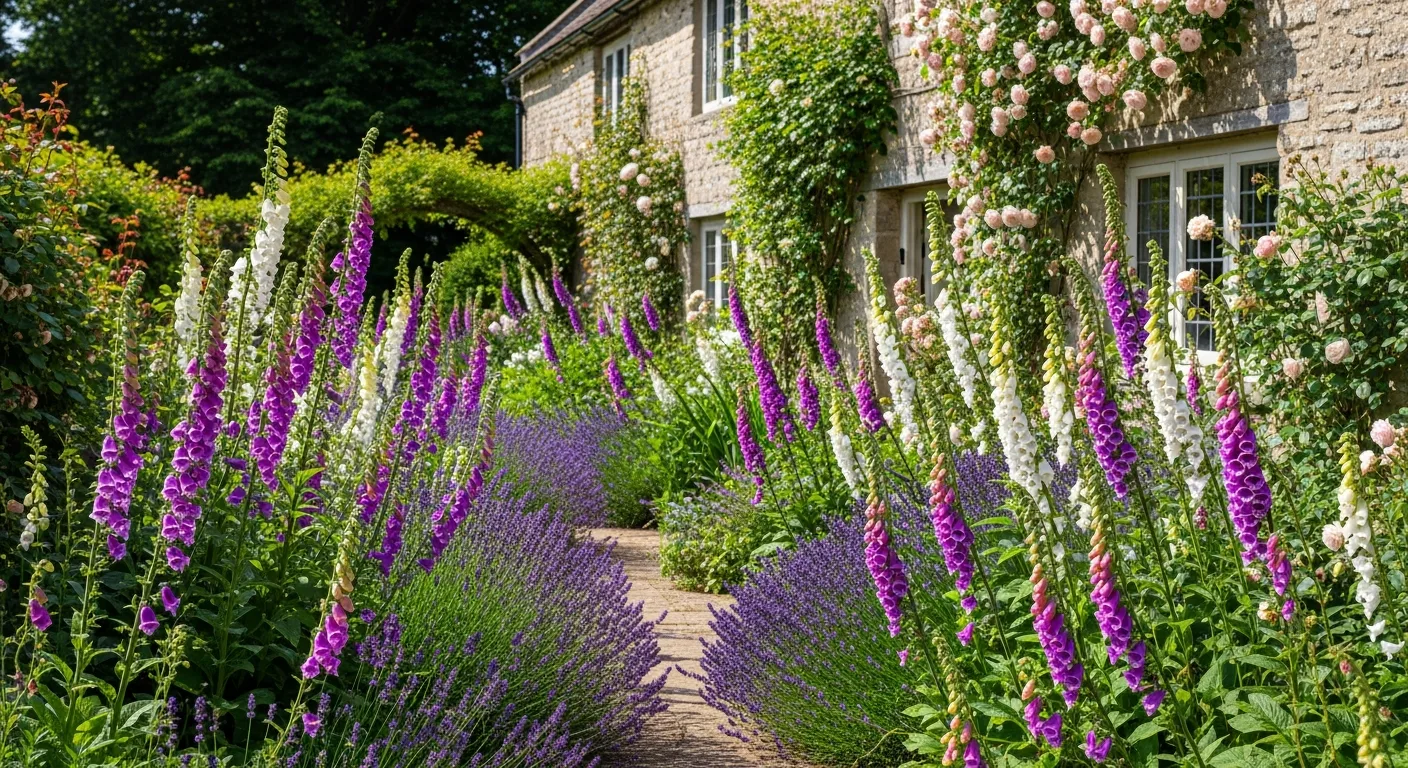
- Foxgloves (Digitalis): These biennials are essential for their bell-shaped flowers. He will appreciate how they effortlessly self-seed, popping up in unexpected corners to add to the garden’s whimsical feel.
- Hollyhocks (Alcea): Perfect for planting against a fence or a stone wall, these giants offer a vintage look that is synonymous with rural landscapes.
- Lupines: Known for their palmate leaves and dense flower spikes, they fix nitrogen in the soil, benefiting the plants around them.
Romantic Blooms: Roses and Peonies
No cottage garden is complete without the heavy, intoxicating scent of Old English Roses. Unlike modern hybrid teas, shrub roses and climbers offer a more relaxed form that spills over trellises and doorways. He should look for varieties like ‘Gertrude Jekyll’ or ‘Graham Thomas’ for their robust fragrance and repeat-flowering habits.
Peonies provide the mid-tier bulk needed to fill gaps. Their massive, pillowy blooms appear in late spring, offering a fleeting but spectacular show. Even after the flowers fade, their deep green, architectural foliage remains a solid anchor for the rest of the summer. While many of these flowers are hardy, starting with the best soil for a vegetable garden or flower bed ensures deep root penetration and more resilient blooms during dry spells.
Ground Fillers and Fragrant Herbs
To achieve the “overflowing” look, the lower layers must be packed with spilling plants and aromatic herbs. Lavender is a staple, not just for its purple hues but for its ability to attract pollinators. A gardener might plant it along a walkway where his brushing coat can release the scent as he passes.
Catmint (Nepeta) and Hardy Geraniums (Cranesbill) are excellent for softening the edges of paths. They grow in low, dense mounds that suppress weeds and provide a long season of color. For a touch of silver foliage, Lamb’s Ear (Stachys byzantina) offers a tactile experience that contrasts beautifully with the vibrant greens of surrounding perennials.
Self-Seeding Annuals for Effortless Growth
The secret to a garden that looks better every year is the inclusion of self-seeders. These plants do the work for the gardener, dropping their seeds in autumn to sprout again in spring. Poppies (Papaver), especially the Breadseed and Shirley varieties, add a papery, delicate texture that dances in the wind.
Nigella (Love-in-a-Mist) is another favorite, featuring jewel-like blue flowers surrounded by feathery bracts. Once the flowers fade, the seed pods remain attractive, adding interest to the winter landscape. By allowing these plants to find their own place, he ensures the garden never looks too manufactured or forced.
Maintaining the Cottage Look
While the aesthetic is relaxed, maintenance is still required to prevent the space from becoming a tangled mess. He should practice deadheading regularly to encourage second flushes of flowers. Cutting back early bloomers like Alchemilla mollis (Lady’s Mantle) after their first flowering can result in fresh new foliage that keeps the garden looking tidy through August.
Mulching is also vital. A thick layer of organic matter helps retain moisture and feeds the soil as it breaks down. This reduces the need for chemical fertilizers and supports the dense planting style that defines the cottage tradition.
Frequently Asked Questions
What are the best low-maintenance cottage garden plants?
Hardy Geraniums, Sedum, and Nepeta are excellent choices. They require very little intervention once established and are generally resistant to common pests and diseases.
How do I stop my cottage garden from looking like a mess of weeds?
The key is density. By planting closely together, the desired plants shade out the soil, making it difficult for weeds to germinate. Using a consistent color palette can also help the variety of textures feel cohesive rather than cluttered.
Can I grow a cottage garden in a small space?
Yes. Focus on verticality by using climbing roses or clematis on walls and fences. Choose dwarf varieties of classic plants, such as compact Lavender or smaller Hydrangeas, to maintain the aesthetic without overwhelming the area.