Why Building Your Own Dog House Beats Store-Bought Options
Most retail dog houses are made of thin plastic or flimsy cedar scraps that won’t last a single harsh winter. When a man decides to build a DIY dog house, he is investing in a structure that provides actual protection and comfort. By choosing his own materials, he can ensure the floor is insulated, the roof is watertight, and the dimensions perfectly suit his dog’s size.
A custom build allows for modifications that commercial products ignore, such as removable roofs for easy cleaning or elevated bases to prevent ground moisture from rotting the wood. This project doesn’t require a master carpenter’s shop, but it does require a solid plan and the right lumber.
Selecting the Right Lumber and Materials
The foundation of any outdoor structure is the wood. Since this house will sit in the elements, he must choose rot-resistant materials. Cedar is the gold standard because it naturally repels insects and handles moisture well without warping. If budget is a concern, pressure-treated lumber works for the base, while exterior-grade plywood can be used for the walls.
When picking out boards, he should look for the best wood for outdoor furniture to ensure the dog house doesn’t fall apart after one season. Avoid using chemically treated wood on the interior surfaces where the dog might chew, as these can be toxic. Stick to natural wood for the siding and use a high-quality, low-VOC exterior stain to seal the outside.
Sizing the House for Maximum Comfort
A common mistake is building a house that is too large. A dog relies on his own body heat to keep the space warm during cold nights. If the interior is cavernous, the heat dissipates instantly. Conversely, a house that is too small will be cramped and uncomfortable.
- Height: The interior should be about 3 to 4 inches taller than the dog’s head when he is standing.
- Width and Length: The dog should be able to walk in, turn around completely, and lie down comfortably.
- The Doorway: Keep the opening just large enough for him to pass through. A smaller door helps retain heat and keeps wind out.
Step-by-Step Construction Process
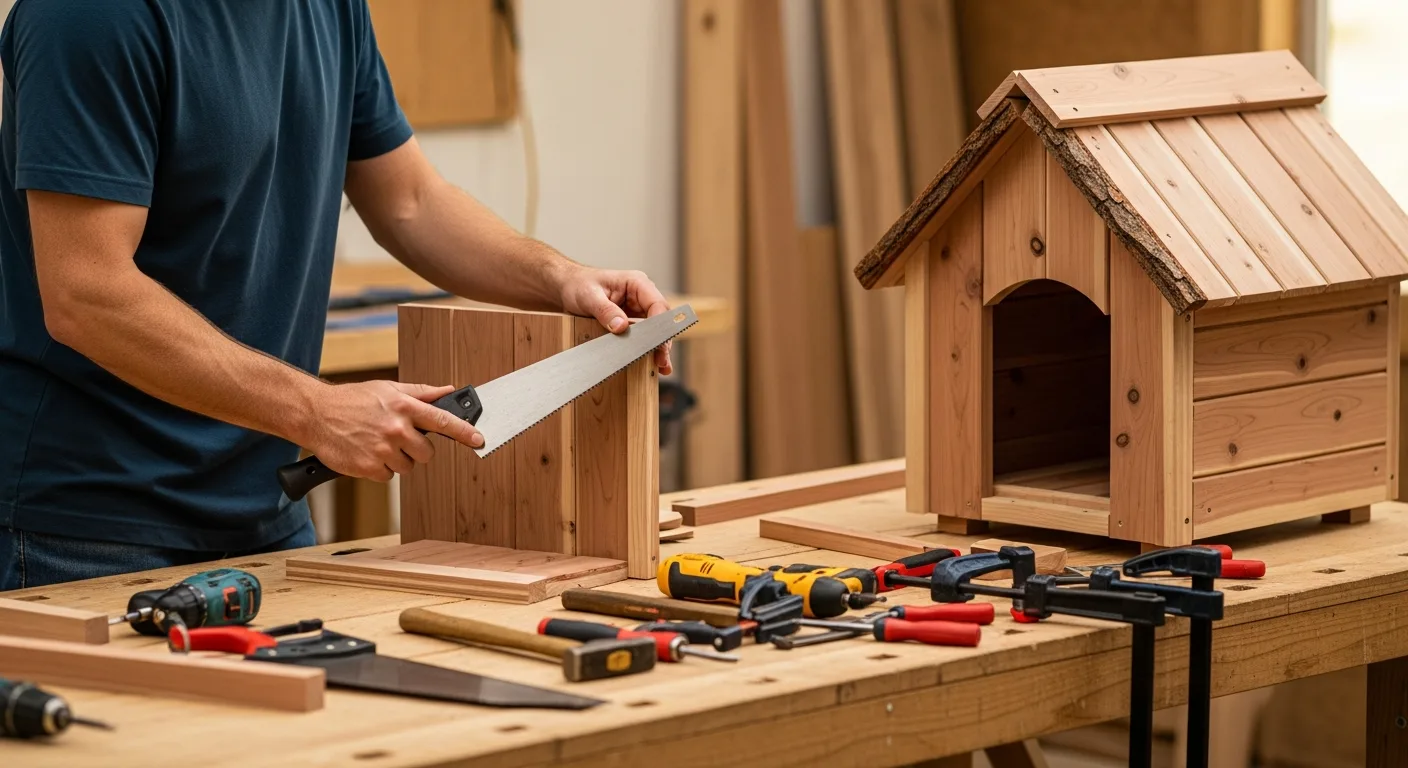
Start by building the floor frame. Use 2x4s to create a rectangular base and deck it with 3/4-inch plywood. It is vital to elevate this base at least 2 inches off the ground using pressure-treated skids or bricks. This prevents rising dampness and keeps the floor dry.
Next, frame the walls. Simple 2×2 or 2×4 studs will suffice. Once the skeleton is up, attach the siding. For the roof, a slanted design (shed roof) is the easiest to build and ensures water runoff. He should attach the roof with hinges on one side; this allows him to lift the top for cleaning or to check on his dog if he suspects an injury, which is a proactive step in any pet first aid home guide strategy.
Weatherproofing and Final Touches
Once the structure is built, it needs to be sealed against the wind. Use exterior-grade caulk to fill any gaps in the corners where drafts might enter. For the roof, use asphalt shingles or a piece of corrugated metal. If he lives in a particularly cold climate, he can staple rigid foam insulation between the studs before adding the interior wall panels.
Adding a heavy-duty rubber flap over the door can significantly reduce wind chill inside the house. Finally, place the house in a spot that is shielded from the prevailing winds, ideally under a tree or near the side of the home for extra protection.
Frequently Asked Questions
What is the best wood for a DIY dog house?
Cedar is the best choice because it is naturally rot-resistant and repels fleas and ticks. If cedar is too expensive, exterior-grade plywood with a solid coat of weather-resistant paint is a viable alternative.
Should I insulate the dog house?
If the dog spends significant time outside in sub-freezing temperatures, insulation is highly recommended. Use foam board insulation sandwiched between two layers of wood to prevent the dog from chewing on it.
How do I keep the dog house clean?
The best way to maintain cleanliness is to build the house with a removable or hinged roof. This allows him to reach in, swap out bedding, and scrub the floor with a pet-safe disinfectant regularly.
Does the dog house need a door?
A physical door isn’t usually necessary, but a heavy vinyl or rubber flap is excellent for keeping out rain and wind while still allowing the dog to enter and exit freely.