Why Coverage is the Foundation of a Great Outdoor Kitchen
A grill sitting in the middle of a lawn is a hobby; a covered outdoor kitchen is a lifestyle. By 2026, the trend has shifted away from simple standalone islands toward fully integrated culinary hubs. The primary reason a man invests in a roof for his cooking space is longevity. Without protection, expensive stainless steel appliances and stone countertops face a constant barrage of UV rays, rain, and debris.
Coverage also extends the usable season. Whether he is searing steaks in a summer downpour or hosting a game-day gathering in the brisk autumn air, a solid roof ensures the party doesn’t move indoors. It transforms the backyard from a fair-weather option into a permanent extension of his home’s square footage.
Structural Styles: Finding the Right Roof
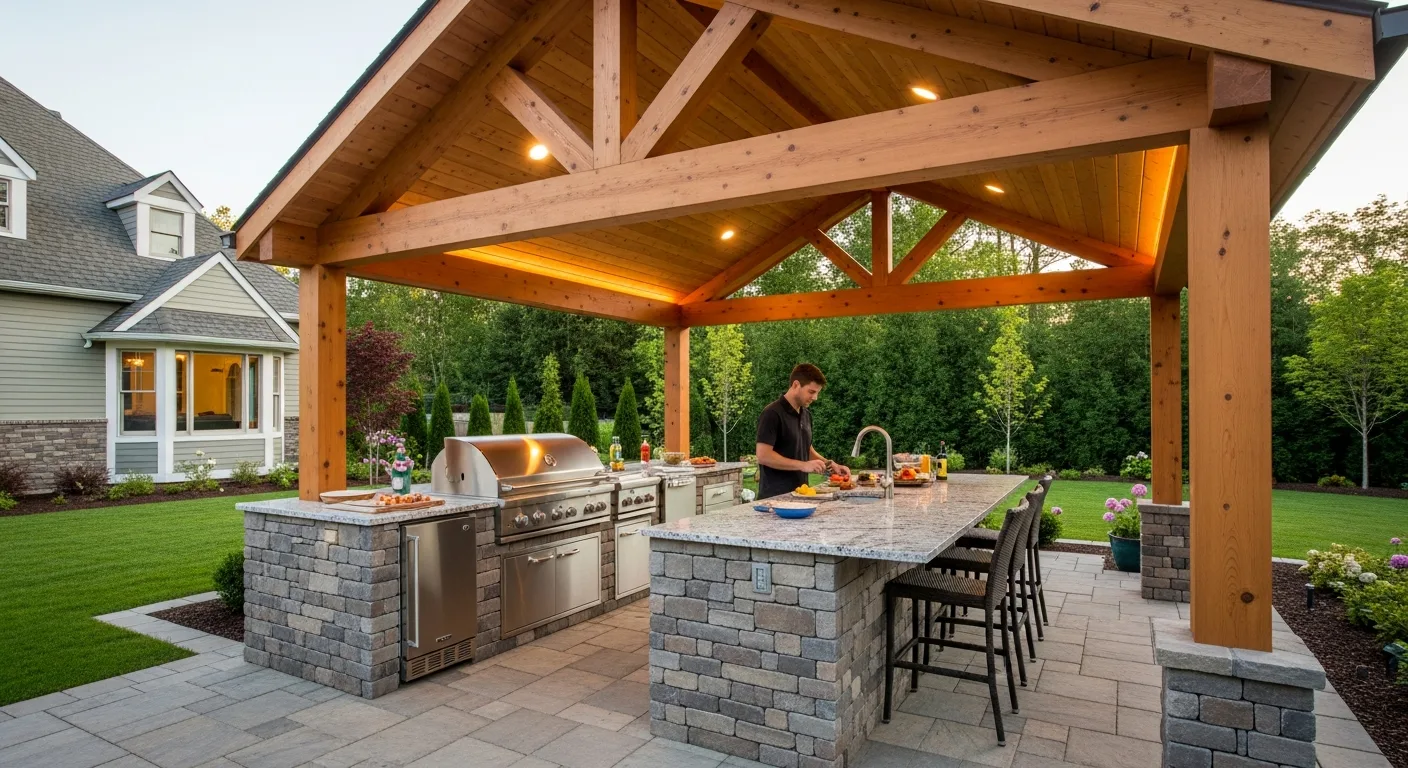
The type of cover he chooses dictates the entire vibe of the space. A pavilion-style roof offers total protection and allows for the installation of ceiling fans and recessed lighting. This is the gold standard for those who want a true “outdoor room” feel. If he wants to attach a roof over a deck from the house, he must ensure the structural beams are rated for the weight of the new assembly and any integrated ventilation systems.
- Pergolas with Retractable Canopies: Best for men who want a balance of sun and shade. Modern 2026 models often feature motorized louvers that close automatically when sensors detect rain.
- Extended Overhangs: If the kitchen is adjacent to the house, extending the existing roofline creates a seamless transition. It feels intentional and often adds the most value to the property.
- Gazebos: A classic choice for a detached kitchen. It provides a 360-degree view of the garden while keeping the chef dry.
High-Performance Materials for the Elements
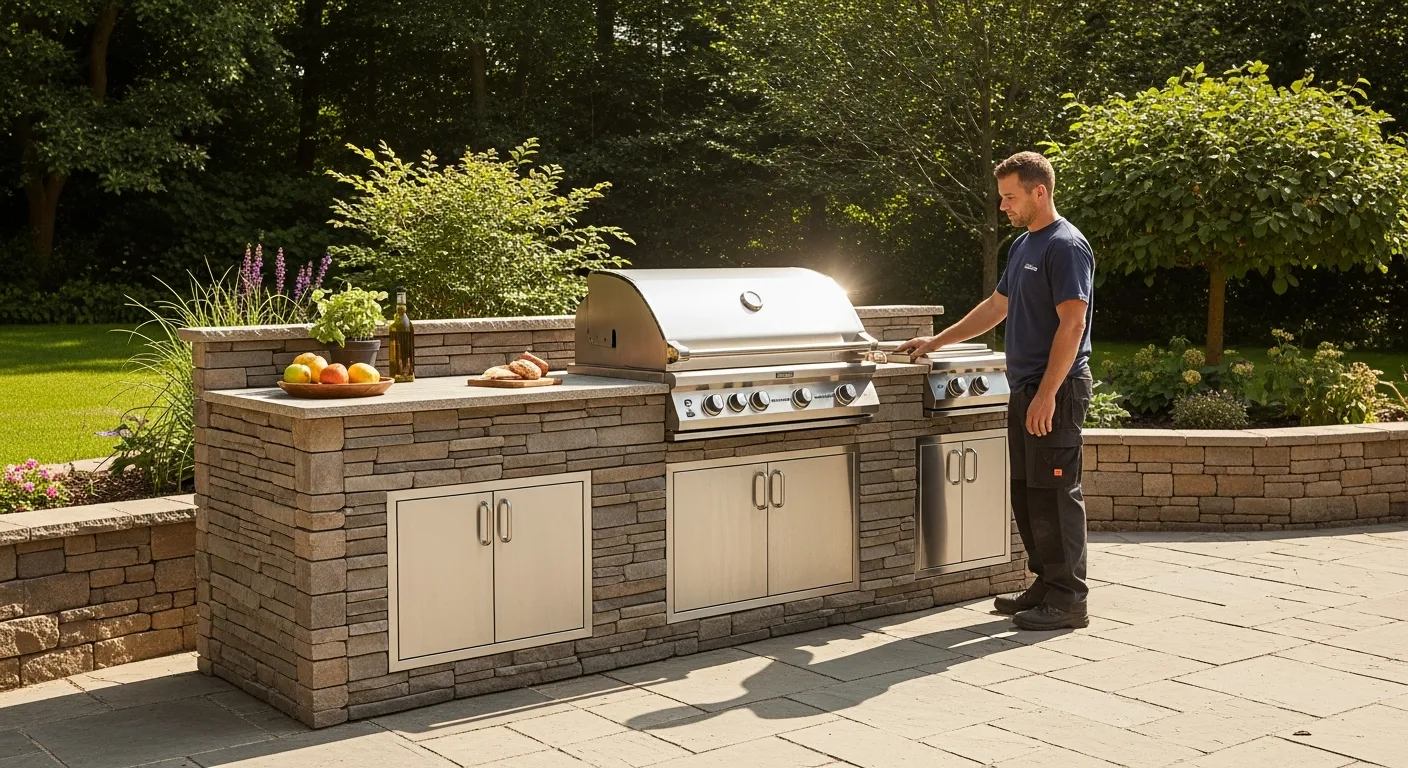
Even with a roof, outdoor kitchens face humidity and temperature swings. He should prioritize materials that are non-porous and UV-stable. Dekton or granite countertops are preferred over marble, which can etch and stain easily in an outdoor environment. For the cabinetry, marine-grade polymer or stainless steel are the most durable options.
Wood adds warmth, but it requires maintenance. When selecting the best wood for outdoor furniture and cabinetry, he should look toward Ipe, Teak, or Cedar. These species possess natural oils that resist rot and insect infestation, making them ideal for a high-moisture cooking zone.
The Layout: Efficiency Meets Entertainment
A well-designed covered kitchen follows the functional triangle: the sink, the prep area, and the grill should be within a few steps of each other. However, in a covered space, smoke management becomes a priority. He must install a high-CFM (Cubic Feet per Minute) vent hood if the grill is located under a solid roof. This prevents smoke from lingering and staining the ceiling or irritating his guests.
Consider the “Social Zone.” A raised bar counter allows his friends to sit and chat with him while he works without getting in the way of the heat. Integrating a small refrigerator and a dedicated ice maker ensures he doesn’t have to keep running back to the main house for supplies, keeping him in the center of the action.
Lighting and Climate Control
Lighting should be layered. Task lighting over the grill and prep areas is non-negotiable for evening cooking. Ambient lighting, such as dimmable LED strips under the counter or pendant lights over the bar, sets the mood for dining. For year-round comfort, he might consider mounting infrared heaters to the ceiling beams or installing a misting system for those sweltering July afternoons.
Frequently Asked Questions
Does a covered outdoor kitchen need a vent hood?
Yes, if the kitchen is under a solid roof or a screened-in porch, a vent hood is essential. It pulls smoke, grease, and heat away from the cooking area, protecting the ceiling and ensuring a comfortable environment for guests.
What is the best flooring for a covered patio kitchen?
Non-slip porcelain tile or natural stone like travertine are excellent choices. They are easy to hose down, resist grease stains, and can handle the weight of heavy appliances without cracking.
How much does a covered outdoor kitchen cost in 2026?
A mid-range setup with a basic roof, grill, and stone counters typically starts around $15,000. High-end custom builds with premium appliances and full structural roof extensions can easily exceed $50,000 depending on the materials used.