Planning Your Outdoor Culinary Command Center
Building a diy outdoor kitchen is about more than just moving a grill outside; it is about creating a dedicated territory where a man can master the flame and entertain his guests with precision. Before he picks up a shovel, he must determine the primary function of the space. Will it be a simple grilling station or a full-service kitchen with a sink, refrigerator, and pizza oven?
Site selection is the first critical hurdle. He should choose a location that is level and offers easy access to the main house. Proximity to existing utility lines—gas, water, and electricity—will significantly dictate the budget. If he places the kitchen too far from the house, the cost of trenching pipes and wires will skyrocket. He must also consider the prevailing wind direction to ensure smoke from the grill doesn’t blow directly into his seating area or back into the house.
Choosing the Right Foundation and Frame
A heavy outdoor kitchen cannot sit on bare soil or a thin layer of pavers. He needs a solid concrete pad, ideally reinforced with rebar, to prevent shifting and cracking over time. Once the foundation is set, he must decide on the framing material. While some beginners opt for pressure-treated lumber, galvanized steel studs are the superior choice for a DIY build. Steel is fireproof, won’t warp, and provides a perfectly level surface for stone veneers and heavy countertops.
When he begins the framing process, he should leave precise cutouts for his appliances. It is far easier to frame around a grill’s dimensions than to try and cut into a finished structure later. Taking on a project of this scale is one of the most rewarding diy home improvement projects a man can tackle, provided he respects the structural requirements of the build.
Selecting Durable Materials for the Elements
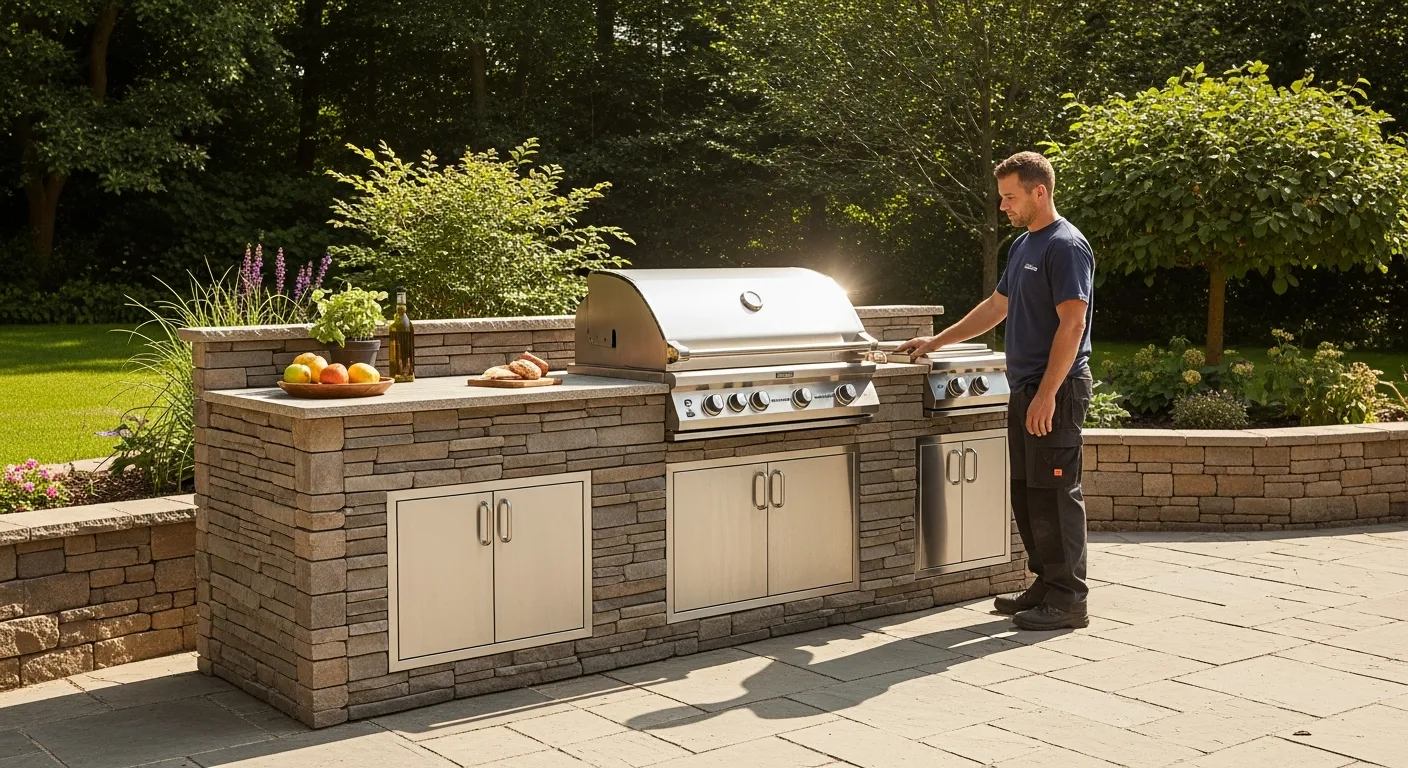
The exterior of the kitchen must withstand rain, UV rays, and temperature fluctuations. For the finish, stacked stone or brick veneers offer a classic, rugged look that hides imperfections well. For the countertops, granite and concrete are the gold standards. Granite is naturally heat-resistant and easy to sanitize, while poured concrete allows for a custom, seamless look, though it requires regular sealing to prevent staining.
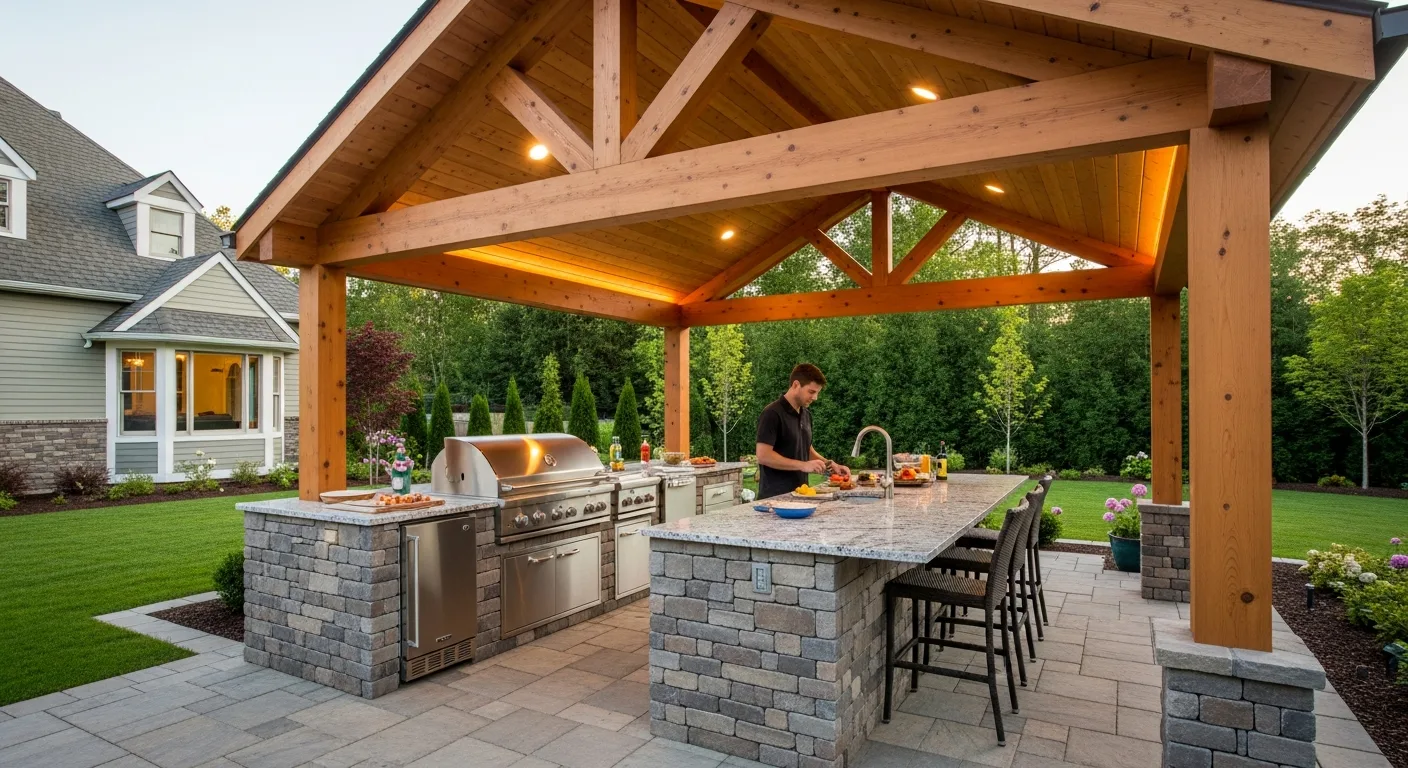
He should also think about the surrounding aesthetics. While the main structure is built for utility, he might want to incorporate a cedar pergola or a bar-height seating area. In these instances, he must select the best wood for outdoor furniture to ensure the accents don’t rot or fade within a few seasons. Teak and Ipe are excellent high-end options, while cedar offers a more budget-friendly, naturally rot-resistant alternative.
Essential Appliances for the Modern Pitmaster
The heart of the kitchen is the grill. He should invest in a high-quality drop-in stainless steel grill designed for permanent installation. Beyond the primary heat source, he should consider these additions to maximize his outdoor cooking efficiency:
- Outdoor Refrigerator: Rated for exterior use to keep beverages and raw meats at safe temperatures.
- Side Burners: Essential for simmering sauces or boiling corn without running back to the indoor kitchen.
- Stainless Steel Drawers: Provides weather-tight storage for tools, charcoal, and cleaning supplies.
- Trash Chute: Keeps the workspace clean and prevents pests from gathering around open bins.
Managing Utilities and Safety
Safety is paramount when mixing gas, water, and electricity in an outdoor environment. He should ensure all electrical outlets are GFCI-protected and housed in weatherproof covers. If he is running a natural gas line, he must hire a licensed professional to make the final connection to ensure there are no leaks that could lead to a disaster.
Proper ventilation is another often-overlooked factor. If the grill is placed under a roof or within a deep alcove, he must install a vent hood or ensure the cabinet has adequate rear venting to prevent gas buildup. By following these technical steps, he ensures his DIY outdoor kitchen is not only a functional masterpiece but a safe environment for his family and friends.
Frequently Asked Questions
Do I need a permit for a DIY outdoor kitchen?
In most jurisdictions, he will need a permit if he is running new gas, water, or electrical lines. Simple structures that use portable propane tanks may not require one, but it is always best for him to check with local building codes first.
What is the cheapest way to build an outdoor kitchen?
The most cost-effective method is using a prefabricated kit or building a frame from pressure-treated wood and finishing it with cement board and paint. He can also save significantly by using a standalone grill rather than an expensive drop-in model.
Can I use indoor appliances in my outdoor kitchen?
No. Indoor appliances are not designed to handle moisture or extreme temperature changes. He must use appliances specifically rated for outdoor use to avoid electrical shorts, rust, and premature failure.