The Precision and Appeal of Miniature Construction
Building a DIY miniature house is far more than a simple craft project; it is an exercise in patience, engineering, and artistic vision. For the modern man, this hobby offers a unique escape into a world where he has total control over every architectural detail. Whether he is recreating a mid-century modern masterpiece or a rustic cabin, the process demands a level of focus that effectively silences the noise of daily life.
The satisfaction comes from the micro-engineering involved. When a man spends hours aligning a tiny floorboard or wiring a microscopic LED lamp, he isn’t just making a toy. He is honing his fine motor skills and spatial reasoning. It is a tactile experience that provides a tangible sense of accomplishment once the final shingle is placed and the structure stands complete on his desk.
Selecting the Right Project: Kits vs. Scratch Building
A beginner usually starts with a pre-packaged kit. These kits provide the laser-cut wood, fabric, and components needed to finish a specific design. If he is just starting out, exploring a comprehensive DIY house kit guide can help him understand the different scales and complexity levels available before he commits to a multi-week build.
Once he has mastered the basics, he might transition to “kit bashing”—taking a standard kit and modifying it to suit his own taste—or full scratch building. Scratch building requires him to source his own raw materials, such as balsa wood, styrene, and basswood. This path allows for complete creative freedom, enabling him to design a structure that reflects his personal architectural preferences down to the last millimeter.
The Essential Toolkit for Miniature Success
To achieve professional results, a man needs the right tools. Standard household scissors and school glue will not suffice for the intricate work required in a DIY miniature house. Precision is the name of the game here.
- Precision Craft Knife: A sharp X-Acto knife with a variety of blades is mandatory for clean cuts.
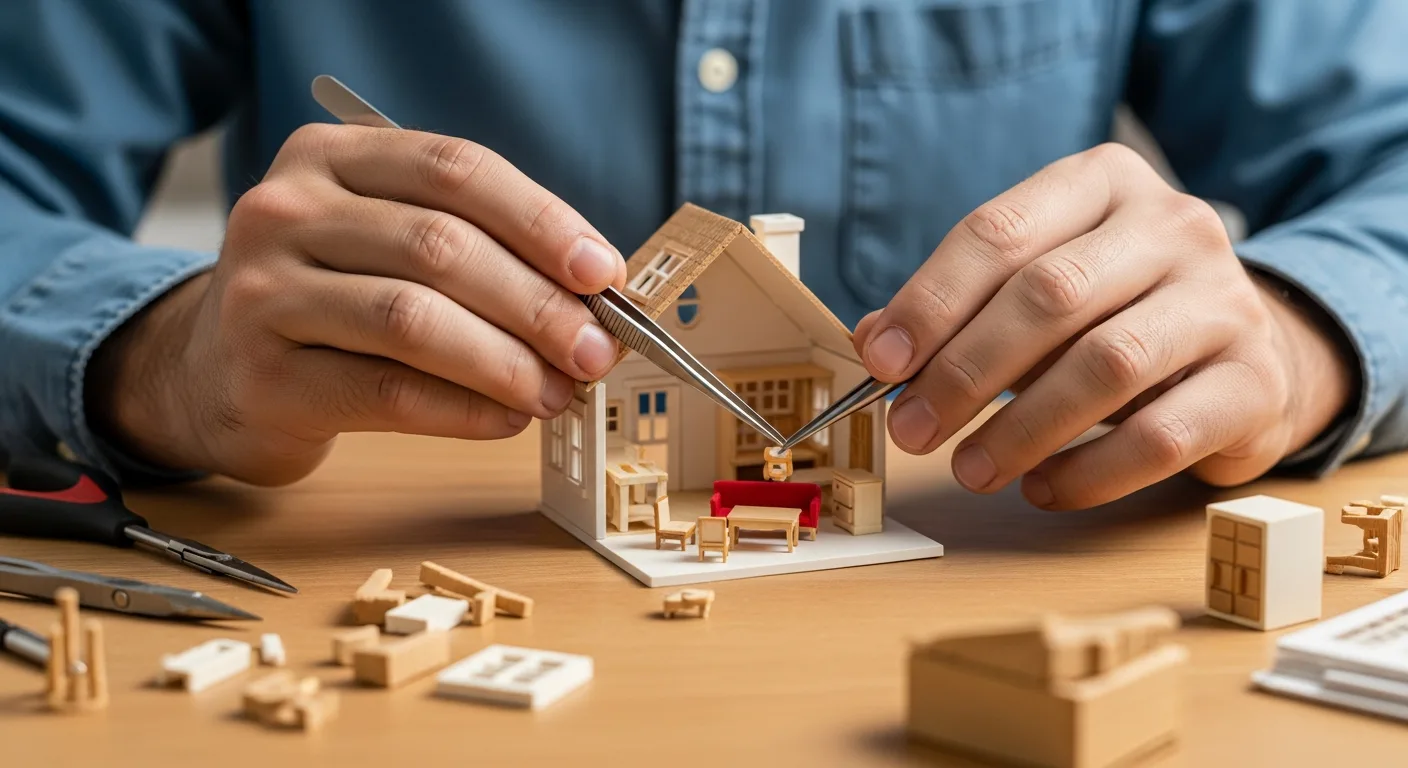
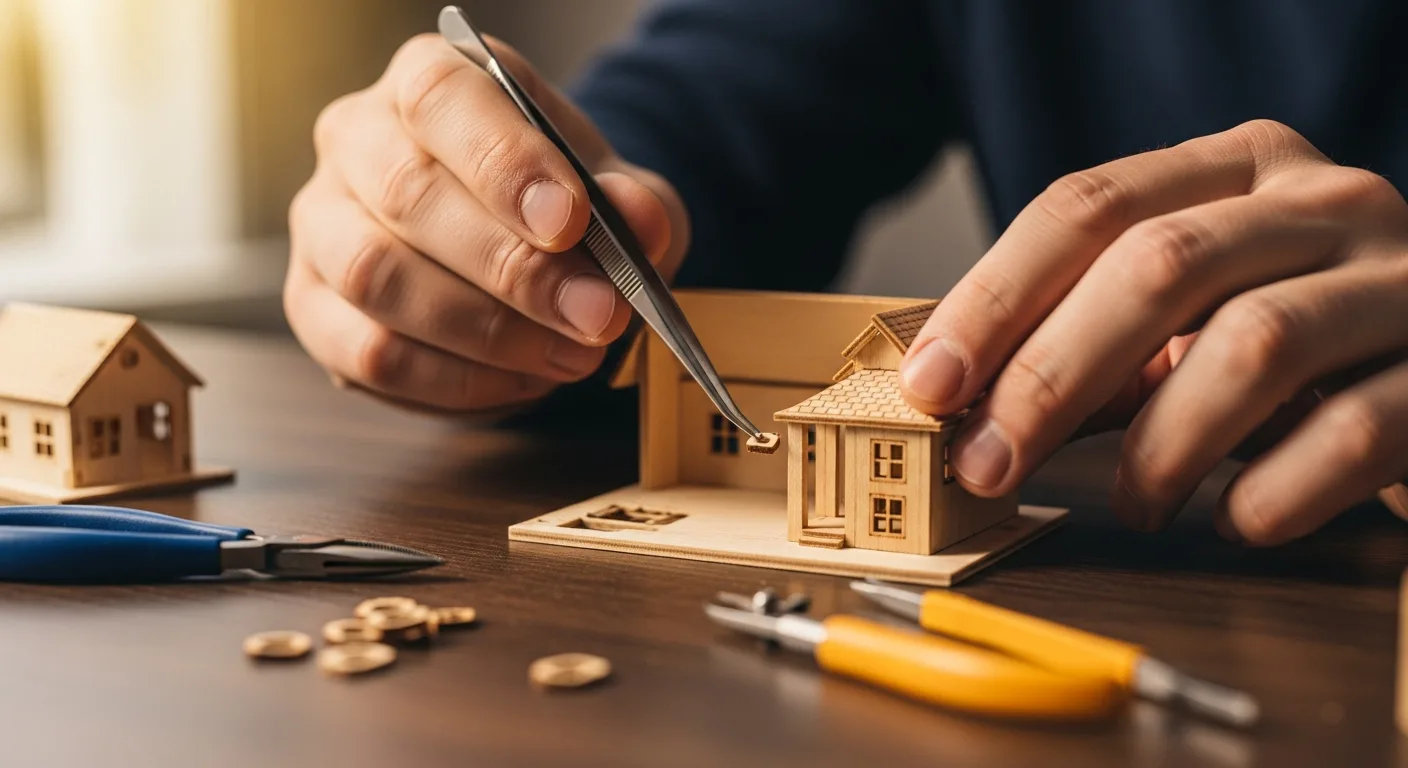
- Fine-Tip Tweezers: Essential for placing tiny pieces of furniture or delicate decorative items.
- Specialized Adhesives: He should use a fast-setting wood glue for structural elements and a clear-drying tacky glue for fabrics and small details.
- Cutting Mat: A self-healing mat protects his workspace and provides a grid for accurate measurements.
- Sandpaper and Files: Necessary for smoothing out laser-cut edges and ensuring a perfect fit between joints.
Many hobbyists find that the best way to enjoy a long afternoon of assembly is by pairing the task with a perfectly brewed cup of coffee to maintain focus during delicate work. The steady hand required for painting a 1:24 scale chair is much easier to maintain when he is relaxed and settled into his dedicated hobby space.
Mastering Realism Through Weathering and Lighting
What separates a basic model from a museum-quality miniature is the attention to realism. A brand-new DIY miniature house can sometimes look too “plastic” or sterile. To combat this, a builder can use weathering techniques. By applying thin washes of acrylic paint or using specialized weathering powders, he can simulate the look of aged wood, rusted metal, or sun-faded paint.
Lighting is another game-changer. Most high-end kits include basic LED wiring, but a dedicated builder will often customize the circuitry. He might add flickering firelight to a tiny fireplace or soft amber glows to a study. This requires a basic understanding of parallel circuits and battery housing, adding an extra layer of technical skill to the hobby.
Displaying and Protecting the Finished Work
After investing dozens of hours into a build, protecting the miniature from dust and damage is vital. A custom-fit acrylic display case is the gold standard. It keeps the intricate interior safe from curious hands and environmental debris. He should also consider the placement of his display; direct sunlight can fade the delicate fabrics and paints used inside the house over time.
Shelving with integrated puck lighting can turn a single DIY miniature house into a focal point of a room. It serves as a testament to his dedication and skill, often sparking conversations with guests about the technical challenges he overcame during the construction process.
Frequently Asked Questions
What is the most common scale for DIY miniature houses?
The most popular scale is 1:24, though 1:12 is also common for those who want to include more detailed furniture. 1:24 offers a good balance between detail and space-saving size.
How long does it take to build a miniature house?
A standard kit can take anywhere from 20 to 50 hours depending on the complexity. Scratch-built projects can take months as the builder designs and creates every element from scratch.
What glue is best for miniatures?
For wood-to-wood bonds, a high-quality PVA wood glue is best. For plastic or metal accents, a gel-based cyanoacrylate (super glue) provides a strong, instant bond.
Do I need to be an artist to start this hobby?
No. Kits provide excellent instructions and pre-cut pieces. The hobby is more about following a process and developing patience than having innate artistic talent.