The Reality of Building Your Own Outdoor Seating
Walking into a high-end furniture showroom often leads to immediate sticker shock. A simple outdoor sectional can easily cost thousands of dollars, yet many of these pieces are constructed from mid-grade materials with a massive retail markup. For the man who isn’t afraid to get his hands dirty, DIY patio furniture offers a way to bypass these costs while building something significantly more durable.
Building your own furniture allows for complete control over the dimensions and the finish. If he has a specific corner on his deck that doesn’t fit standard retail sizes, he can simply adjust his blueprints. This process isn’t just about saving money; it’s about the satisfaction of knowing exactly how a piece was joined and finished.
Essential Tools for the Modern DIYer
He doesn’t need a massive industrial workshop to get started, but a few key power tools will make the difference between a weekend project and a month-long headache. At a minimum, he should have:
- Miter Saw: Critical for making clean, repeatable cross-cuts for legs and frames.
- Drill and Driver Set: Essential for boring pilot holes and driving structural screws.
- Orbital Sander: Necessary for removing splinters and preparing the wood for a professional finish.
- Pocket Hole Jig: This is the secret weapon for beginners. It allows him to create strong, hidden joints without complex joinery.
Selecting the Right Lumber for Longevity
The biggest mistake a builder can make is choosing the wrong species of wood. Standard interior pine will rot within a couple of seasons if left exposed to the rain and sun. When he starts selecting his lumber, he should consult a guide on the best wood for outdoor furniture to ensure his pieces survive the elements.
Cedar and Redwood are naturally rot-resistant and age beautifully to a silvery gray if left untreated. For those on a tighter budget, pressure-treated pine is a viable option, though it requires a longer drying period before it can be stained or painted. If he wants a premium, heirloom-quality result, hardwoods like Teak or Ipe are the gold standard, though they require more specialized blades and pre-drilling.
Top DIY Projects to Start This Weekend
For those looking for inspiration beyond basic seating, exploring various deck furniture ideas can help him visualize a cohesive outdoor layout. Here are three manageable projects for any skill level:
1. The Modern 2×4 Sofa
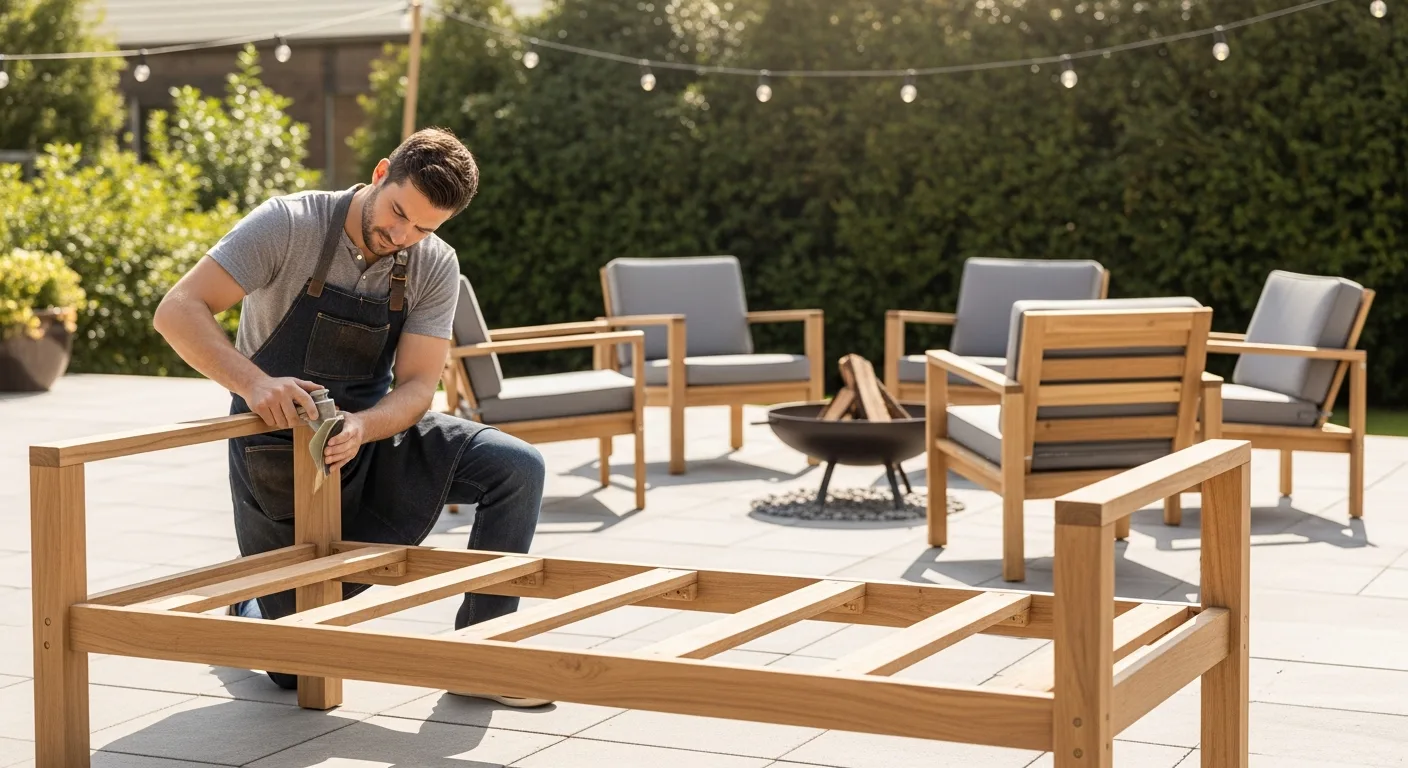
Using standard 2×4 lumber, he can construct a sleek, minimalist sofa frame. By using pocket hole screws and outdoor-rated wood glue, the frame becomes incredibly rigid. The beauty of this project is that the dimensions can be tailored to fit standard deep-seat cushions found at most hardware stores.
2. The Classic Adirondack Chair
This is a rite of passage for many woodworkers. While the curved back requires a jigsaw, the comfort provided by the sloped seat is unmatched. He should focus on using stainless steel hardware to prevent rust streaks from ruining the wood over time.
3. The Farmhouse Dining Table
A large outdoor table is often the centerpiece of a patio. By using 4×4 posts for the legs and 2×6 planks for the top, he can create a heavy, wind-resistant table that won’t budge during a storm. Leaving small gaps between the top planks allows for water drainage, preventing the wood from cupping.
Finishing and Weatherproofing for 2026
The build is only half the battle. To ensure his hard work lasts, he must apply a high-quality finish. Penetrating oils are often superior to film-forming finishes like polyurethane, which tend to crack and peel under intense UV exposure. An oil-based stain soaks into the fibers, providing deep protection while allowing the wood to breathe.
He should apply at least two coats, paying special attention to the end grain of the wood, which acts like a straw and sucks up moisture. Adding rubber feet or “glides” to the bottom of the legs will also prevent the furniture from sitting in standing water, significantly extending its lifespan.
Frequently Asked Questions
What is the cheapest wood for DIY patio furniture?
Pressure-treated pine is generally the most affordable option that can withstand outdoor conditions. However, many DIYers also use heat-treated pallets for a rustic look, provided they verify the pallets are safe for residential use.
Do I need to use special screws for outdoor furniture?
Yes. He must use stainless steel or ceramic-coated screws. Standard interior screws will corrode quickly when exposed to moisture, leading to structural failure and unsightly rust stains.
How often should I refinish my DIY furniture?
Depending on the sun exposure, he should expect to apply a fresh coat of oil or sealer every 12 to 24 months. Regular maintenance is much easier than sanding down a completely weathered piece later on.