The Strategic Impact of Commercial Outdoor Lighting
First impressions are formed long before a client steps into an office or a customer enters a storefront. For a business owner, the exterior of his property serves as a silent ambassador. If his parking lot is shrouded in shadows or his building facade is dim, he is inadvertently signaling a lack of professionalism and safety. Commercial outdoor lighting is not merely a utility; it is a strategic investment in security, liability reduction, and brand image.
When a manager evaluates his lighting needs, he must look beyond simple illumination. High-quality lighting prevents accidents, deters criminal activity, and extends the usable hours of a property. By highlighting architectural features, he can also significantly increase the perceived value of his real estate.
Prioritizing Security and Liability Reduction
Security is the primary driver for most commercial lighting projects. A well-lit perimeter is the most effective non-human deterrent against trespassing and vandalism. Criminals prefer to operate where they cannot be easily identified by cameras or witnesses. By installing high-output floodlights and strategically placed wall packs, a property owner ensures there are no blind spots for intruders to exploit.
- Parking Lot Safety: Uniform light distribution prevents dark corners where accidents or muggings could occur.
- Entry Point Illumination: Brightly lit doors and loading docks ensure that employees and visitors feel safe during late-night shifts.
- Camera Optimization: Modern security cameras require a certain level of ambient light to capture clear, actionable footage.
Beyond crime, lighting is a shield against liability. If a visitor trips on an unseen curb or a patch of ice in a poorly lit area, the owner may face costly legal battles. Ensuring every walkway is visible is a fundamental part of risk management.
The Shift to High-Efficiency LED Systems
The days of flickering metal halide bulbs and energy-hungry high-pressure sodium lamps are over. For the modern professional, switching to commercial LED lighting solutions is the only logical choice. LEDs offer a superior return on investment through reduced energy consumption and minimal maintenance requirements.
An LED fixture typically uses 50% to 75% less electricity than traditional bulbs. Furthermore, because these units can last upwards of 50,000 to 100,000 hours, a facility manager won’t have to send his maintenance crew up on a lift every few months to replace burnt-out lamps. This longevity is particularly beneficial for hard-to-reach fixtures mounted high on building exteriors or poles.
Enhancing Curb Appeal and Brand Identity
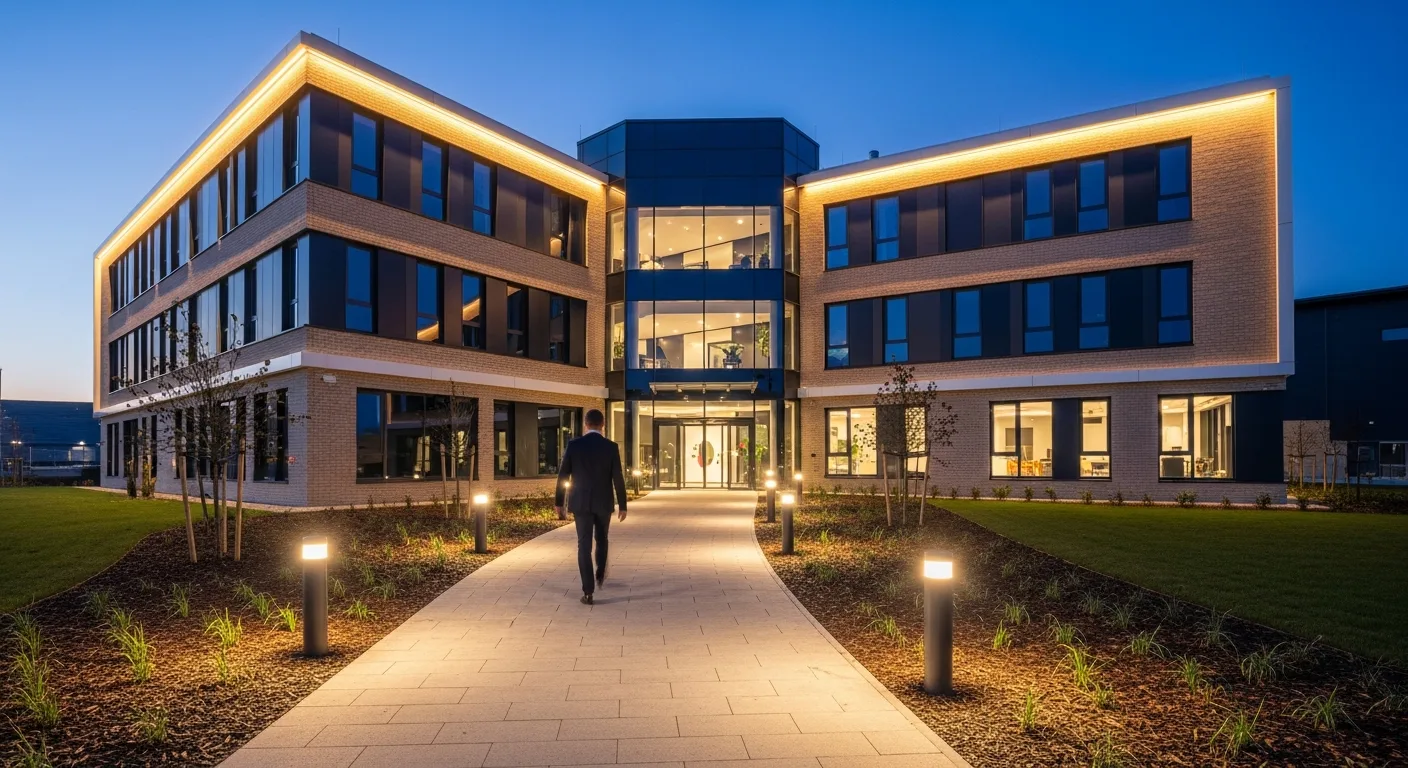
While security is functional, aesthetics are emotional. A business that glows warmly at night attracts more attention than one that disappears into the darkness. Using accent lighting to wash walls or spotlighting to emphasize signage helps a brand stand out in a crowded commercial corridor.
A property owner can use professional exterior landscape illumination to create a welcoming atmosphere. Bollard lights along pathways or well-lights at the base of trees add a layer of sophistication that suggests the business is thriving and attentive to detail. This visual appeal often translates directly into higher foot traffic and better tenant retention for commercial landlords.
Smart Controls and Automation
Efficiency in 2026 is driven by intelligence. A smart commercial lighting system allows a manager to control his entire property from a single interface. He no longer needs to rely on manual switches or outdated mechanical timers that fail to adjust for seasonal changes in daylight.
- Photocells: These sensors automatically trigger lights at dusk and turn them off at dawn, ensuring the property is never dark when it shouldn’t be.
- Motion Sensors: In low-traffic areas, lights can stay at a dimmed level (e.g., 20% brightness) and ramp up to 100% only when movement is detected. This saves energy while still providing security.
- Zoning: A manager can group fixtures together, allowing him to keep the front entrance bright while dimming the back alleyways after business hours.
Technical Considerations for Installation
Before purchasing fixtures, it is vital to understand Light Pollution and Dark Sky Compliance. Many municipalities now have strict ordinances regarding “up-light” and glare. A business owner must ensure his fixtures are shielded, directing light downward where it is needed rather than into the sky or neighboring properties.
Color temperature also plays a role. For security and parking lots, a cooler light (4000K to 5000K) is often preferred as it mimics daylight and improves visibility. For hospitality or retail entrances, a warmer tone (3000K) creates a more inviting and comfortable environment for his guests.
Frequently Asked Questions
What is the best brightness level for a commercial parking lot?
Most experts recommend an average of 1 to 5 foot-candles for parking lots, depending on the activity level. High-traffic areas like retail centers require more light than a private office lot.
How often should commercial outdoor lights be inspected?
A facility manager should schedule a visual inspection at least once a quarter. He should check for flickering bulbs, cracked lenses, and any signs of water ingress in the fixtures.
Are solar-powered commercial lights worth the investment?
Solar is excellent for remote areas where running electrical conduit is too expensive. However, for primary security lighting, hardwired LED systems remain the standard for reliability and consistent brightness.
What does an IP65 rating mean for outdoor fixtures?
An IP65 rating indicates that the fixture is dust-tight and protected against water jets from any angle. This is the minimum standard a buyer should look for to ensure his lights survive heavy rain and storms.