The Strategic Value of Exterior Illumination
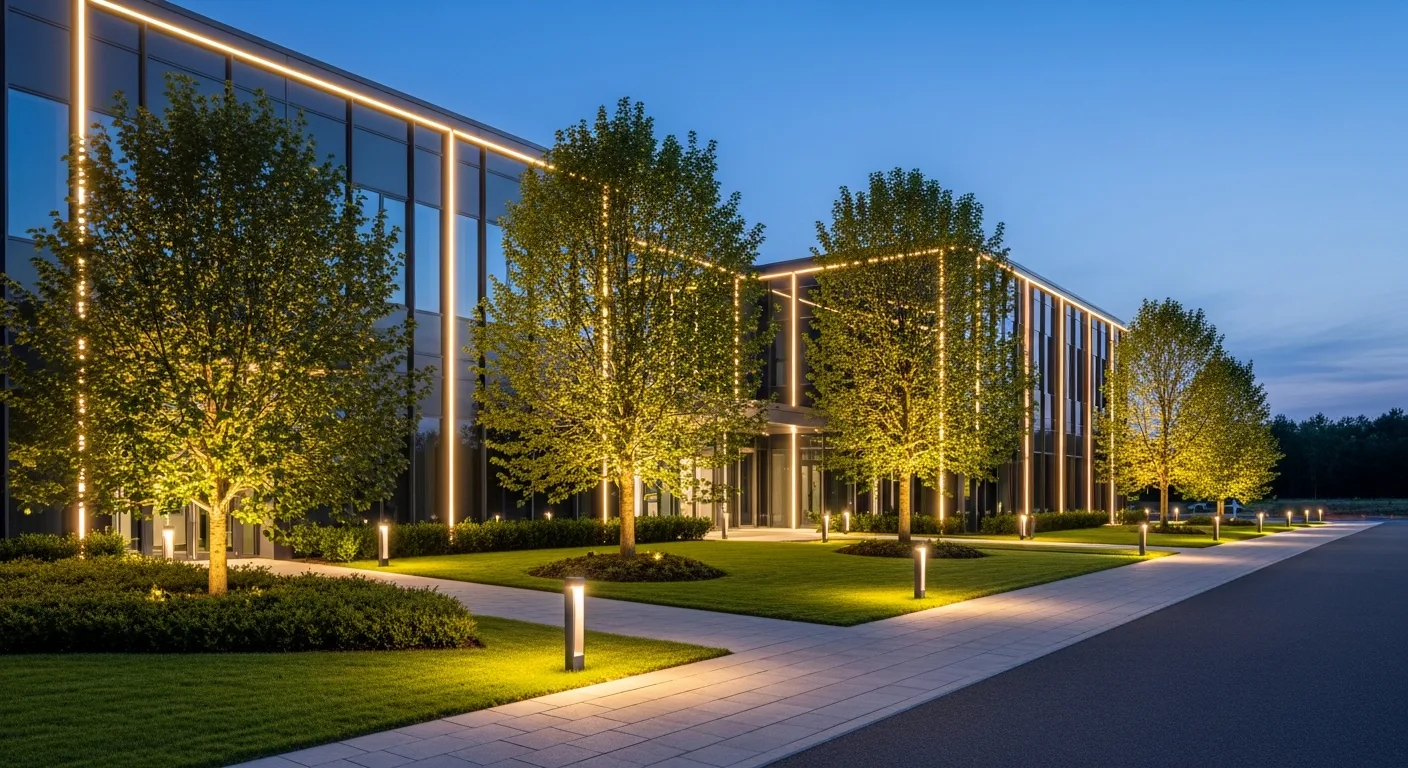
A dark storefront or an unlit office complex is a missed opportunity. In 2026, commercial landscape lighting has evolved beyond simple visibility; it is now a critical component of a business owner’s branding and security strategy. When a client approaches a building at night, the lighting tells him everything he needs to know about the professionalism and safety of the establishment. High-quality illumination highlights architectural features, guides visitors safely to the entrance, and creates an inviting atmosphere that encourages late-night foot traffic.
Investing in a professional setup ensures that a property remains functional and attractive long after the sun sets. By focusing on high-output LED technology and smart zoning, a business owner can significantly reduce his overhead while maximizing the visual impact of his exterior space.
Essential Lighting Techniques for Business Properties
Effective commercial lighting requires a layered approach. It is not about flooding the area with harsh glares, but rather about placing light where it serves a specific purpose. Here are the primary techniques used by top-tier designers:
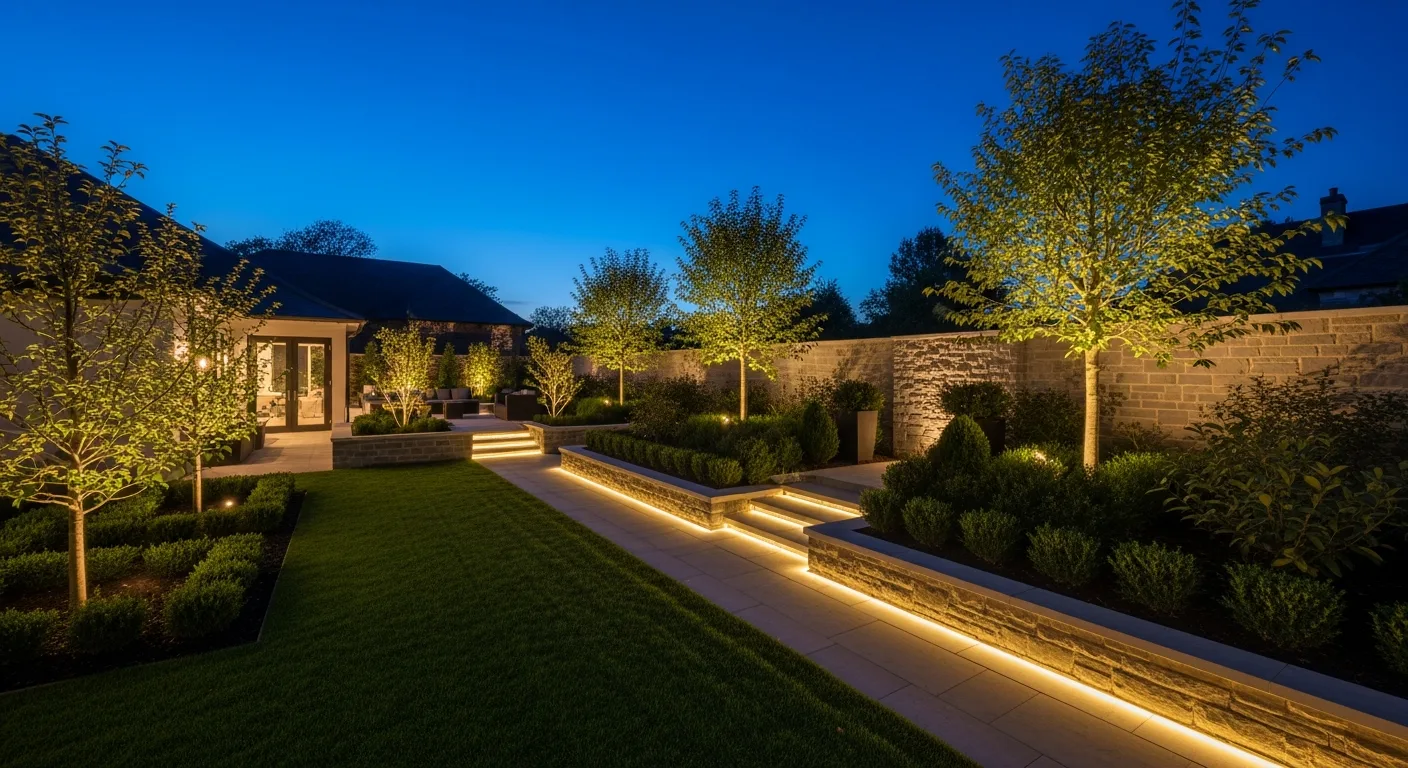
- Uplighting: Placing fixtures at the base of trees or architectural columns to direct light upward. This creates a sense of grandeur and emphasizes the height of the building.
- Path Lighting: Essential for safety, these low-profile fixtures ensure that every guest can see where he is walking, reducing the risk of trips and falls on the property.
- Moonlighting: Mounting lights high in trees to filter through branches, mimicking the soft glow of natural moonlight. This is particularly effective for outdoor seating areas or courtyards.
- Wall Washing: Providing a uniform glow across a large surface to eliminate shadows and make the building appear more expansive.
When choosing the right fixtures for high-traffic areas, durability is paramount. Commercial-grade brass or copper housings are preferred over plastic because they withstand the rigors of public environments and harsh weather conditions.
Security Benefits: Deterrence Through Illumination
Security is often the primary driver for installing commercial landscape lighting. Criminals thrive in shadows; by eliminating dark corners and unlit alleyways, a business owner protects his assets and his employees. Well-lit perimeters act as a psychological deterrent, signaling that the property is actively monitored and maintained.
Modern systems often include motion sensors that trigger higher brightness levels when movement is detected. This not only saves energy but also alerts security personnel to potential intruders. For those looking to maximize their protection, integrating lighting with modern security systems allows for clearer video footage, as cameras require adequate light to capture high-definition details and facial recognition data.
Energy Efficiency and Smart Controls in 2026
The shift toward sustainability has made LED systems the industry standard. In 2026, these bulbs offer incredible longevity, often lasting over 50,000 hours, which means less maintenance for the property manager. Furthermore, smart controllers now allow a business owner to manage his entire lighting grid from a smartphone or tablet.
He can set custom schedules, dim specific zones during off-hours to save on electricity, or change the color temperature to match seasonal branding. Astronomical timers are another vital tool; they automatically adjust the “on/off” times based on the local sunset and sunrise, ensuring the lights are never burning unnecessarily during daylight hours.
Maintenance and Long-Term Performance
Commercial systems face more wear and tear than residential setups. Regular maintenance is necessary to ensure the system continues to perform at its peak. This includes cleaning lenses to maintain light output, trimming overgrown foliage that may be blocking fixtures, and checking for wire exposure caused by landscaping tools or pests.
A proactive approach prevents small issues from turning into costly repairs. By hiring a professional to perform an annual audit, the business owner ensures his investment continues to provide a high return through improved curb appeal and unwavering safety.
Frequently Asked Questions
How much does commercial landscape lighting typically cost?
Costs vary based on the size of the property and the quality of the fixtures. A professional installation for a medium-sized commercial building generally starts at several thousand dollars, but the reduction in liability and increase in property value often offset the initial expense within a few years.
Are solar lights suitable for commercial use?
While solar technology has improved, most commercial applications still rely on hardwired low-voltage systems. Hardwired systems provide the consistent, high-intensity light required for security and professional aesthetics, which solar often cannot guarantee during cloudy periods or in shaded areas.
What is the best color temperature for a business exterior?
For most commercial properties, a color temperature between 3000K and 4000K is ideal. This range provides a clean, neutral white light that looks professional and improves visibility without appearing too blue or sterile.
Can I upgrade my existing halogen system to LED?
Yes, most older systems can be retrofitted with LED bulbs. This is a highly cost-effective way for a business owner to reduce his energy consumption by up to 80% without replacing all of his existing fixtures.