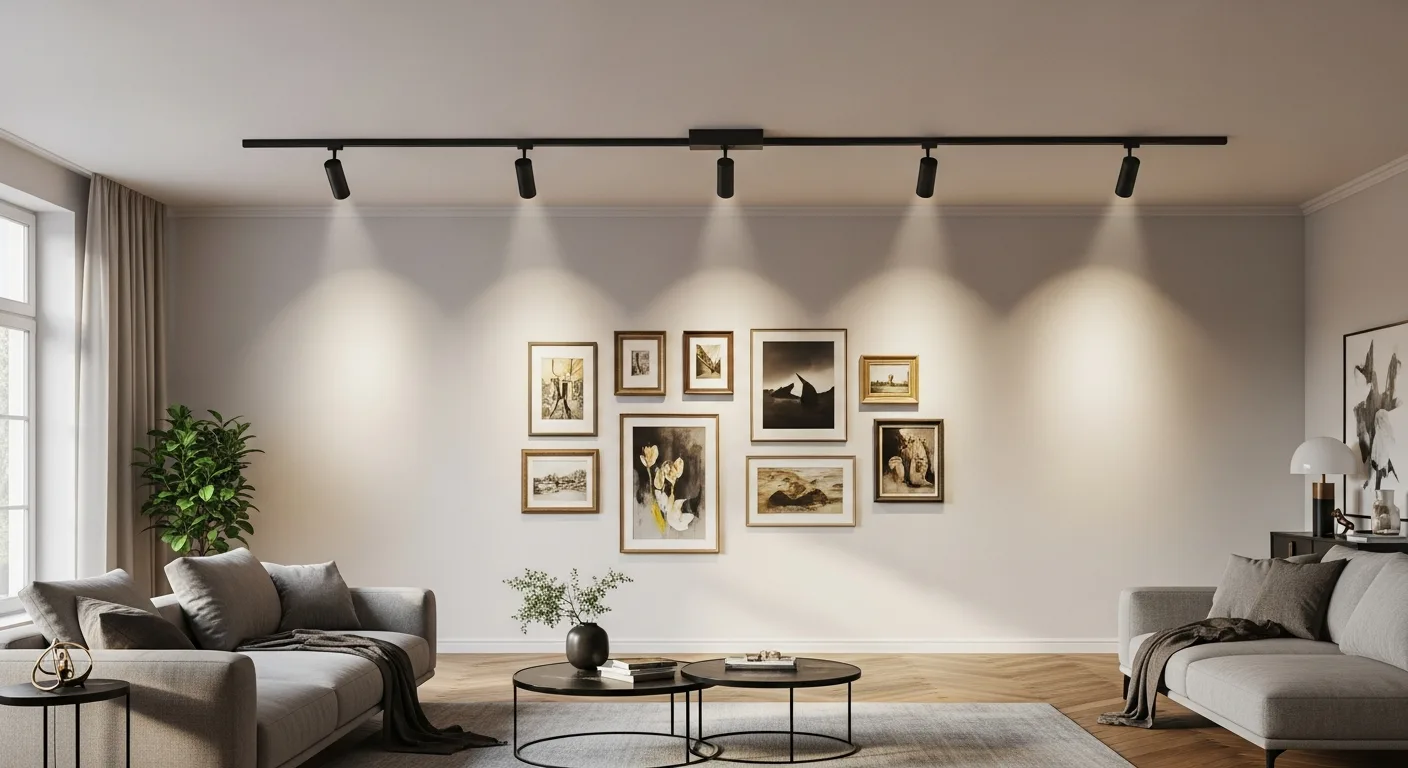
The Versatility of Modern Ceiling Track Lighting
Ceiling track lighting has evolved far beyond the bulky, industrial fixtures of the past. Today, it stands as one of the most flexible tools in a homeowner’s arsenal. Whether a man is looking to highlight a specific piece of wall art or needs focused illumination over a workbench, track systems provide a level of customization that standard recessed cans or flush mounts simply cannot match.
The primary advantage lies in the ability to move, swivel, and tilt individual heads along a live rail. This means as his furniture layout changes or his needs shift, he can reconfigure his light without ever touching a drill or calling an electrician back to the house. It is the ultimate solution for dynamic spaces that serve multiple purposes.
Choosing the Right Track System: H, J, or L?
Before purchasing fixtures, it is vital to understand that not all tracks are compatible. The industry standard is divided into three main types: H-type (Halo), J-type (Juno), and L-type (Lightolier). Each system has a unique contact configuration. If he buys an H-type head for a J-type track, it will not fit or function.
- H-Type: Features three wire contacts and is perhaps the most common standard found in hardware stores.
- J-Type: Uses two wide contacts and is often preferred for its sleek, low-profile design.
- L-Type: Known for a specific clip-in mechanism that provides a very secure fit, often used in commercial-grade residential setups.
For those looking to integrate these systems into specific rooms, exploring a comprehensive kitchen lighting layout can help determine if a linear track or a flexible monorail system better suits the cabinetry and island placement.
Strategic Placement for Maximum Impact
Effective lighting is about layers. Track lighting excels at providing accent and task lighting. To avoid harsh shadows, he should position the track approximately two to three feet away from the wall he intends to illuminate. This angle allows the light to wash down the surface, highlighting textures like brick or stone without creating a blinding glare.
In a workspace or hobby room, placing the track directly above the front edge of the desk ensures that his body doesn’t cast a shadow over his work. This precision is why many professionals prefer track systems over traditional standard bedroom fixtures when they need to balance aesthetics with high-functioning utility.
LED Technology and Color Temperature
The shift to LED has revolutionized track lighting. Modern LED track heads are smaller, run cooler, and consume a fraction of the energy used by old halogen bulbs. When selecting bulbs, he should pay close attention to the Color Rendering Index (CRI). A CRI of 90 or higher is essential for ensuring that the colors in his home look vibrant and true to life.
Color temperature also plays a massive role in the mood of the room. For a cozy, relaxed vibe, a warm 2700K to 3000K bulb is ideal. However, for a garage or a home office where focus is paramount, a cooler 4000K or 5000K bulb provides the crisp, daylight-mimicking clarity needed to stay productive.
Installation and Maintenance Essentials
While installing a track system is a straightforward DIY project for a man comfortable with basic wiring, safety is the priority. He must ensure the power is off at the breaker before removing old fixtures. Most track kits come with a power feed that connects directly to an existing junction box, making the transition from a single light to a multi-head track system relatively simple.
Maintenance is minimal but necessary. Dust tends to settle on the top of the track and the heads, which can lead to overheating or a duller light output. A quick wipe with a microfiber cloth every few months keeps the system looking sharp and performing at its peak. If he notices a flickering head, it is often just a matter of slightly adjusting the contact pins to ensure a firm connection with the rail.
Frequently Asked Questions
Can I mix different brands of track heads on one track?
Only if they share the same system type (H, J, or L). Brand names matter less than the track standard. Always check the underside of the track head for the contact pattern before buying.
Is track lighting considered outdated?
Not at all. While the bulky tracks of the 80s are gone, modern minimalist tracks with matte black or brushed nickel finishes are a staple in contemporary and industrial interior design.
Can track lighting be dimmed?
Yes, most modern LED track systems are dimmable. However, he must ensure that both the LED bulbs and the wall switch are compatible with each other to avoid buzzing or flickering.
How many heads can I put on a single track?
This depends on the wattage of the bulbs and the capacity of the circuit. With LEDs, he can typically fit 10 to 20 heads on a single standard track without exceeding the electrical load, though visual clutter usually limits him to 3-5 heads per four-foot section.