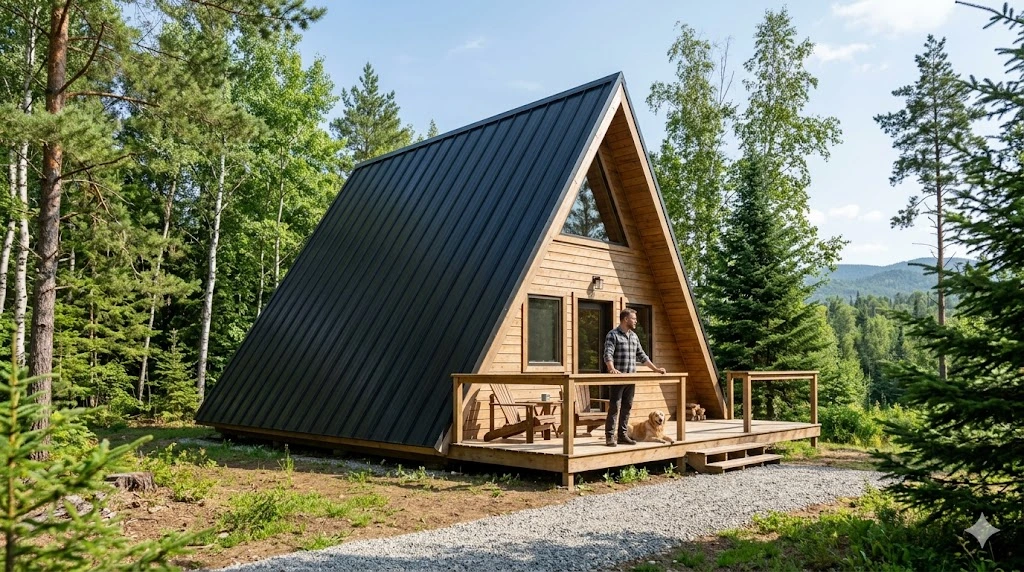
There is something undeniably magnetic about the silhouette of a classic a frame house. Whether it is nestled in a dense pine forest or perched on a rugged coastline, the steep, triangular roofline is an architectural icon that has transcended generations. In 2026, we are seeing a significant resurgence in these structures as homeowners prioritize efficiency, aesthetic uniqueness, and a closer connection to nature.
The Timeless Appeal of A-Frame House Designs
Modern a frame house designs have evolved far beyond the drafty, dark cabins of the 1960s. Today, architects are utilizing expansive glass walls to flood the interiors with natural light, turning the once-cramped lofts into airy sanctuaries. The geometric simplicity of a frame houses makes them incredibly versatile, allowing for everything from a minimalist retreat to a high-end luxury residence.
One of the primary reasons men are drawn to this style is the structural logic. When evaluating the structural integrity of a building, the A-frame stands out for its ability to handle heavy snow loads and high winds, as the weight is distributed directly to the ground along the roofline. This makes it a top choice for those building in extreme climates.
Choosing Between A-Frame House Kits and Custom Builds
If you are planning to join the A-frame movement, you generally have two paths: a ground-up custom build or utilizing a frame house kits. Both options have their merits depending on your budget and timeline.
- A-Frame Cabin Kits: These are perfect for the DIY-minded homeowner or those looking to save on architectural fees. These kits come with pre-cut lumber and specific instructions, significantly reducing the margin for error.
- A-Frame Prefab Homes: For those who want a faster turnaround, a frame prefab homes are manufactured off-site and delivered in sections. This method ensures high-quality control and can often be assembled in a matter of weeks.
- Custom Plans: If you have a specific vision for your property, investing in unique a frame house plans allows you to customize every square inch, from the mezzanine level to the outdoor decking.
Understanding the Cost to Build a Frame House
Budgeting is the most critical phase of any construction project. The cost to build a frame house can vary wildly based on location, materials, and finishes. On average, you can expect to pay anywhere from $150 to $300 per square foot. While the simple shape can save on some framing costs, the high-quality glass often required for the front and back facades can be a significant investment.
For many, the a frame tiny house represents the most cost-effective entry point. These smaller footprints allow for premium materials—like cedar siding or high-end insulation—without breaking the bank. If you are leaning toward smaller footprints, exploring efficient small home floor plans can help you visualize how to maximize every square inch of a compact A-frame.
Maximizing Space in an A-Frame Tiny House
The biggest challenge of the A-frame is the sloping walls, which can create “dead space” where the roof meets the floor. Smart builders use these areas for built-in storage, cabinetry, or even cozy reading nooks. In an a frame tiny house, every vertical foot counts. Utilizing a loft for the sleeping area is a standard practice that keeps the main floor open for living and dining. This verticality creates a sense of volume that makes a small footprint feel much larger than it actually is.
The Future of A-Frame Living
As we move through 2026, the focus on sustainable living and off-grid capabilities continues to grow. The roof of an A-frame is perfectly angled for solar panel installation, and the compact design is naturally easier to heat and cool when properly insulated. Whether you are looking at a frame house plans for a weekend getaway or a permanent residence, this architectural style offers a blend of nostalgia and forward-thinking design that is hard to beat.
Frequently Asked Questions
Are A-frame houses energy efficient?
Yes, because of their compact shape and the way heat rises into the loft areas, they can be very efficient. However, proper insulation and high-quality windows are essential to prevent heat loss through the large glass surfaces.
How long does it take to build an A-frame from a kit?
Depending on the complexity and the size of your crew, a frame cabin kits can be dried-in (made weatherproof) in as little as two to four weeks, with interior finishing taking another few months.
Do A-frame houses have good resale value?
Absolutely. Because of their iconic look and the current trend toward unique “staycation” style homes, A-frames often command a premium in the real estate market, especially in vacation destinations.
Can I build an A-frame house on any terrain?
A-frames are particularly well-suited for sloped or uneven terrain. Their footprint is often smaller than traditional ranch-style homes, requiring less excavation and allowing for creative foundation solutions like piers or stilts.