The Practical Benefits of Installing Awnings for Your House
Adding awnings for your house is one of the most effective ways a homeowner can immediately improve both the functionality and aesthetic appeal of his property. Beyond simple curb appeal, these structures provide a sophisticated layer of protection against the elements. A man who values his outdoor living space understands that a well-placed awning creates a comfortable microclimate, allowing him to enjoy his patio or deck even during the peak heat of a summer afternoon.
From an economic perspective, awnings are a strategic investment. They act as a barrier against solar heat gain, preventing the sun’s rays from penetrating windows and glass doors. This naturally reduces the load on his HVAC system, leading to noticeable savings on monthly cooling costs. Furthermore, a man looking to preserve his property should consider how exterior protection and awnings work together to shield the home from harsh UV rays that can fade indoor furniture and flooring.
Retractable vs. Fixed: Which Style Suits Your Lifestyle?
When selecting awnings for your house, the first major decision a homeowner faces is whether to choose a fixed or retractable model. Each serves a distinct purpose depending on his specific needs and the local climate.
- Fixed Awnings: These are permanent structures that provide constant shade. They are exceptionally sturdy and can be custom-fitted to unique architectural features. A man might prefer this option for a window that receives relentless sun year-round.
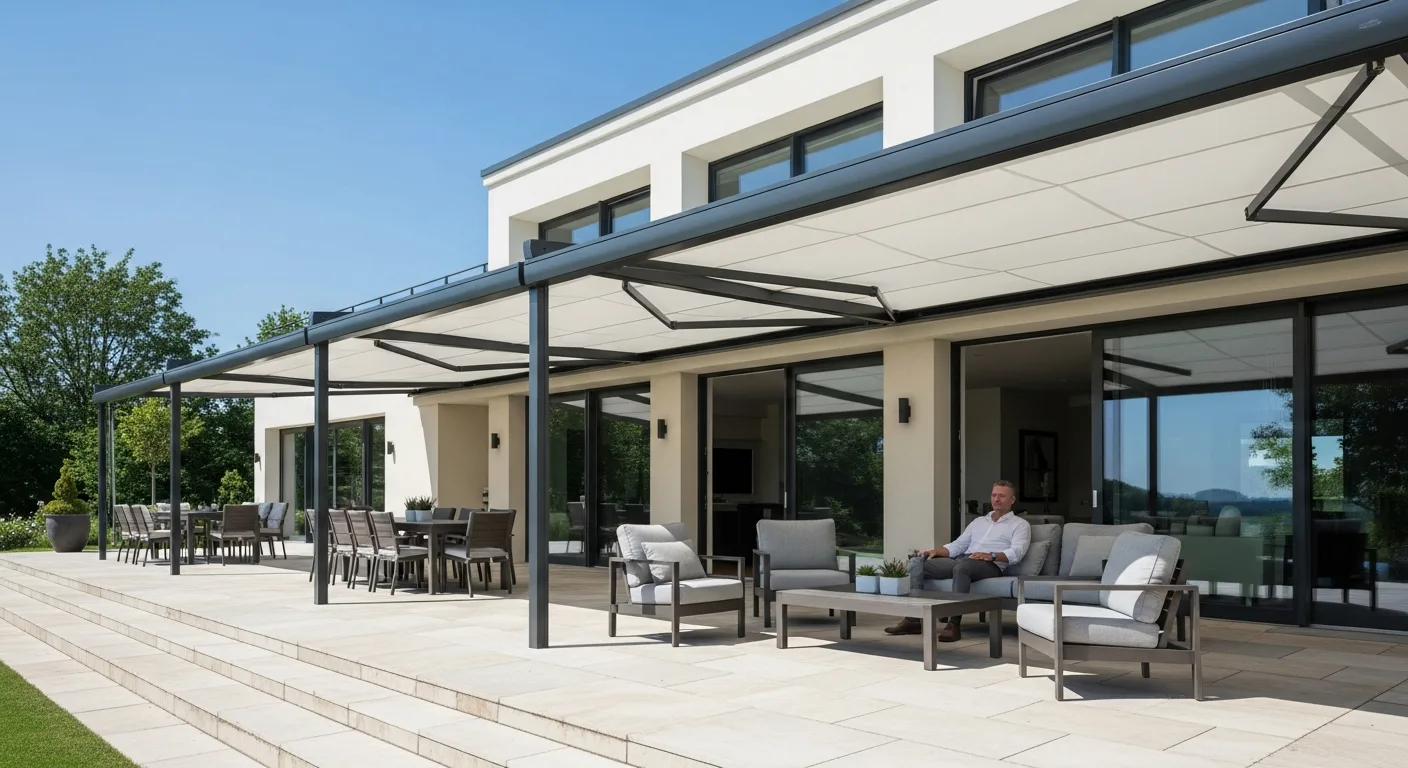
- Retractable Awnings: These offer the ultimate flexibility. Using either a manual crank or a motorized system, he can extend the awning when he needs shade and retract it when he wants to let in more light or protect the fabric from high winds.
If he is planning to upgrade his outdoor space, he might also look into a guide on decks and porches to ensure the awning integrates seamlessly with his existing structures. Motorized retractable versions have become increasingly popular in 2026, often featuring sensors that automatically retract the unit if they detect heavy vibrations from wind.
Selecting the Best Materials for Longevity
The durability of awnings for your house depends heavily on the materials used. A man should prioritize high-quality fabrics and frames that can withstand his local environment. The most common materials include:
Acrylic Fabrics
Acrylic is a top-tier choice because it is solution-dyed, meaning the color goes all the way through the fiber. This prevents fading and ensures the awning looks sharp for years. It is also highly resistant to mold and mildew, which is essential if he lives in a humid climate.
Polyester and Vinyl-Coated Fabrics
These materials are known for being waterproof and easy to clean. They are often heavier than acrylic, making them a solid choice for areas that experience frequent rain. A man who prefers a low-maintenance lifestyle will appreciate how easily dirt can be rinsed off these surfaces.
Aluminum Frames
For the structural component, aluminum is the gold standard. It is lightweight, which puts less stress on the house’s exterior walls, yet it is strong enough to support the weight of the fabric. Most importantly, it does not rust, ensuring the mechanism remains functional for the long haul.
Strategic Placement for Maximum Energy Efficiency
To get the most out of awnings for your house, a homeowner must think strategically about placement. The orientation of his home determines where the sun hits hardest. North-facing windows rarely need awnings, but south and west-facing windows are prime candidates for shade.
By installing awnings over these key areas, he can reduce solar heat gain by up to 65% on south-facing windows and as much as 77% on west-facing windows. This proactive approach to home management demonstrates his commitment to efficiency and comfort. He should also consider the drop or the angle of the awning; a steeper angle provides better shade for low-hanging afternoon sun, which is often the most intense.
Maintaining Your House Awnings Year-Round
A man takes pride in his home, and that includes the upkeep of his exterior features. Maintaining awnings for your house is relatively straightforward but requires consistency. He should aim to rinse the fabric at least once a month with a garden hose to prevent dirt from becoming embedded in the fibers.
Every few years, a deeper cleaning with a mild soap solution may be necessary. It is also vital that he inspects the mechanical parts of a retractable awning. Applying a silicone-based lubricant to the moving joints will keep the operation smooth and quiet. If he notices any small tears in the fabric, he should address them immediately with a repair kit to prevent the wind from turning a minor issue into a major replacement cost.
Frequently Asked Questions
Do awnings for your house really lower energy bills?
Yes, they can significantly lower cooling costs. By blocking direct sunlight before it enters the home, they reduce the internal temperature, allowing the homeowner to rely less on his air conditioning unit during the summer months.
What is the best material for a house awning?
Acrylic-coated polyester or 100% solution-dyed acrylic are generally considered the best materials. They offer a balance of UV resistance, breathability, and water repellency, ensuring the awning lasts for many years without fading.
Can a man install an awning by himself?
While a handy man can certainly install a smaller window awning, larger retractable patio awnings often require two or three people to handle the weight and ensure the unit is perfectly level. It is important to secure the brackets into the house studs for maximum safety.
How do I protect my awning during a storm?
If he has a retractable awning, he should always retract it during high winds or heavy snow. Fixed awnings are designed to be more permanent, but in areas prone to hurricanes, he may need to remove the fabric covers to prevent structural damage to his house.