Rethinking the High-End Outdoor Kitchen Myth
Building a high-end culinary space in the backyard often feels like a luxury reserved for those with deep pockets. However, a man can easily assemble a functional, rugged cooking area using basic materials and a bit of weekend sweat equity. You do not need a $20,000 contractor-led project to enjoy searing steaks under the open sky. By focusing on modular designs and repurposed materials, you can create a space that is both practical and impressive.
The Cinder Block Island: Rugged and Reliable
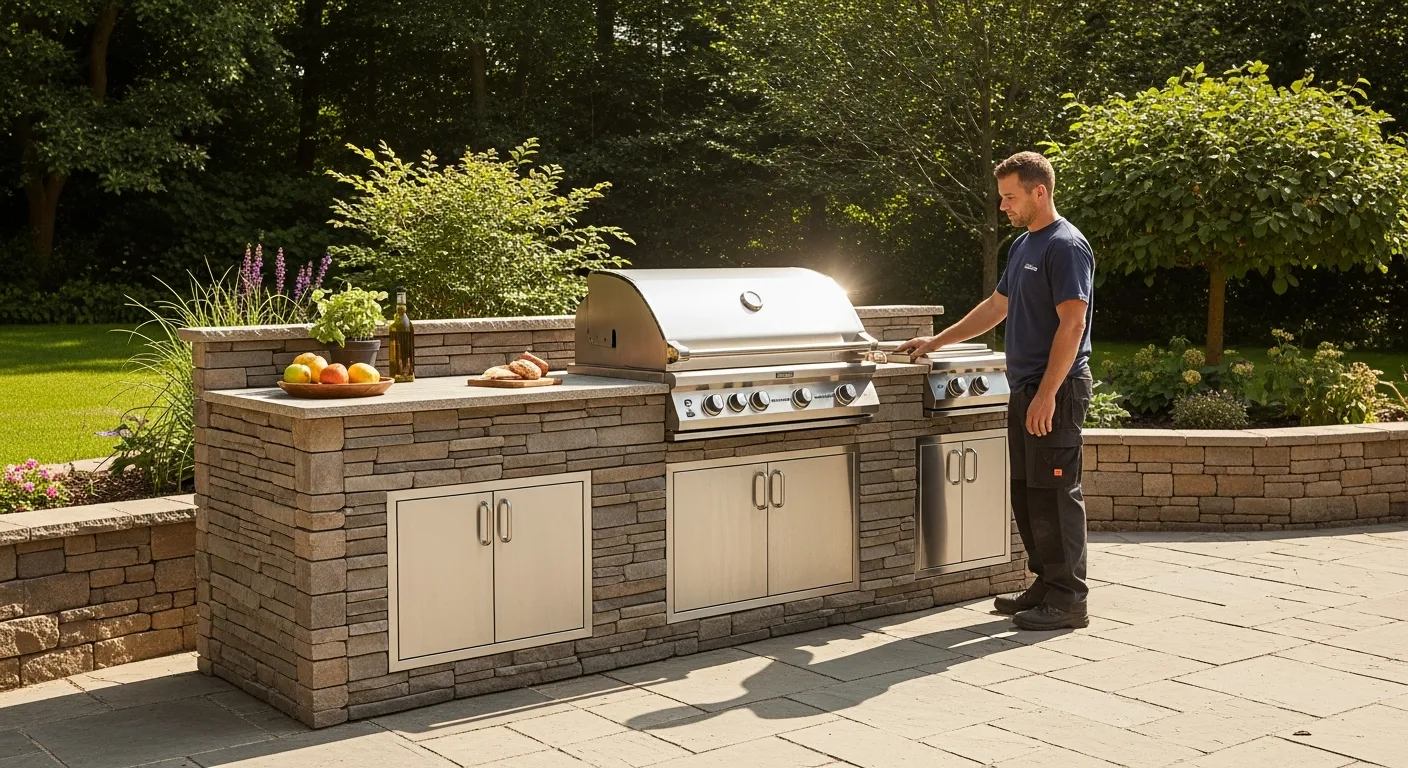
Cinder blocks are the unsung heroes of budget construction. They are fireproof, weather-resistant, and incredibly cheap. To build a simple island, stack the blocks to his desired height—usually around 36 inches—and secure them with heavy-duty construction adhesive. For the countertop, a smooth concrete paver or a piece of reclaimed granite provides a professional finish without the premium price tag.
He can leave the blocks raw for an industrial look or apply a thin coat of stucco for a more polished appearance. This setup provides a stable base for a drop-in charcoal grill or a portable propane burner.
Repurposing a Heavy-Duty Workbench
Sometimes the best outdoor kitchen isn’t built from scratch; it is adapted. A sturdy wooden workbench or a potting bench can serve as an excellent prep station. When selecting materials for your frame, choosing the best wood for outdoor furniture ensures your structure survives the humidity and rain without warping or rotting within the first season.
- Cedar and Redwood: Naturally resistant to insects and decay.
- Pressure-Treated Pine: The most cost-effective option for long-term durability.
- Teak: High-end but lasts a lifetime if maintained.
The Pallet Wood Kitchen: Sustainable and Low-Cost
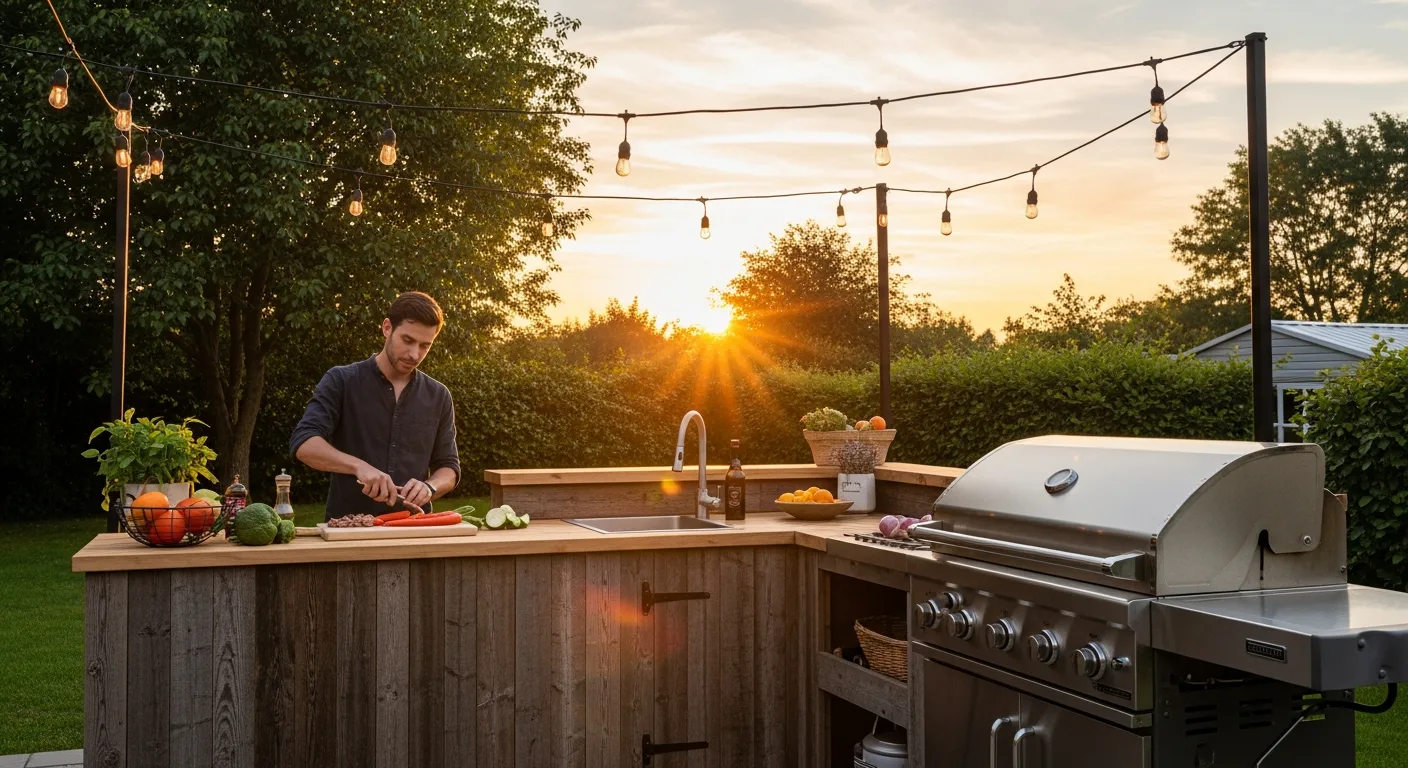
If he has access to heat-treated (HT) shipping pallets, he has the raw materials for a rustic outdoor bar and prep area. By dismantling the pallets and using the slats to skin a simple 2×4 frame, he creates a custom look for pennies. It is vital to ensure the pallets are marked with “HT” to avoid chemically treated wood near food preparation surfaces. A coat of exterior-grade sealant will keep the wood looking fresh and prevent splinters.
Portable Prep Stations and Rolling Carts
Not every outdoor kitchen needs to be a permanent fixture. A rolling stainless steel cart provides flexibility, allowing him to move the cooking station based on the wind direction or the size of the crowd. If he is working with limited space, consider integrating the kitchen into existing mobile home decks and porches to save on the cost of pouring a new concrete pad.
These carts often come with built-in shelves for spice racks, paper towel holders, and hooks for grilling tools, making them a highly efficient “all-in-one” solution for the minimalist griller.
Simple Plumbing: The Garden Hose Sink
A full-service sink with professional plumbing is often the most expensive part of an outdoor kitchen. He can bypass this cost by using a cold-water-only setup. A basic drop-in stainless steel sink can be connected to a standard garden hose using a simple adapter. For drainage, the waste line can be directed into a five-gallon bucket or a French drain system, provided he uses eco-friendly soap.
Essential Gear for a Minimalist Setup
To keep costs down, he should prioritize the essentials. A high-quality kettle grill or a flat-top griddle offers more versatility than a massive built-in gas range. Adding a magnetic tool strip to the side of the island keeps spatulas and tongs within reach, while a simple battery-powered LED light strip under the counter provides enough illumination for evening sessions without the need for an electrician.
Frequently Asked Questions
What is the cheapest material for an outdoor kitchen frame?
Pressure-treated lumber is generally the most affordable framing material. For those who want a non-combustible option, metal studs or stacked cinder blocks are cost-effective alternatives that offer superior fire safety near grills.
Do I need a permit for a simple outdoor kitchen?
If the kitchen is a freestanding, non-permanent structure without hardwired electrical or gas lines, a permit is rarely required. However, he should always check local zoning laws, especially if he plans to build a permanent roof or structure near property lines.
How do I protect a budget outdoor kitchen from the elements?
The most effective protection is a high-quality, fitted waterproof cover. Additionally, using exterior-grade stains on wood and ensuring all metal components are stainless steel or powder-coated will prevent rust and decay over time.