The Impact of a Statement Chandelier
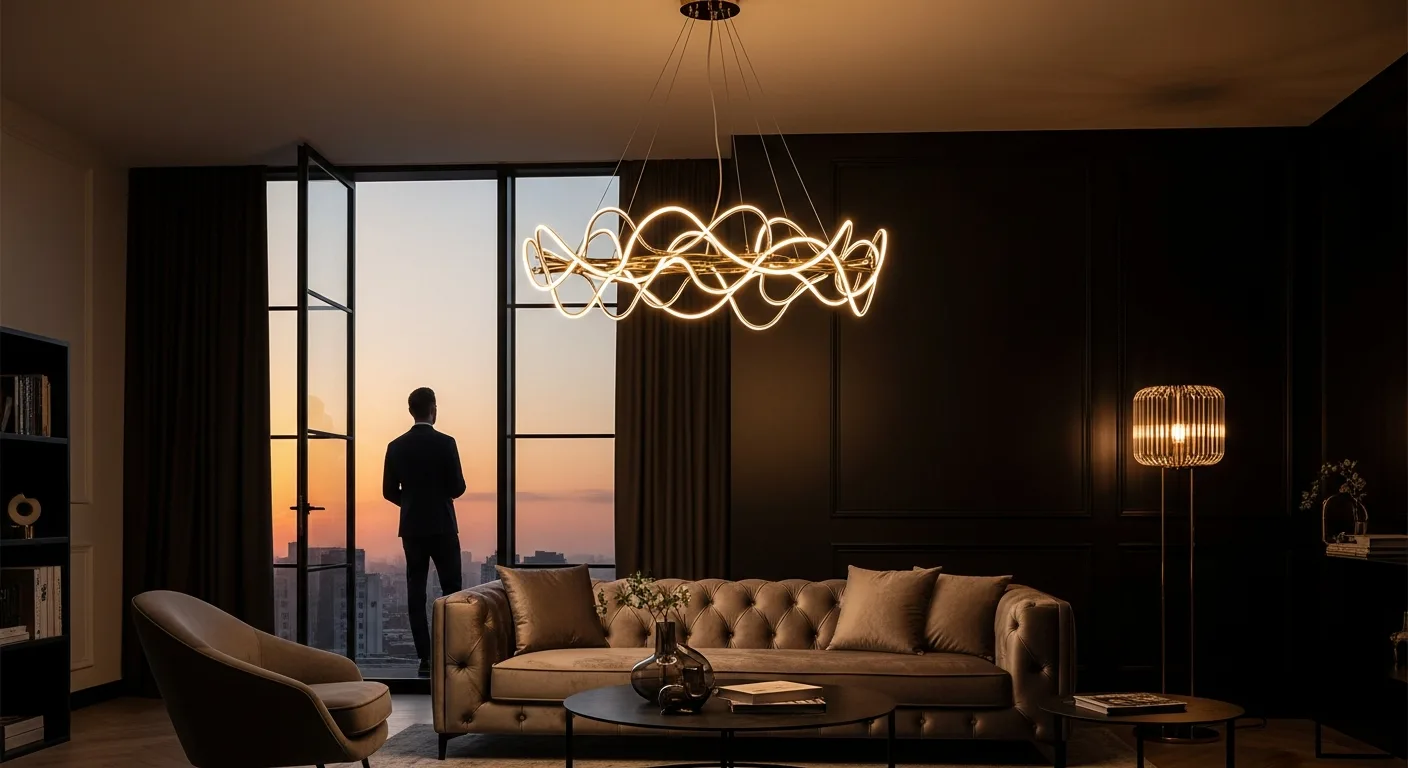
A living room without a focal point feels unfinished. When a man walks into his home, he wants the space to reflect his taste and command attention. A chandelier isn’t just a light source; it is a statement piece that anchors the entire room’s design. In 2026, the trend has shifted away from purely decorative fixtures toward functional art that balances raw materials with high-tech efficiency.
Choosing the right fixture requires more than just picking a design he likes. It involves understanding the geometry of the room and how light interacts with the furniture. A well-placed chandelier can make a ceiling feel higher and a room feel more expansive, provided the proportions are calculated correctly.
Calculating the Right Size and Scale
One of the most common mistakes is choosing a fixture that is either too small, making it look like an afterthought, or too large, which overwhelms the space. To find the ideal diameter for a living room chandelier, use this simple designer’s formula: Measure the length and width of the room in feet, add those two numbers together, and the sum is the ideal diameter of the chandelier in inches.
- Small Rooms (10′ x 10′): Look for a fixture around 20 inches in diameter.
- Medium Rooms (12′ x 14′): A 26-inch diameter works best.
- Large Rooms (15′ x 20′): He should aim for a 35-inch diameter or larger to fill the volume of the room.
Vertical space is equally important. For a standard 8-foot ceiling, the chandelier should hang approximately 30 to 36 inches above the coffee table. If the room is an open-concept space where people walk under the fixture, he must ensure there is at least 7 feet of clearance from the floor to the bottom of the light.
Matching Lighting Styles with Interior Themes
The style of the chandelier should complement the existing architecture. For a man who prefers a sleek, masculine aesthetic, industrial chandeliers featuring matte black finishes and Edison bulbs offer a rugged yet refined look. Conversely, if he is leaning into a more classic or opulent vibe, he might integrate art deco furniture in modern interiors to create a sophisticated, high-contrast environment where a tiered glass chandelier can truly shine.
Modern minimalism is also evolving. We are seeing a rise in “linear chandeliers”—long, horizontal fixtures that work exceptionally well in rectangular living rooms. These provide a wider spread of light and align perfectly with contemporary, low-profile seating arrangements.
Integrating Smart Lighting and Layers
A single light source is rarely enough to create a comfortable atmosphere. A chandelier provides the “ambient” layer, but it should be supported by task and accent lighting. In 2026, smart home integration is a standard expectation. He should ensure his chandelier is compatible with dimmable LED systems, allowing him to shift the mood from a bright, productive morning to a relaxed evening glow.
For those who have designed their space around home entertainment concepts, lighting control is vital. A chandelier that can be dimmed via a smartphone or voice command ensures that glare on the television is eliminated without leaving the room in total darkness. Using warm-spectrum bulbs (2700K to 3000K) will keep the living room feeling inviting rather than clinical.
Material Trends: Beyond Brass and Chrome
While polished chrome and brass remain staples, 2026 is seeing a surge in organic and mixed materials. Smoked glass, hand-forged iron, and even integrated wood elements are becoming popular for living room fixtures. These materials add texture to a room, making the lighting feel like a custom-built part of the home rather than a mass-produced accessory.
He should also consider the maintenance of these materials. Intricate crystal designs require frequent dusting to maintain their brilliance, while matte metal finishes are far more forgiving and suit a low-maintenance lifestyle. Choosing a fixture with easily accessible bulbs will save him significant frustration during routine upkeep.
Frequently Asked Questions
How do I know if a chandelier is too big for my living room?
If the fixture feels like it is crowding the walls or if he has to duck to walk around it, it is likely too large. Visually, a chandelier should occupy about 1/3 to 1/2 the width of the furniture piece it sits above, such as a coffee table.
Can I install a chandelier on a sloped ceiling?
Yes, but he will need a sloped-ceiling adapter or a fixture that uses a chain or cable suspension rather than a fixed stem. This allows gravity to pull the fixture straight down regardless of the ceiling’s angle.
Are LED chandeliers better than traditional ones?
LED chandeliers are superior in terms of longevity and energy efficiency. Many modern designs now feature integrated LEDs, meaning there are no bulbs to change for up to 50,000 hours of use, though he should ensure the color temperature is adjustable to suit his preference.
Should the chandelier be the only light in the room?
No. A chandelier should be part of a layered lighting plan. He should combine it with recessed cans for general brightness and floor lamps for reading or localized tasks to avoid harsh shadows.