Identifying the Common House Water Bug
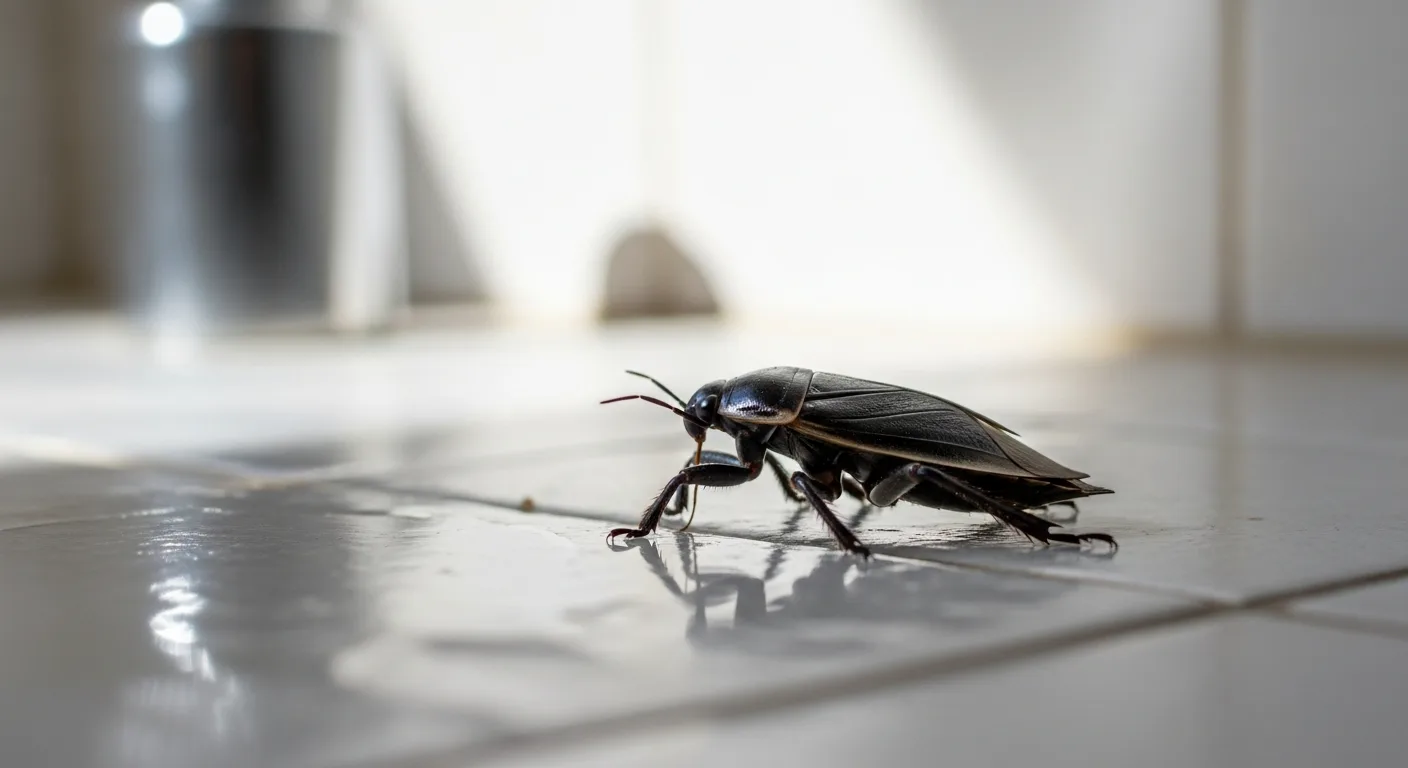
Finding a large, dark insect scurrying across the bathroom floor in the middle of the night is enough to make any homeowner uneasy. While many people use the term common house water bug as a catch-all phrase, it usually refers to one of two things: the Oriental cockroach or the Giant Water Bug. In most residential settings, he is likely dealing with the Oriental cockroach, a pest that thrives in damp, cool environments.
The Oriental cockroach is typically about an inch long, with a dark brown or nearly black, shiny body. Unlike other roaches, he doesn’t fly, and his wings are often stunted. On the other hand, a true water bug (from the Belostomatidae family) is much larger, sometimes reaching four inches, and possesses a painful bite. These true water bugs rarely stay indoors unless they were attracted by bright lights or brought in accidentally.
Why Water Bugs Invade Your Living Space
Water bugs are not in a home because of poor hygiene alone; they are there because they found a reliable source of moisture and organic matter. He will often find them in basements, crawl spaces, or near leaky pipes under the kitchen sink. These insects are highly dependent on water and can only survive a few days without it.
- Leaky Plumbing: Even a small drip under a utility sink provides enough hydration for a colony.
- High Humidity: Basements with poor ventilation create the perfect damp atmosphere.
- Decaying Matter: They feed on garbage, rotting leaves, and starchy materials.
If he wants to take a hands-on approach to clearing his property, he can utilize various diy pest control methods to target these pests at the source before the infestation grows.
Effective Strategies for Elimination
Eliminating the common house water bug requires a multi-pronged attack. He should start by drying out the environment. Using a dehumidifier in the basement or fixing a leaky trap under the shower can do more to kill off water bugs than any spray. Without water, their metabolism fails, and they either leave or die.
Boric acid is a highly effective, low-toxicity tool for the homeowner. He should dust a thin layer of the powder in cracks, crevices, and behind appliances. When the insect walks through the powder, it sticks to his legs; when he grooms himself later, he ingests the poison. Bait stations are also useful, as they allow the insect to carry the slow-acting insecticide back to the nest, effectively wiping out the hidden population.
Long-Term Prevention Tactics
Once the immediate threat is gone, the focus must shift to exclusion. He should inspect the exterior of his home for any gaps where pipes enter the walls. Using expandable foam or caulk to seal these entries prevents new bugs from wandering in from the sewers or mulch beds. Understanding the habits of common house bugs and how to identify them is the first step in maintaining a clean, pest-free environment.
Regular maintenance is key. He should ensure that floor drains in the laundry room or basement are used frequently or filled with a bit of mineral oil to prevent the water trap from drying out, which otherwise acts as an open highway for water bugs to enter from the sewer system.
Frequently Asked Questions
Are water bugs dangerous to humans?
While the Oriental cockroach (often called a water bug) doesn’t bite, he can carry bacteria and pathogens on his legs, potentially contaminating food surfaces. True water bugs can bite if handled, which is quite painful but not venomous.
How do I tell the difference between a water bug and a German cockroach?
Size and color are the main indicators. The common house water bug (Oriental roach) is much larger, darker, and prefers cold, wet areas. The German cockroach is smaller, light brown with two dark stripes on his head, and prefers warm, dry areas like kitchens.
Can vinegar kill water bugs?
Vinegar is an excellent cleaning agent that can remove the scent trails left by insects, but it is not an effective insecticide. He should use it to clean surfaces, but rely on baits or boric acid for actual elimination.
Do water bugs come up through the drains?
Yes, they often travel through sewer lines and enter a home through drains, especially if the P-trap has dried out. Running water regularly through all drains can help prevent this.