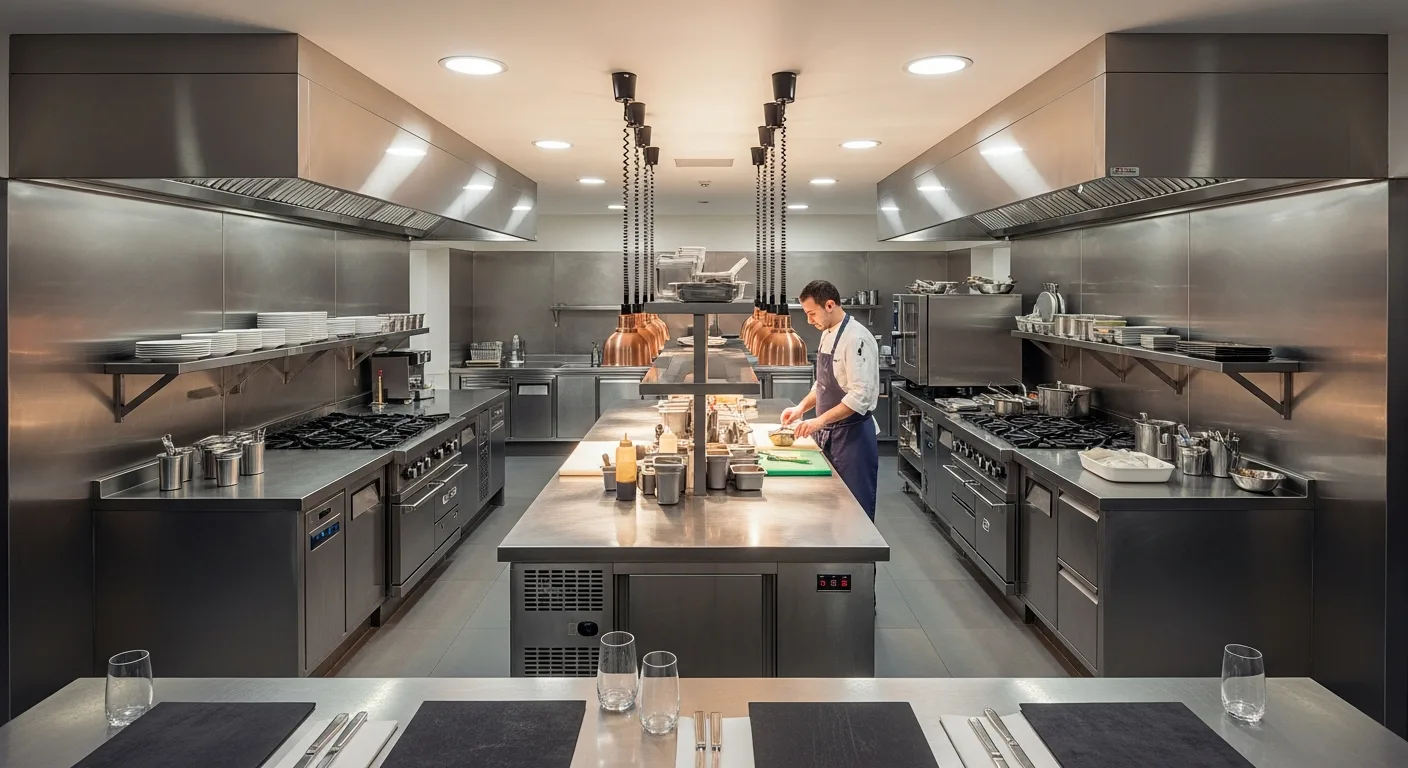
The Foundation of a High-Output Commercial Kitchen
A professional kitchen is a high-pressure environment where every second counts. If a chef has to take three extra steps to reach his prep station, those seconds compound into lost revenue and frustrated customers. Commercial kitchen design is not about aesthetics; it is about engineering a machine that facilitates speed, safety, and precision.
The most successful restaurateurs understand that the layout must dictate the movement of the staff. By prioritizing a logical flow from the receiving dock to the service window, the owner ensures his team operates at maximum capacity without unnecessary physical strain.
Strategic Layout Patterns for Maximum Efficiency
Choosing the right configuration depends entirely on the menu and the volume of output. There is no one-size-fits-all solution, but several proven patterns dominate the industry:
- Assembly Line Layout: Ideal for high-volume, limited-menu establishments like pizzerias or sandwich shops. It follows a linear path from prep to cooking to plating.
- Zone-Style Layout: The kitchen is divided into specific blocks for different tasks—soup and salad, frying, grilling, and baking. This keeps the specialist in his area, reducing cross-traffic.
- Island Layout: The cooking equipment sits in the center, while prep and cleaning stations line the perimeter. This creates a central hub for the executive chef to oversee all operations.
Implementing strategic spatial organization is vital for maintaining order during the dinner rush. When a lead cook can pivot from his grill to his plating station without crossing paths with a dishwasher, the risk of accidents drops significantly. For those looking to apply similar logic to smaller scales, strategic spatial organization principles can offer a blueprint for minimizing wasted movement.
Equipment Selection and Integration
The hardware is the heartbeat of the kitchen. Every piece of equipment must be industrial-grade and positioned for immediate access. When a chef is selecting high-performance cooking units, he must consider the utility requirements—gas lines, electrical loads, and water access—before finalizing the floor plan.
Integrating the right tools involves more than just buying the most expensive oven. It requires a deep understanding of the menu’s technical demands. For instance, a steakhouse requires heavy-duty charbroilers with high-capacity ventilation, while a bakery focuses on humidity-controlled proofers and convection ovens. Detailed insights on choosing the right gear can be found in our commercial kitchen appliances guide, which breaks down the durability and output metrics needed for professional use.
Ventilation, Safety, and Sanitation Standards
Heat and smoke are the enemies of a productive kitchen. A robust HVAC and exhaust system is non-negotiable. The hood must be sized correctly to capture all effluent from the cooking line, ensuring the air remains breathable and the temperature stays manageable for the staff. A chef who is overheating is a chef who is prone to making mistakes.
Safety protocols must be baked into the design:
- Fire Suppression: Automatic systems must be installed over all open-flame and high-heat equipment.
- Non-Slip Flooring: Use industrial-grade quarry tile or epoxy with grit to prevent falls in wet areas.
- Grease Traps: Properly sized and accessible traps are essential for plumbing health and local code compliance.
Optimizing the Prep and Storage Zones
Storage is often the most overlooked aspect of commercial kitchen design. Dry storage, walk-in coolers, and freezers should be located near the delivery entrance to minimize the distance staff must carry heavy crates. Inside the kitchen, reach-in refrigeration at the prep stations keeps ingredients at the chef’s fingertips, maintaining the cold chain and reducing the time he spends walking to the main cooler.
Stainless steel remains the gold standard for prep tables due to its non-porous nature and ease of sanitization. Every surface should be easy to wipe down, and equipment should be on heavy-duty casters to allow for deep cleaning of the floors and walls at the end of each shift.
Frequently Asked Questions
What is the most important factor in commercial kitchen design?
Workflow efficiency is the most critical factor. A design that minimizes steps and prevents cross-traffic between the cooking line and the dishwashing station will always outperform a poorly planned space, regardless of the equipment quality.
How much space should be allocated for a commercial kitchen?
Generally, the kitchen should occupy about 25% to 30% of the total restaurant square footage. This ensures the back-of-house has enough room to operate without sacrificing too much seating capacity in the front-of-house.
What are the legal requirements for a professional kitchen?
Requirements vary by jurisdiction but typically include specific fire suppression systems, grease trap installations, health department-approved surfaces, and adequate ventilation. Always consult with a local building inspector before starting construction.