The Pillars of Professional Cutlery
For the man who views his kitchen as a sanctuary of precision, the quality of his tools is non-negotiable. A superior knife is not merely a piece of metal; it is a finely tuned instrument that dictates the rhythm of his preparation. In 2026, the market for high-end cutlery has expanded, offering a blend of traditional craftsmanship and metallurgical innovation. Selecting the right brand requires an understanding of his specific needs, whether he prioritizes the rugged durability of Western steel or the surgical sharpness of Eastern blades.
German Engineering: The Workhorses of the Kitchen
German brands are legendary for their resilience. These knives are typically forged from softer steel than their Japanese counterparts, allowing them to withstand heavy-duty tasks like breaking down a chicken or hacking through thick-skinned vegetables without chipping. For a man who wants a reliable partner for his daily culinary battles, German steel remains a premier standard.
Wüsthof: The Standard of Solingen
Wüsthof has remained a family-owned powerhouse for generations. His choice of a Wüsthof Classic means he is getting a blade forged from a single piece of high-carbon stainless steel. The full tang and triple-riveted handle provide a balance that feels substantial in his palm, giving him total control over every slice. While he organizes his culinary station, he might also consider the best kitchen appliances for small spaces to maximize the efficiency of his workspace.
Zwilling J.A. Henckels: Versatility and Durability
Known for their friodur ice-hardening process, Zwilling knives offer exceptional corrosion resistance. The Pro series, designed with a unique curved bolster, encourages a professional pinch grip, allowing him to work for hours without fatigue. These are the knives he passes down to his son, built to survive decades of constant use.
Japanese Craftsmanship: Precision and Artistry
Japanese knife brands focus on high-performance edges and lightweight designs. Often featuring harder steel, these blades can be sharpened to a much finer angle, making them ideal for delicate tasks like sashimi or paper-thin vegetable slices.
Shun Cutlery: The Beauty of Damascus Steel
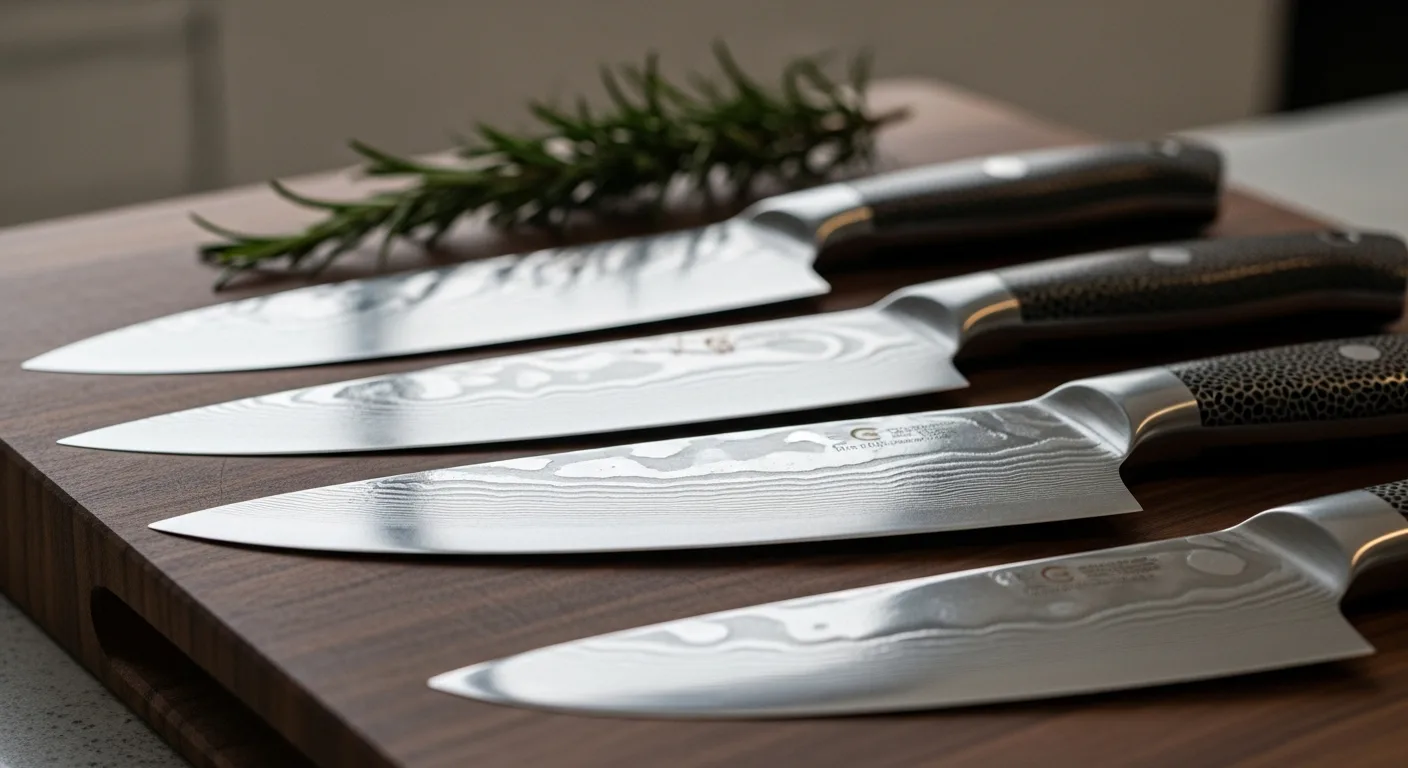
Shun is the go-to brand for a man who appreciates the aesthetics of his tools as much as their performance. The Damascus cladding on a Shun Classic is not just for show; it helps the blade glide through food by reducing friction. The D-shaped handle is specifically designed to fit comfortably in his hand, providing a secure grip during intricate work.
Global: Modern Minimalist Design
Global knives are easily identified by their all-steel construction and signature dimpled handles. Because they are made from a single piece of metal, they are incredibly hygienic and durable. The lightweight nature of a Global knife allows him to move with speed and agility, which is perfect for high-volume prep work in a fast-paced environment.
Key Factors He Should Consider Before Buying
- Steel Type: High-carbon steel holds an edge longer but requires more maintenance to prevent rust. Stainless steel is more forgiving for the average user.
- Tang: A full tang, where the metal extends to the end of the handle, offers superior balance and structural strength.
- Blade Geometry: Does he prefer the rocking motion of a Western chef’s knife or the straight-edge precision of a Santoku?
- Handle Comfort: The knife must feel like a natural extension of his arm. He should look for ergonomic designs that prevent slipping even when wet.
The precision required for a perfect dice is a skill he hones over time, much like the attention to detail found in a comprehensive at-home espresso machine guide for the coffee enthusiast who demands excellence in every aspect of his morning ritual.
Frequently Asked Questions
How often should he sharpen his kitchen knives?
A serious cook should hone his blade with a steel rod every few uses to realign the edge. For actual sharpening, he should use a whetstone or professional service every 6 to 12 months, depending on how often he puts the tool to work.
Why are Japanese knives considered superior by some chefs?
Japanese knives are often made from harder steel (higher on the Rockwell scale), which allows them to hold a sharper, thinner edge. This makes them superior for precision cutting, though they can be more brittle than the thicker German knives.
Can he put high-quality knives in the dishwasher?
No. He should never put a premium knife in the dishwasher. The high heat, harsh detergents, and movement can damage the blade edge and the handle material. Hand-washing and immediate drying are essential to preserve his investment.