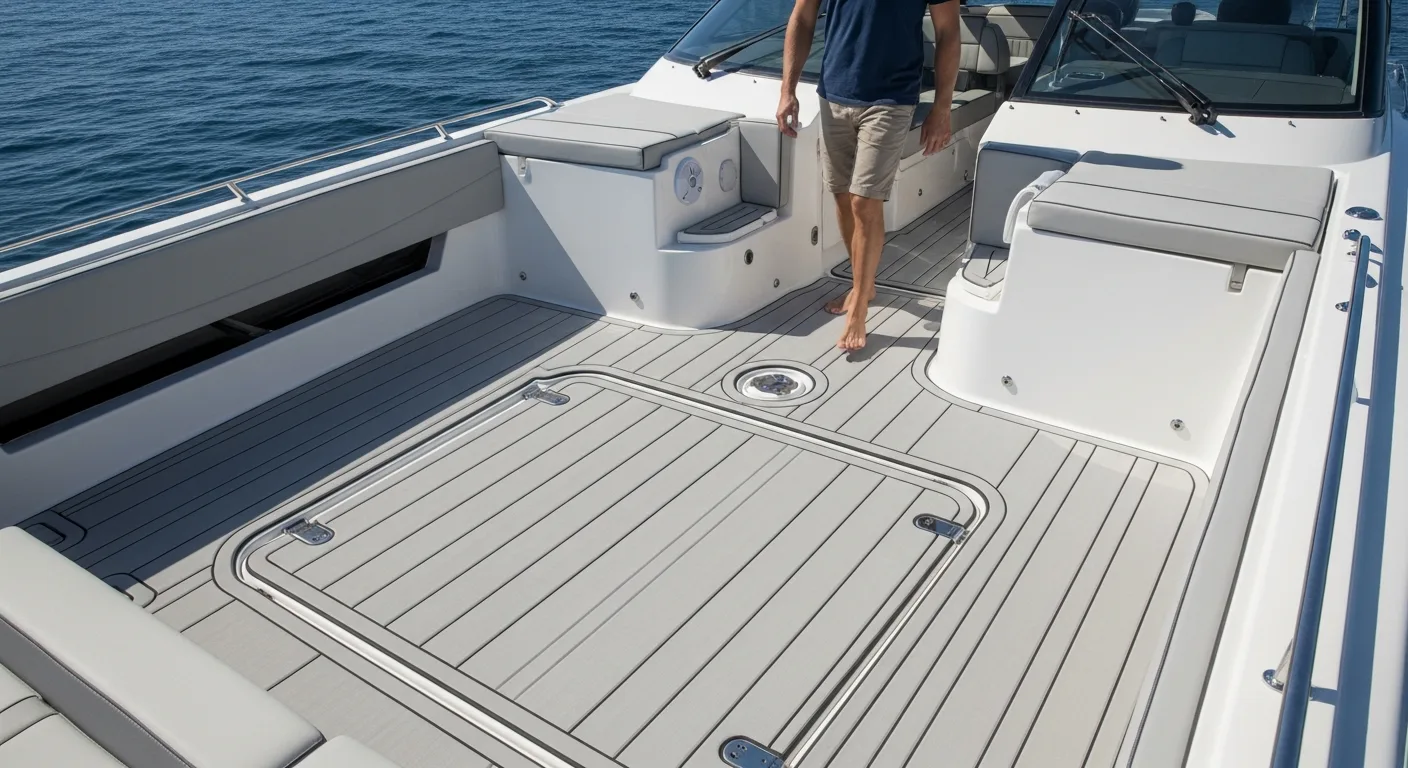
The Shift Toward Marine Foam Decking
Standing on a vibrating boat deck for eight hours straight is a recipe for back pain and sore joints. For years, boaters relied on marine carpet that stayed soggy for days or textured fiberglass that felt like sandpaper underfoot. Boat flooring foam, specifically Ethylene-Vinyl Acetate (EVA), has fundamentally changed how a man experiences his time on the water. It provides a cushioned, non-skid surface that stays cool even under the blistering midday sun.
Unlike traditional materials, high-quality foam decking is closed-cell. This means it does not absorb water, fish blood, or spilled fuel. If he is looking to modernize an older center console or simply wants to save his knees during a long fishing trip, foam is the most logical upgrade available in 2026.
Why EVA Foam Outperforms Carpet and Vinyl
The primary advantage of foam is its shock absorption. Much like selecting the right home gym setup flooring, boat foam provides essential cushioning that protects a man’s skeletal system from the constant pounding of chop and engine vibration.
- Heat Resistance: Darker fiberglass decks can reach temperatures that blister bare feet. Foam acts as an insulator, keeping the surface touchable even in tropical climates.
- Traction: When the deck gets sprayed with salt water or fish slime, foam maintains its grip. When comparing marine options to various bathroom flooring ideas, the priority remains the same: superior slip resistance in high-moisture environments.
- Noise Dampening: Foam absorbs sound rather than reflecting it. This is a massive benefit for the stealthy angler who doesn’t want to spook fish by dropping a lead weight or a pair of pliers on the deck.
Choosing the Right Thickness and Density
Not all boat flooring foam is created equal. Most premium brands offer a dual-layer system, typically 6mm thick. The bottom layer provides the primary color and adhesive bond, while the top layer is CNC-routed to reveal patterns like faux teak or hexagonal grids.
For heavy-duty use, he should look for a high-density foam. Lower-density foams might feel softer initially, but they compress over time and lose their rebound. A 9mm thickness is often preferred for helm stations where the captain spends the majority of his time standing. This extra thickness provides a noticeable difference in fatigue reduction by the end of the day.
DIY Installation: Getting a Professional Finish
He doesn’t need to hire a professional to get a factory-look finish. The secret to a successful installation lies entirely in the preparation of the subfloor. Any wax, oil, or salt residue will compromise the pressure-sensitive adhesive (PSA) used to bond the foam to the fiberglass.
Step 1: Deep Clean. Use a degreaser followed by a thorough wipe-down with 91% isopropyl alcohol. The surface must be bone dry and surgically clean.
Step 2: Templating. Use clear Mylar plastic or heavy-duty paper to trace the deck sections. He should leave a small gap (about 1/2 inch) around hardware like hinges and pedestals to prevent the foam from peeling up when those parts move.
Step 3: The Peel-and-Stick. Start from one edge and slowly peel the backing while pressing the foam down with a laminate roller. This ensures no air bubbles are trapped, which could cause the adhesive to fail later.
Maintenance and Long-Term Durability
While foam is durable, it isn’t indestructible. To get the maximum lifespan out of his investment, he should avoid using harsh chemicals like bleach or acid-based cleaners. A simple mixture of mild dish soap and water, along with a medium-stiff brush, is usually enough to lift dirt from the pores.
UV exposure is the biggest enemy of foam. While modern EVA foams contain UV inhibitors, keeping the boat covered when not in use will prevent the colors from fading and the material from becoming brittle. If he notices a corner lifting, he can easily repair it using a marine-grade contact cement rather than replacing the entire sheet.
Frequently Asked Questions
How long does boat flooring foam typically last?
With proper care and UV protection, a high-quality foam deck will last between 5 to 7 years. Boats kept in covered slips or garages often see even longer lifespans.
Can I install foam over existing non-skid patterns?
Yes. The adhesive used on premium marine foam is designed to fill the small voids in molded-in non-skid patterns, creating a very strong mechanical bond.
Does the foam get stained by fish blood?
Because it is closed-cell, it is highly resistant to staining. However, he should rinse the deck as soon as possible after a catch to ensure no organic material dries into the textured surface.
Is it difficult to remove if I want to change the color?
Removal requires some elbow grease. He will need a plastic scraper and an adhesive remover like Goo Gone or a heat gun to soften the glue. It won’t damage the gelcoat if done carefully.