The Shift Toward Concrete Floors in Modern Homes
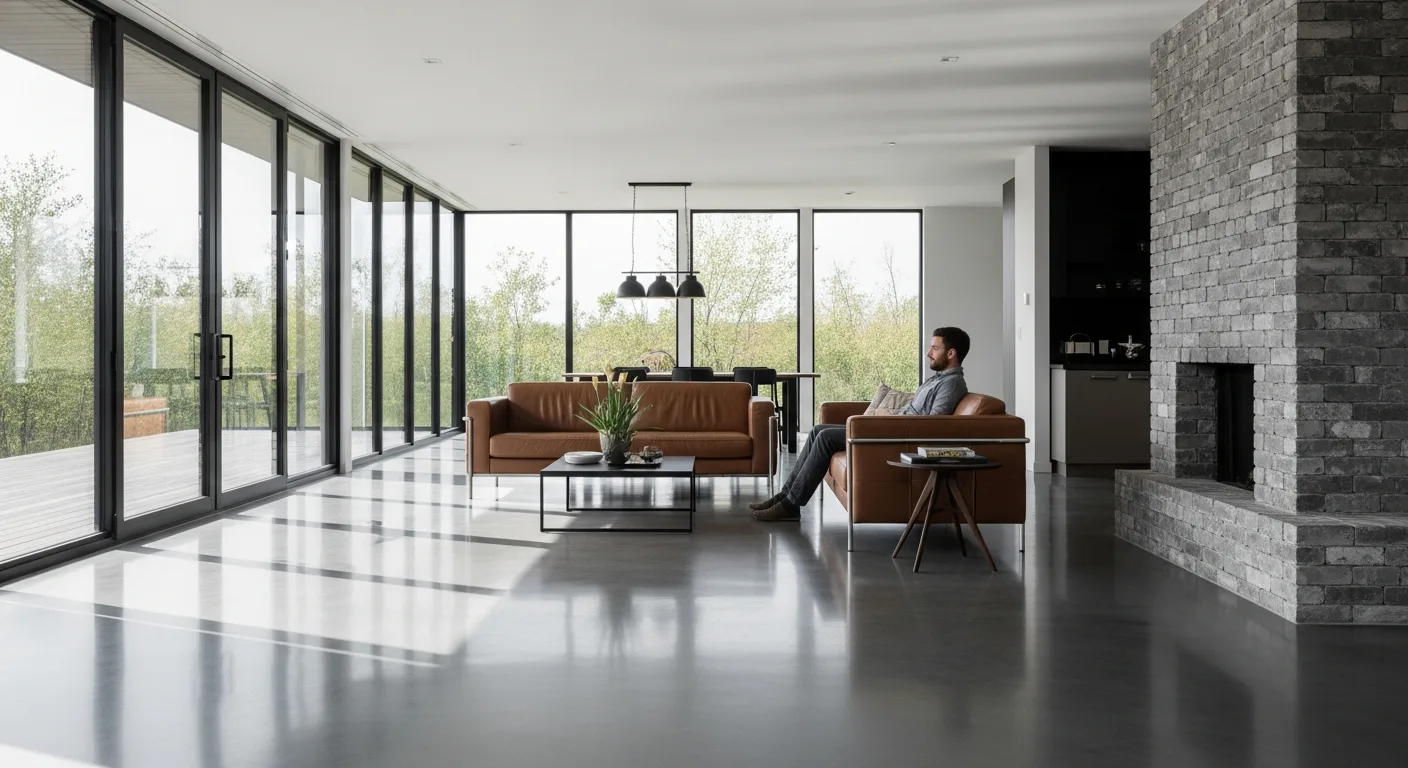
Concrete has officially moved from the garage and basement into the main living areas of the modern home. For the homeowner who values a minimalist, industrial, or contemporary aesthetic, concrete floors in a house offer a level of sophistication that traditional materials often struggle to match. He no longer sees concrete as a cold, unfinished slab, but as a versatile canvas that can be polished to a mirror-like shine or stained to mimic natural stone.
Beyond the visual appeal, the primary driver for this trend is sheer durability. A man who invests in his property wants a floor that can withstand heavy foot traffic, moving furniture, and the occasional dropped heavy object without denting or scratching. Concrete delivers this resilience better than almost any other material on the market today.
Types of Interior Concrete Finishes
Choosing concrete doesn’t mean settling for a dull gray surface. There are several ways a homeowner can customize the look to fit his specific style:
- Polished Concrete: This involves grinding the surface with diamond-impregnated disks. He can choose the level of sheen, from a matte finish to a high-gloss reflection that brightens the entire room by bouncing light.
- Stained Concrete: Using acid-based or water-based stains, he can achieve deep, translucent colors. This process creates a variegated look similar to marble or wood grain, ensuring no two floors are exactly alike.
- Epoxy Coatings: Ideal for high-utility areas, epoxy provides a thick, protective layer that is resistant to chemicals and moisture. This is a popular choice when a man is planning his home gym setup, as it handles heavy equipment and sweat with ease.
- Stamped Concrete: While more common outdoors, interior stamping can create textures that mimic slate, brick, or even hardwood planks.
Thermal Mass and Energy Efficiency
One of the most overlooked advantages of concrete floors in a house is their thermal mass. Concrete has the ability to absorb, store, and slowly release heat. In the winter, if his home has large south-facing windows, the floor will soak up the sun’s rays during the day and radiate that warmth back into the room at night. This natural temperature regulation can significantly lower his monthly utility bills.
To maximize comfort, many men are now opting for radiant floor heating. By embedding hydronic tubes or electric cables directly into the concrete slab before it is poured, he can enjoy a consistent, silent warmth that rises from the ground up. This eliminates the need for forced-air systems that often circulate dust and allergens throughout the house.
Maintenance and Long-Term Care
Concrete is remarkably low-maintenance, but it is not “no-maintenance.” To keep the floor looking pristine, he should follow a simple routine:
- Sealing: A high-quality sealer should be applied every 2 to 5 years, depending on the volume of traffic. This prevents moisture penetration and protects against stains.
- Dust Mopping: Regular sweeping or dust mopping prevents fine grit from acting like sandpaper on a polished surface.
- pH-Neutral Cleaners: When mopping, he must avoid acidic cleaners like vinegar or bleach, which can etch the surface and dull the shine over time.
In areas prone to spills, such as the kitchen or when selecting bathroom flooring, ensuring a proper non-slip additive is mixed into the sealer is a smart move for safety without sacrificing the sleek look of the stone.
Cost Comparison: Concrete vs. Traditional Flooring
When evaluating the budget, concrete is often more cost-effective in the long run. While the initial installation of a decorative concrete floor might be comparable to high-end hardwood or tile (ranging from $8 to $15 per square foot for professional polishing and staining), the lifespan of concrete far exceeds its competitors. He won’t need to replace it in 15 years; with proper care, a concrete floor can last as long as the house itself.
Frequently Asked Questions
Are concrete floors too cold for a bedroom?
While concrete is naturally cool to the touch, this can be mitigated by installing radiant heating systems or using large area rugs. Many homeowners find the coolness refreshing during summer months.
Do concrete floors crack easily?
Small hairline cracks can occur as the house settles or the concrete shrinks. However, professional installers use control joints to manage where these cracks happen, and many men find that minor imperfections add to the industrial character of the floor.
Is concrete flooring slippery when wet?
Polished concrete can be slippery if water is present. To prevent accidents, he can request a non-slip additive in the final sealer coat, which provides extra grip without altering the appearance.
Can I install concrete floors on a second story?
It is possible, but it requires a structural engineer to ensure the home’s frame can support the significant weight of a concrete overlay. For most residential applications, concrete is best suited for the ground floor or basement.