The Unmatched Durability of Cinder Block Construction
When a man decides to build a home, he isn’t just looking for a place to sleep; he is looking for a fortress. A cinder block house, constructed using Concrete Masonry Units (CMUs), offers a level of structural resilience that traditional stick-built homes simply cannot match. These structures are virtually impervious to termites, rot, and severe weather conditions like hurricanes or tornadoes.
The weight and density of the blocks provide a solid foundation that resists shifting over time. For a builder focused on ensuring the long-term stability of the build, cinder blocks are the gold standard. Unlike wood, which can warp or weaken when exposed to moisture, concrete remains steadfast, maintaining its shape and strength for decades with minimal intervention.
Cost-Effectiveness and Long-Term Value
While the upfront cost of materials for a cinder block house can sometimes be higher than lumber, the long-term financial benefits are significant. A homeowner will often see a reduction in his insurance premiums because concrete is non-combustible. Fire resistance is a major selling point, as these walls can withstand intense heat without collapsing, providing a safety margin that wood frames lack.
When budgeting for a new project, it is important to factor in the reduced maintenance. You won’t be dealing with siding that needs constant painting or wood that requires chemical treatments against pests. The energy efficiency, when properly managed, also leads to lower monthly utility bills, making the total cost of ownership much more attractive over a thirty-year mortgage.
Thermal Mass and Energy Efficiency
One of the most misunderstood aspects of cinder block houses is their insulation capability. Concrete has high thermal mass, meaning it absorbs and stores heat energy. In a climate with significant temperature swings between day and night, the blocks soak up the sun’s heat during the day and slowly release it into the interior as the air cools down at night.
- Core Insulation: Modern builders often fill the hollow cores of the blocks with loose-fill insulation or foam inserts to boost the R-value.
- Exterior Rigid Foam: Applying rigid foam boards to the outside of the block wall prevents thermal bridging, keeping the interior temperature stable.
- Acoustic Benefits: The density of the walls acts as a natural sound barrier, blocking out traffic noise and neighborhood disturbances.
Modern Aesthetics: Beyond the Industrial Look
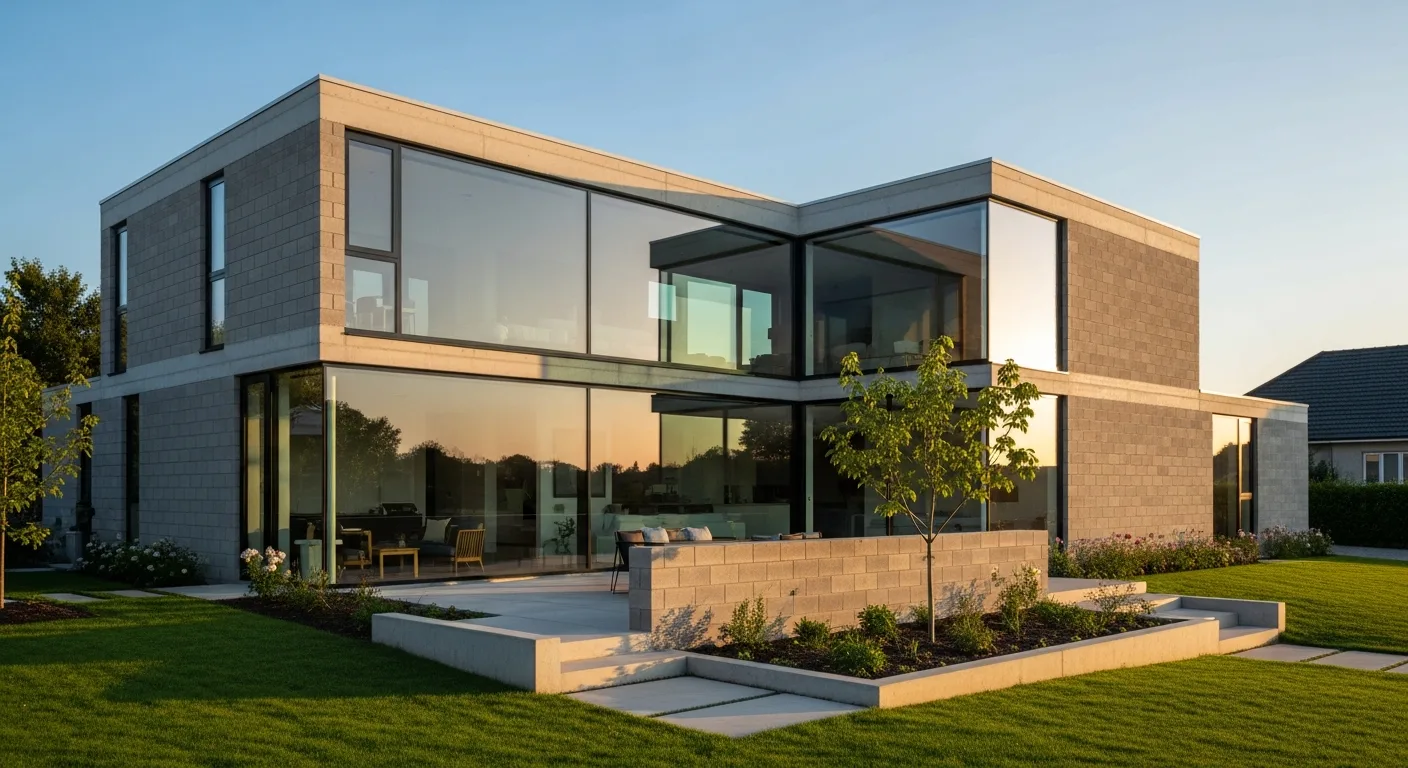
Gone are the days when a cinder block house had to look like a high school gymnasium or a warehouse. Today, architects use these units to create sleek, mid-century modern or industrial-chic designs. A man can choose to leave the blocks exposed for a raw, textured look, or he can apply a variety of finishes to match any neighborhood aesthetic.
Stucco is a popular choice for covering block walls, providing a smooth, Mediterranean finish that is both durable and attractive. Alternatively, furring strips can be attached to the blocks, allowing for the installation of traditional siding, brick veneer, or even stone. The versatility of the material allows for large open floor plans and expansive windows, as the strength of the blocks can support significant loads without the need for frequent interior pillars.
Common Maintenance and Moisture Control
While cinder block houses are low-maintenance, they are not “no-maintenance.” The primary enemy of concrete masonry is water. Because concrete is porous, it can wick moisture from the ground or through the face of the block if not properly sealed. A homeowner should regularly inspect his exterior walls for efflorescence—that white, powdery salt deposit that indicates water is moving through the material.
Applying a high-quality waterproof sealant every few years is a simple task that prevents moisture from reaching the interior. Additionally, ensuring that the grading around the house slopes away from the foundation will prevent hydrostatic pressure from causing cracks in the lower blocks. If a man stays on top of these minor tasks, his home will remain dry and structurally sound for a lifetime.
Frequently Asked Questions
Are cinder block houses more expensive to build than wood frame houses?
Generally, yes. The material costs and the specialized labor required for masonry can increase the initial construction budget by 10% to 20%. However, the savings on insurance, maintenance, and energy often offset this initial investment within a few years.
Can you hang heavy items on cinder block walls?
Absolutely. A man can easily mount heavy televisions, shelving, or cabinets to cinder block walls using masonry anchors or toggle bolts. The walls provide a much more secure mounting surface than standard drywall and wooden studs.
Is a cinder block house safe during an earthquake?
When properly reinforced with steel rebar and grout, cinder block houses perform exceptionally well in seismic zones. The key is the vertical and horizontal reinforcement that ties the entire structure together into a single, cohesive unit.