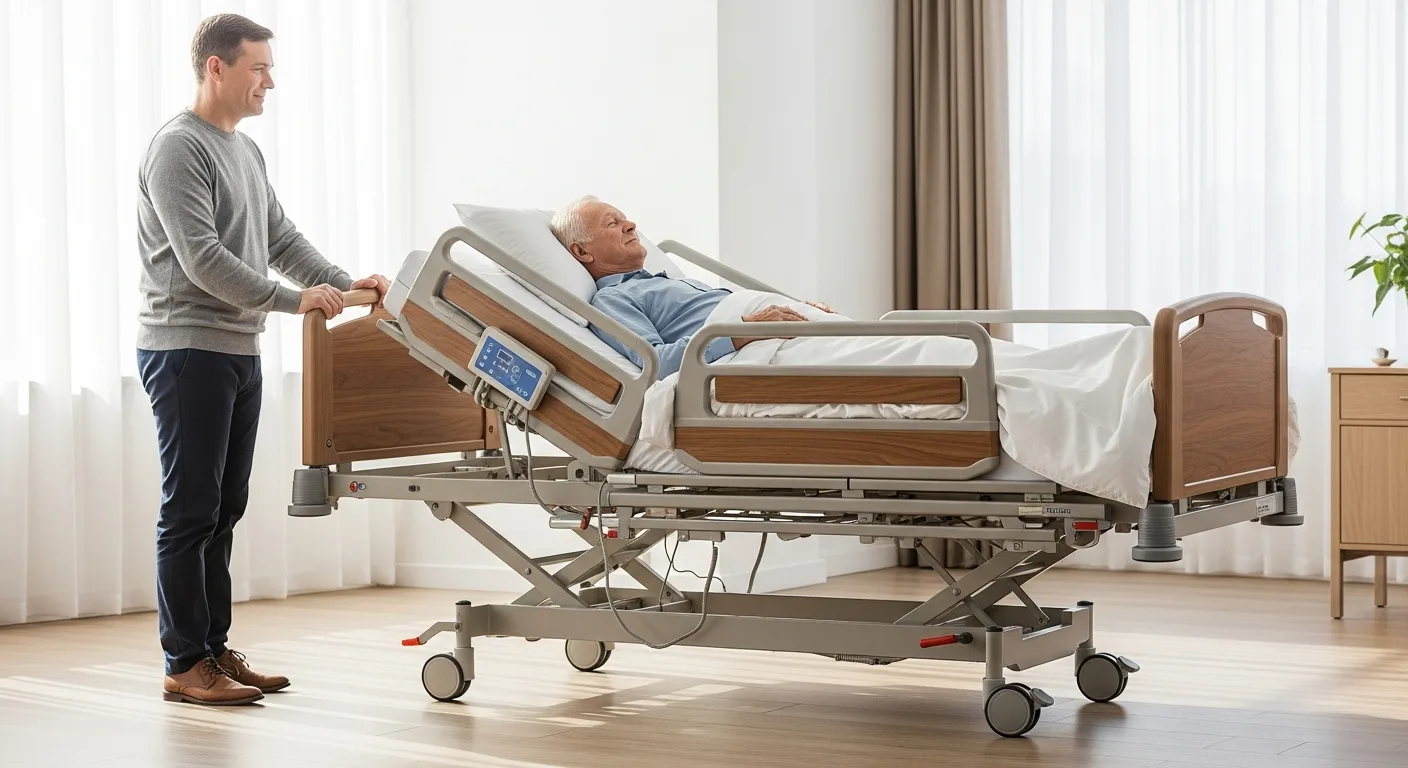
Understanding Your Options for Home Medical Beds
When a man requires specialized home care medical equipment, the choice of bed becomes the foundation of his daily comfort and recovery. A standard mattress often fails to provide the necessary support for those with limited mobility or chronic health conditions. Choosing the right hospital bed involves understanding the mechanical differences and how they cater to his specific physical needs.
The primary goal is to provide a surface that allows for easy repositioning, reduces the risk of pressure sores, and assists the caregiver in performing daily tasks without physical strain. By selecting a bed that aligns with his level of independence, you can significantly improve his quality of life at home.
The Three Main Types of Hospital Beds
Hospital beds for residential use generally fall into three categories based on how they are adjusted. Each has its own set of benefits and price points.
1. Full-Electric Hospital Beds
A full-electric bed is the gold standard for home care. It allows the user to adjust the height of the bed frame from the floor, as well as the head and foot sections, using a simple remote control. This is ideal for a man who retains enough hand dexterity to manage his own positioning. It eliminates the need for manual cranking, making it the most convenient option for both the patient and his caregiver.
2. Semi-Electric Hospital Beds
Semi-electric models use a motor to adjust the head and foot sections, but the overall height of the bed frame must be adjusted manually with a hand crank. This is a cost-effective middle ground. It is suitable if the bed height does not need to be changed frequently, but the user still needs to sit up or elevate his legs throughout the day.
3. Manual Hospital Beds
Manual beds require a caregiver to use hand cranks to adjust all positions. While these are the most affordable, they are physically demanding. They are best suited for situations where frequent position changes are not required or where budget constraints are the primary concern. However, for those managing at home medical care over a long period, the physical toll on the caregiver should be carefully considered.
Crucial Features to Look For
Beyond the mechanical type, several features can enhance safety and functionality:
- Side Rails: These are essential for preventing falls and providing the user with a sturdy grip when he needs to shift his weight.
- Bariatric Options: If the user is a larger man, a bariatric bed offers a wider frame and a higher weight capacity to ensure structural integrity and comfort.
- Trendelenburg Capability: Some high-end beds allow for tilted positions, which can be vital for certain circulatory or respiratory conditions.
- Locking Casters: Ensure the bed has high-quality wheels that lock securely to prevent the bed from moving during transfers.
Selecting the Right Mattress
The bed frame is only half of the equation; the mattress is where the actual support happens. For a man spending more than 12 hours a day in bed, a standard foam mattress may not be enough. Pressure-redistribution mattresses or alternating pressure air mattresses are often recommended to prevent skin breakdown and bedsores. These systems use air cells that inflate and deflate to ensure no single part of his body bears weight for too long.
Financial Considerations: Buying vs. Renting
Deciding whether to purchase or rent depends on the expected duration of use. If the recovery period is short-term, such as a few months following a surgery, renting may be more economical. However, for chronic conditions or long-term aging in place, purchasing a bed often saves money over time and allows for a wider selection of specialized features that rental fleets might not offer.
Frequently Asked Questions
What is the difference between a hospital bed and an adjustable bed?
While both allow the head and feet to rise, a hospital bed is built to medical standards. It typically includes the ability to raise or lower the entire bed height, which is critical for safe transfers and allowing a caregiver to work at a comfortable height. They also accommodate medical-grade side rails and specialized mattresses.
Does insurance cover hospital beds for home use?
In many cases, if a doctor deems the bed a medical necessity, insurance or Medicare may cover a portion of the cost. Usually, this applies to manual or semi-electric models. Full-electric beds are sometimes considered a luxury and may require an additional out-of-pocket expense.
How do I know if he needs a bariatric bed?
Standard hospital beds generally support up to 350-450 pounds. If the man weighs more than this, or if he requires more lateral space to turn comfortably, a bariatric bed is necessary for his safety and the longevity of the equipment.
Can I use a regular twin mattress on a hospital bed frame?
No, regular mattresses are not designed to bend with the articulations of a hospital bed frame. Using one can damage the mattress and, more importantly, fail to provide the therapeutic benefits the bed is intended to offer. Always use a mattress specifically designed for medical bed frames.