The Science Behind Baking Soda in the Laundry Room
Baking soda, or sodium bicarbonate, is a staple in many households, but its utility extends far beyond the kitchen pantry. For the man looking to optimize his home maintenance, understanding the chemical properties of this powder is key. Baking soda acts as a natural pH buffer. It helps to regulate the alkalinity of the wash water, preventing it from becoming too acidic or too basic. By maintaining a neutral environment, it allows laundry detergent to work more efficiently, breaking down grease and grime that would otherwise cling to his favorite shirts.
Key Benefits for the Modern Homeowner
In 2026, the focus on sustainable and cost-effective home care has never been higher. Integrating this simple step into his master maintenance checklists ensures his wardrobe lasts longer and stays fresher. Here are the primary advantages of using this natural mineral in the wash cycle:
1. Neutralizing Stubborn Odors
Whether it is the scent of sweat from a heavy gym session or the lingering smell of smoke from a weekend barbecue, odors can be difficult to shift. Baking soda doesn’t just mask these smells; it neutralizes them at a molecular level. Because most unpleasant odors are acidic, the alkaline nature of baking soda balances the pH, leaving the fabric truly clean rather than just perfumed. This is particularly useful when dealing with humidity and musty smells that often plague laundry rooms or storage areas.
2. Brightening Whites and Reviving Colors
Over time, white fabrics can turn yellow, and dark colors can become dull due to mineral buildup from hard water. Adding half a cup of baking soda to the wash cycle helps suspend these minerals, preventing them from redepositing onto the fabric. He will find that his white dress shirts stay crisp and his dark denim retains its deep hue for much longer without the need for harsh chemical bleaches.
3. Natural Fabric Softening
Commercial fabric softeners often contain harsh chemicals that can irritate the skin or leave a waxy residue on towels, which eventually reduces their absorbency. Baking soda provides a natural alternative. By regulating the mineral content in the water, it keeps fibers supple without the need for synthetic additives. He will notice his towels feel fluffier and his cotton tees feel significantly softer against his skin.
How to Correctly Apply Baking Soda in the Wash
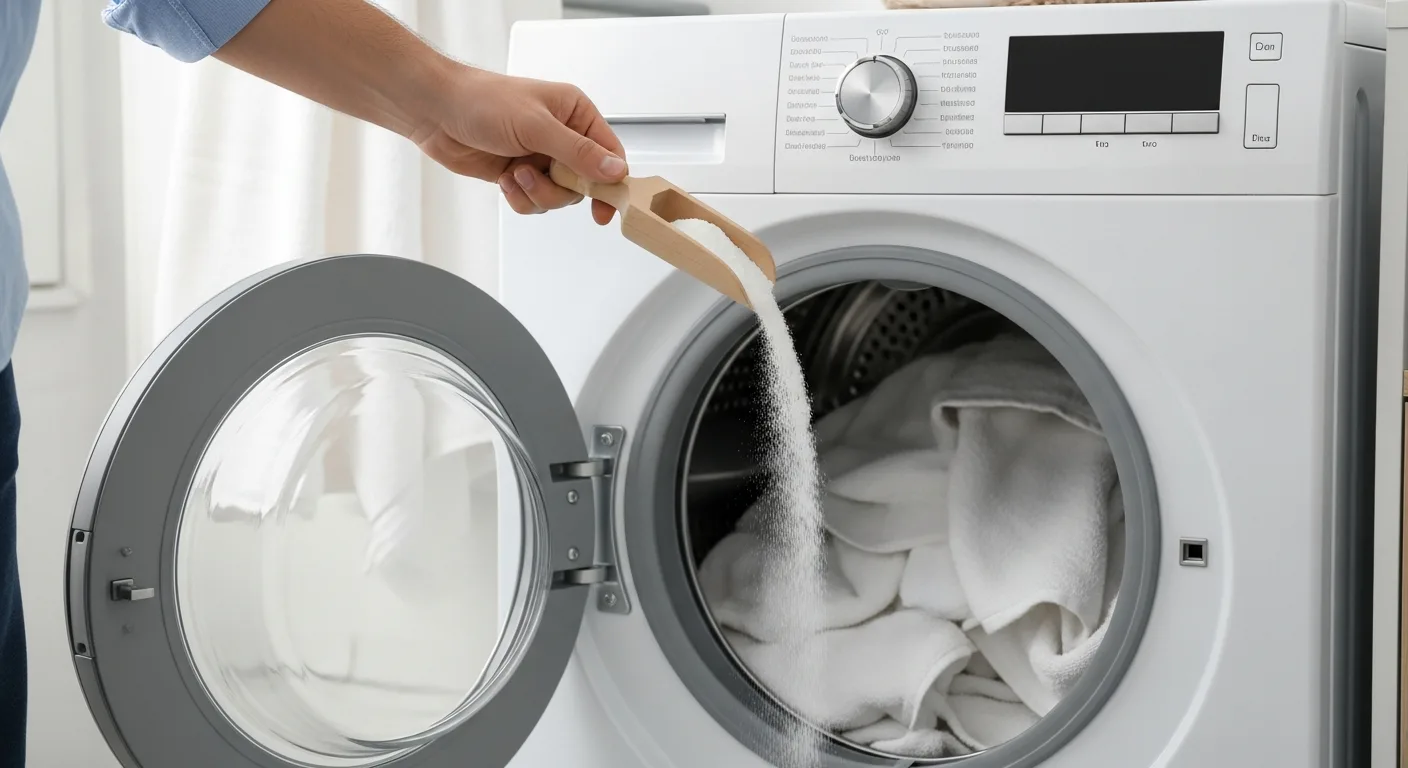
To get the most out of this natural booster, a man must know when and where to add it. It should not be placed in the detergent dispenser of a high-efficiency (HE) machine, as it may not dissolve fully before the cycle begins. Instead, he should sprinkle half a cup directly into the drum before loading his clothes. For particularly heavy-duty work gear or clothes with deep-set grime, a pre-soak in a solution of warm water and one cup of baking soda overnight can work wonders.
Maintaining Your Washing Machine Naturally
Beyond the clothes themselves, baking soda is an excellent tool for maintaining the appliance. Residue from detergents and fabric softeners can build up over time, leading to mold and unpleasant scents inside the drum. Running an empty hot-water cycle with a cup of baking soda once a month helps scrub the internal components of the machine, ensuring it operates at peak efficiency. This simple habit can prevent mechanical issues and extend the lifespan of his equipment.
Frequently Asked Questions
Can I use baking soda in a High-Efficiency (HE) washing machine?
Yes, baking soda is perfectly safe for HE machines. However, he should ensure he adds it directly to the drum rather than the dispenser to prevent any potential clogging or residue buildup in the small compartments.
Does baking soda replace laundry detergent?
No, baking soda is a booster, not a replacement. It enhances the performance of his detergent by balancing the water’s pH, but it does not have the same surfactant properties needed to lift all types of soil and oils on its own.
Can I mix baking soda with vinegar in the same cycle?
It is best to avoid mixing them directly in the wash. Since baking soda is a base and vinegar is an acid, they will neutralize each other, rendering both less effective. Instead, he should use baking soda in the wash cycle and add vinegar to the rinse cycle for the best results.