The Real Cost of Commercial Laundry Detergent
Walking down the cleaning aisle, a man is bombarded with neon-colored jugs promising “mountain spring” freshness and “ultra-clean” results. What he isn’t told is that he is largely paying for water, synthetic fragrances, and aggressive surfactants that can irritate skin and degrade clothing fibers over time. By 2026, the average household spends hundreds of dollars annually on these chemical cocktails. Switching to a homemade solution isn’t just about saving money; it is about taking control of what touches his skin and the environment.
Essential Ingredients for a Powerful Clean
To build a detergent that actually works, a man needs to understand the chemistry behind the ingredients. You don’t need a lab; you just need three or four staples that have been used for generations because they effectively break down oils and lift stains.
- Washing Soda (Sodium Carbonate): This is the heavy lifter. It increases the pH of the water, helping the soap remove grease and dirt more effectively.
- Borax: A natural mineral that acts as a whitener and deodorizer. It also helps soften hard water, which prevents minerals from redepositing on clothes.
- Bar Soap: Options like Fels-Naptha, Zote, or even a high-quality Castile soap provide the surfactant action. A man should choose a soap that aligns with his scent preferences or skin sensitivity.
- Baking Soda: While many recipes call for washing soda, a man might also consider understanding the specific baking soda in laundry benefits to boost deodorizing power in particularly gym-heavy loads.
The Ultimate Powdered DIY Laundry Detergent Recipe
Powdered detergent is the easiest to make, has the longest shelf life, and is incredibly concentrated. This recipe is designed for maximum efficiency in both standard and high-efficiency (HE) machines.
Ingredients:
- 1 bar (approx. 5 oz) of grated laundry soap (Fels-Naptha or Zote)
- 1 cup Washing Soda
- 1 cup Borax
Instructions:
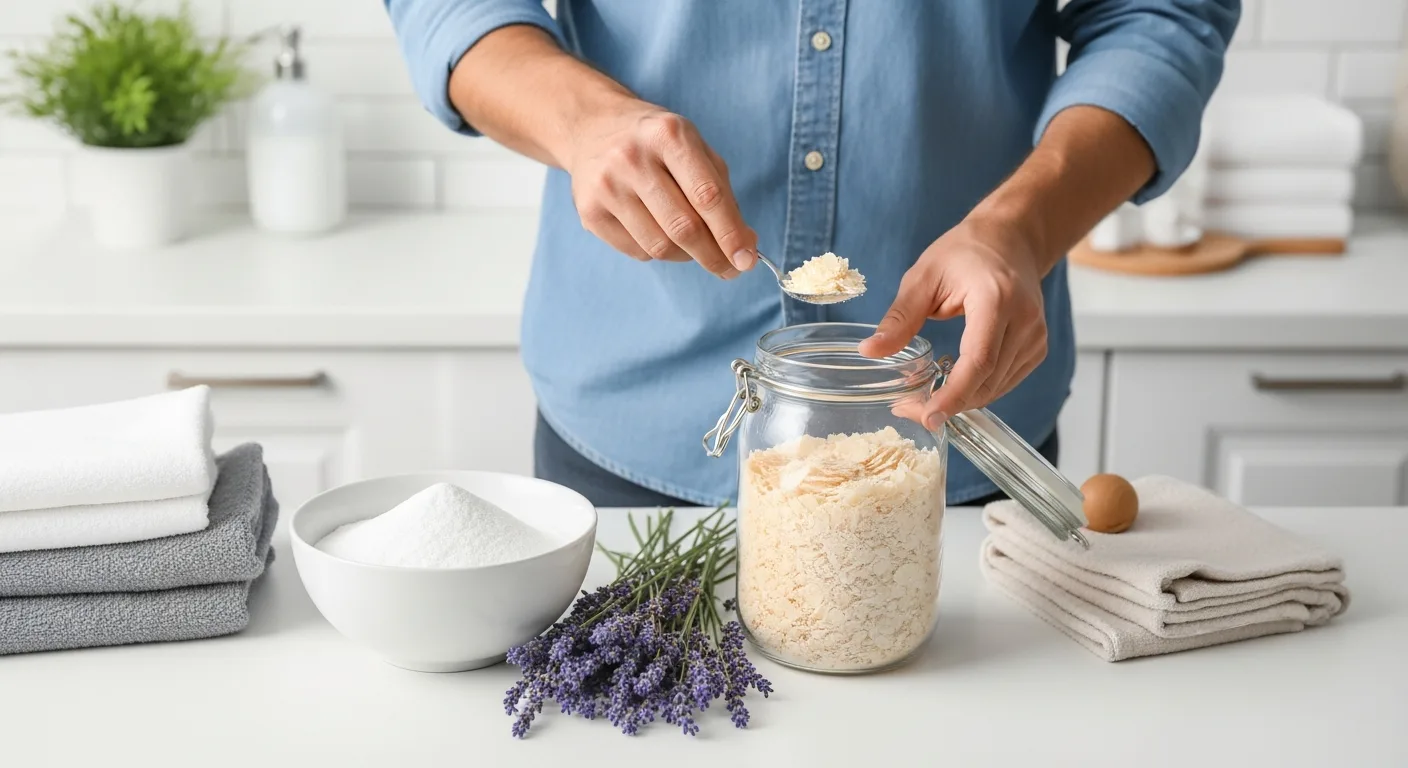
First, he should grate the bar soap using a fine cheese grater or a food processor until it reaches a fine, powdery consistency. Large chunks won’t dissolve well in cold water. In a large container, he will then mix the grated soap with the washing soda and borax. Stir thoroughly to ensure an even distribution of ingredients. For a standard load, he only needs 1 to 2 tablespoons of this mixture. This small amount is a testament to the potency of the raw ingredients compared to watered-down commercial liquids.
Transitioning to Eco-Friendly Habits
One of the primary drivers for making soap at home is the reduction of plastic waste and chemical runoff. Switching to a homemade solution allows a user to enjoy the advantages of biodegradable laundry detergent benefits without the premium price tag found in organic aisles. Because these ingredients are mineral-based and simple, they break down much more easily in septic systems and local water treatments.
Is DIY Detergent Safe for High-Efficiency (HE) Washers?
A common concern for the modern homeowner is whether a homemade concoction will ruin his expensive HE washing machine. The answer lies in the lack of suds. Commercial detergents use foaming agents to give the illusion of cleaning, but these suds are actually detrimental to HE machines, which use very little water. DIY detergent is naturally low-sudsing, making it perfectly safe for HE units as long as the soap is finely grated and the user doesn’t over-pour.
Customizing the Scent and Softness
If a man prefers a specific scent, he can easily add 15-20 drops of essential oils like lemon, eucalyptus, or cedarwood to his powder mix. To tackle static and hardness without using chemical-laden dryer sheets, he can simply add half a cup of white vinegar to the fabric softener dispenser. The vinegar smell disappears during the drying cycle, leaving the fabric soft and neutral.
Frequently Asked Questions
Does DIY laundry detergent work in cold water?
Yes, provided the bar soap is grated into a very fine powder. If he finds it isn’t dissolving, he can dissolve the tablespoon of detergent in a cup of hot water before pouring it into the machine.
Will this detergent fade dark clothes?
Actually, DIY detergent is often gentler on fabrics than commercial brands. However, because washing soda is alkaline, he should ensure clothes are rinsed properly. Adding vinegar to the rinse cycle helps neutralize the pH and lock in colors.
How long does a batch of DIY detergent last?
A single batch made with one bar of soap typically lasts for 30 to 40 loads. Since the ingredients are dry, the shelf life is virtually indefinite as long as it is kept in an airtight container to prevent clumping from humidity.
Can I use this on baby clothes?
If he is washing clothes for a newborn, he should use a fragrance-free Castile soap bar as the base. This eliminates the harsh dyes and heavy fragrances found in many “baby-specific” commercial detergents.