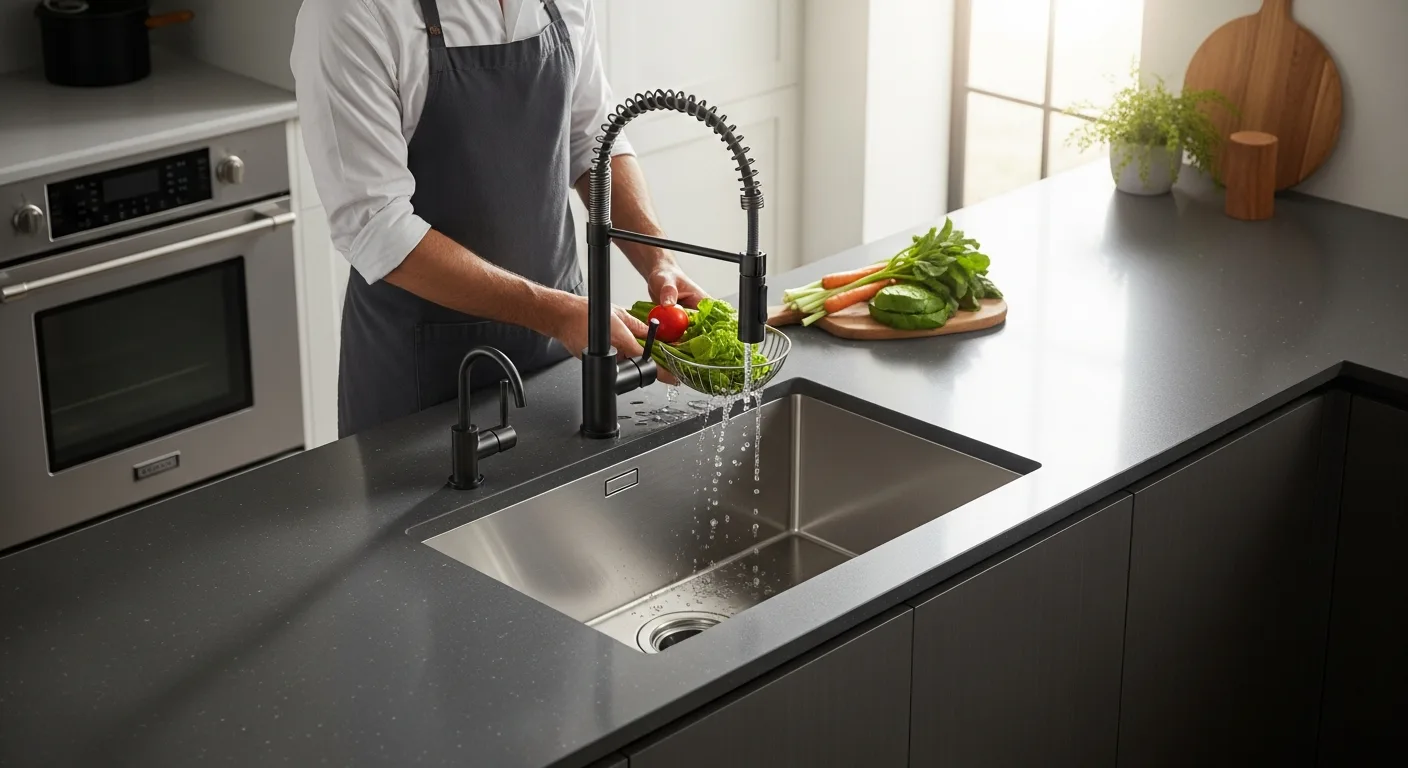
The Practical Advantages of Extra Depth
A shallow sink is a constant source of frustration for any man who takes his kitchen tasks seriously. Whether he is scrubbing a heavy cast-iron skillet or cleaning up after a large family meal, a standard 7-inch basin often falls short. Deep kitchen sinks, typically ranging from 9 to 12 inches, offer the volume needed to handle oversized cookware without splashing water across the countertops.
Beyond the sheer capacity, a deeper basin acts as a staging area. He can hide dirty dishes below the counter line, keeping the kitchen looking organized even when he hasn’t had time to load the dishwasher. This is particularly useful in open-concept homes where the kitchen is always on display to guests.
Choosing the Right Material for Durability
The depth of the sink is only half the battle; the material determines how well it stands up to daily abuse. Stainless steel remains a top choice for its resilience and industrial aesthetic. However, for a more traditional or high-end look, fireclay and granite composite are gaining significant traction in 2026. When selecting your basin, understanding the best kitchen sink material and style options is vital for long-term satisfaction and ensuring the unit doesn’t chip or stain under heavy use.
- Stainless Steel: Look for 16-gauge thickness to minimize noise and prevent denting.
- Fireclay: Extremely hard and resistant to scratches, perfect for a heavy-duty farmhouse look.
- Granite Composite: Offers a modern matte finish and is virtually indestructible against heat and impact.
Installation Styles: Undermount vs. Farmhouse
How the sink sits in the countertop affects both its utility and the kitchen’s overall ergonomics. Undermount sinks are installed beneath the counter, allowing him to wipe crumbs and liquids directly into the basin. This creates a seamless look that is easy to maintain.
On the other hand, apron-front or farmhouse sinks bring the basin forward, replacing a section of the cabinetry. This style is excellent for deep sinks because it eliminates the narrow strip of countertop usually found in front of the sink, allowing him to stand closer to the water and reducing the strain on his lower back during long cleaning sessions.
Maintenance and Ergonomic Considerations
While the benefits of a deep sink are numerous, he must consider the physical impact. A sink that is too deep can cause a tall man to hunch over, leading to discomfort. It is often recommended to pair a very deep sink with a high-arc faucet to balance the workspace. Additionally, the plumbing underneath will be lower, which might require modifications to the existing drainage pipes.
To keep your deep basin functioning perfectly, he should always have the best drain cleaner for kitchen sink on hand to prevent clogs from heavy food debris that tends to accumulate in high-volume basins. Regular rinsing and the use of a bottom grid can also prevent scratches and keep the finish looking new for years.
Frequently Asked Questions
What is considered a deep kitchen sink?
Most standard sinks are 7 to 8 inches deep. A sink is generally considered “deep” when it reaches 9 to 12 inches in depth. This extra space is specifically designed for soaking large pots and minimizing splash-back.
Do deep sinks cause back pain?
They can if the user is particularly tall and the sink is installed too low. To mitigate this, he should consider an undermount or farmhouse style that allows him to stand closer to the basin, or use a sink grid to raise the working surface slightly.
Are deep sinks harder to clean?
Not necessarily, but they do require a faucet with a pull-down sprayer to reach the corners effectively. Because the bottom surface area is often larger, he will need to ensure food particles are rinsed thoroughly toward the drain.