The Reality of Cabinet Refinishing Costs
Most homeowners realize that a full kitchen overhaul is a massive financial undertaking. If a man wants to refresh his space without the five-figure price tag of new millwork, painting is the most logical path. In 2026, the average cost to paint kitchen cabinets ranges from $2,500 to $7,000 for professional services, while a DIY approach typically sits between $300 and $800.
The discrepancy between these two figures comes down to labor and precision. A professional painter doesn’t just slap on a coat of latex; he spends 70% of his time on preparation—degreasing, sanding, and priming. While he might compare this to the labor involved in installing new units, painting remains the most cost-effective way to modernize a space without tearing out functional structures.
Professional Labor vs. DIY Sweat Equity
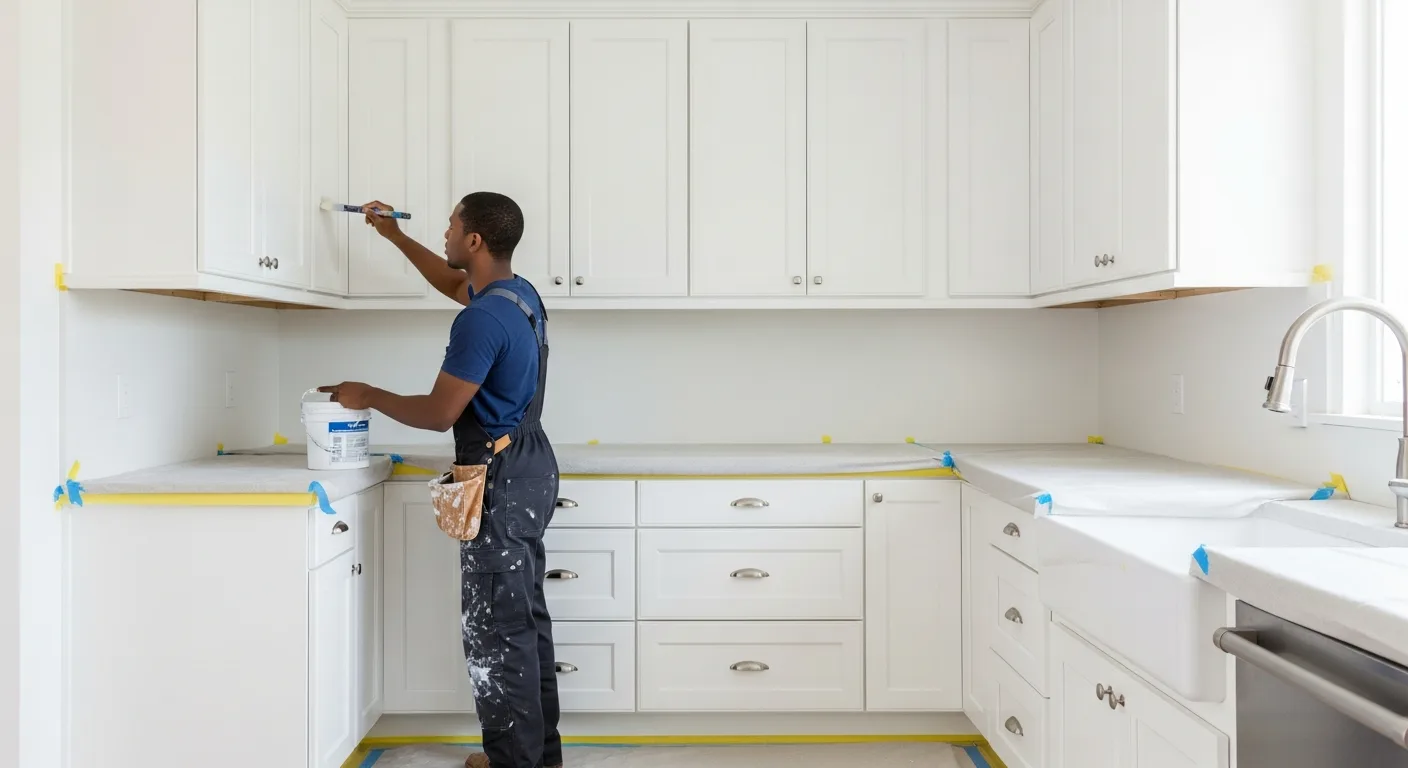
When hiring a pro, the pricing is usually calculated by the number of “openings” (doors and drawer fronts). In the current market, expect to pay $100 to $150 per opening. A standard kitchen with 30 openings will quickly climb toward the $4,500 mark. This price includes the removal of hardware, off-site spraying for a factory-grade finish, and re-installation.
For the man who chooses to tackle this himself, the costs are strictly material-based. He will need high-quality bonding primers, specialized cabinet paint (usually a water-borne alkyd or urethane enamel), and professional-grade brushes or a HVLP sprayer. Understanding these numbers helps a homeowner manage his overall kitchen renovation budget without overspending on unnecessary replacements.
Key Factors That Drive Up Your Quote
Not every kitchen is priced the same. Several variables can push a quote to the higher end of the spectrum:
- Cabinet Material: Solid wood is easier to prep than laminate or thermofoil. If the cabinets are made of open-grain wood like oak, he may pay extra for grain filling to achieve a smooth finish.
- Paint Type: Standard acrylic is cheaper, but professional-grade Italian lacquers or 2K polyurethanes provide a much harder, more durable surface. These premium coatings add 15-20% to the material cost.
- Layout Complexity: A kitchen with crown molding, built-in wine racks, or intricate glass-front doors requires more detail work, increasing the man-hours required.
- Current Condition: If the previous finish is peeling or was a poor DIY job, the painter must strip the old layers entirely, which significantly inflates the labor cost.
Material Costs: What He Needs to Buy
If he decides to go the DIY route, he shouldn’t skimp on supplies. Cheap paint will chip within six months. Here is a breakdown of what he should expect to spend:
- Premium Cabinet Paint: $80–$120 per gallon (He will likely need 2–3 gallons).
- High-Adhesion Primer: $50–$70 per gallon.
- Sandpaper and Deglosser: $40.
- Tack Cloths and Plastic Sheeting: $30.
- Professional Brush and Roller Set: $60.
By investing in these high-end materials, he ensures the finish lasts for years rather than months. The goal is a surface that can withstand the daily rigors of heat, steam, and grease common in any active kitchen.
Is It Worth the Investment?
Painting cabinets offers one of the highest returns on investment (ROI) in home improvement. It can instantly change the aesthetic of a home from dated to contemporary. However, he must weigh the time commitment. A professional crew can finish a kitchen in 4 to 5 days. A solo DIYer working on weekends might find his kitchen out of commission for three weeks or more. If he values his time and demands a flawless, streak-free finish, the professional route is almost always the superior choice.
Frequently Asked Questions
How long does painted cabinet finish last?
A professionally painted cabinet using high-quality urethane enamel can last 8 to 10 years with proper care. DIY jobs using standard wall paint may only last 2 to 3 years before showing significant wear.
Should I spray or roll my cabinets?
Spraying provides a factory-smooth finish without brush marks, but it requires extensive masking of the entire kitchen. Rolling is easier for a DIYer but will result in a slight texture known as “orange peel.”
Do I need to sand my cabinets before painting?
Yes. Even if the paint claims to be “no-sand,” a light scuff-sanding is necessary to break the existing seal and allow the new primer to bite into the surface. Skipping this step is the number one cause of paint failure.
Can I paint laminate or thermofoil cabinets?
Yes, but it requires a specialized high-adhesion bonding primer. If the thermofoil is peeling, it must be removed entirely before painting the underlying MDF.