The Foundation of a Productive Harvest
Every successful gardener knows that the secret to a bountiful harvest doesn’t start with the seeds, but with the ground beneath them. Whether a man is growing heirloom tomatoes or crisp leafy greens, the quality of his soil determines the vigor of his plants and the flavor of his produce. In 2026, we have moved beyond simple dirt; modern gardening focuses on living ecosystems within the soil that sustain plant life naturally.
The best soil for a vegetable garden is one that provides a balance of drainage, aeration, and nutrient retention. Without these three pillars, a gardener will find himself struggling against stunted growth and yellowing leaves, regardless of how much fertilizer he applies.
Understanding Soil Texture and Structure
Soil is categorized by the size of its particles: sand, silt, and clay. The ideal combination for most vegetables is known as loam. Loam is roughly a mix of 40% sand, 40% silt, and 20% clay. This specific ratio allows a gardener to enjoy the benefits of each particle size without the drawbacks.
- Sand: Provides excellent drainage and aeration, preventing root rot.
- Silt: Holds moisture and nutrients better than sand but can become compacted.
- Clay: Rich in minerals and excellent at holding water, though it can become heavy and waterlogged if used alone.
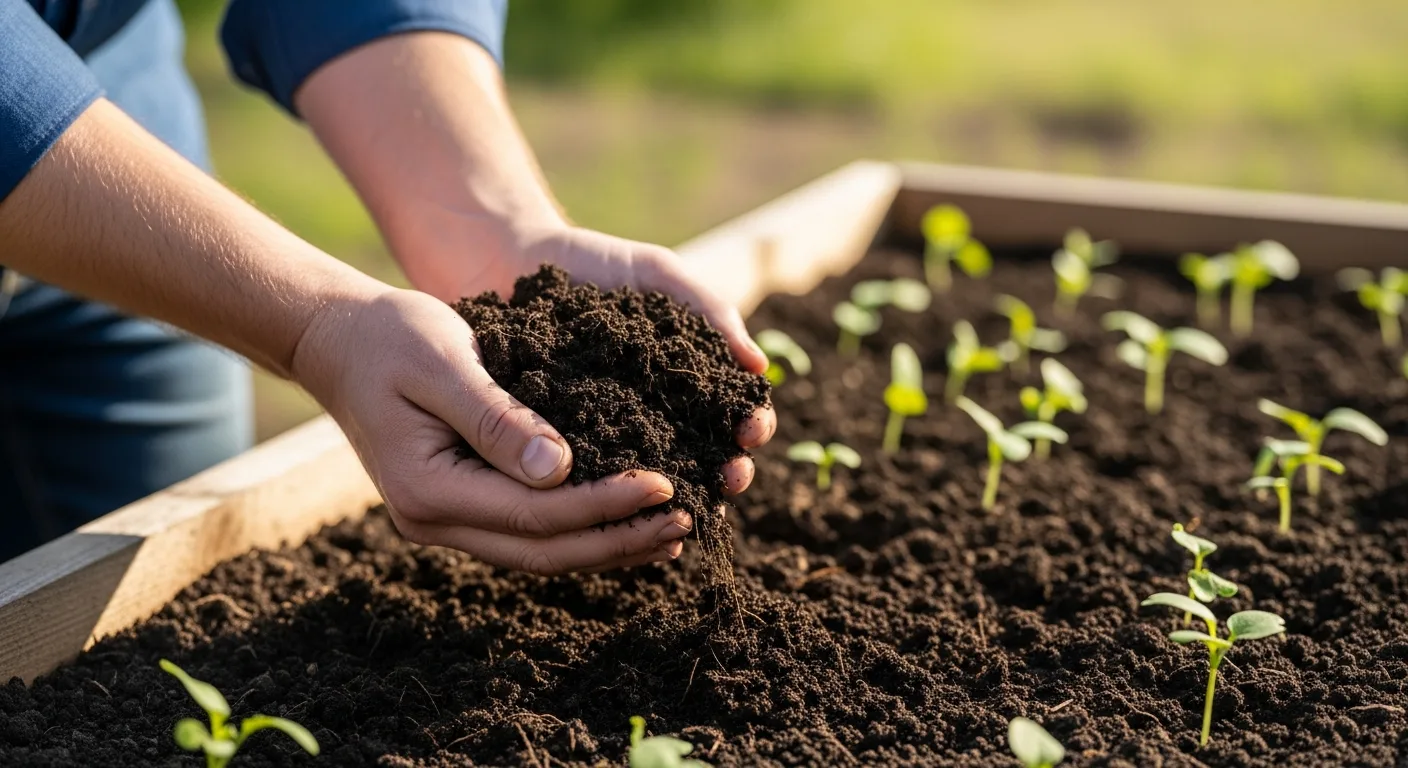
When a man feels the soil in his hands, loamy soil should crumble easily. It should hold its shape when squeezed but break apart with a light touch. If he is working with limited space, he might find that a specialized container setup requires a lighter, more aerated mix than traditional in-ground plots to prevent the soil from becoming too dense over time.
The Role of Organic Matter
No matter the base texture, the most critical ingredient for vegetable success is organic matter. This includes compost, well-rotted manure, and leaf mold. Organic matter acts as a sponge, holding onto water and nutrients while providing a home for beneficial microbes and earthworms.
A gardener should aim for at least 5% to 10% organic matter in his garden beds. As this material breaks down, it releases nitrogen, phosphorus, and potassium—the primary nutrients vegetables crave. Furthermore, organic matter improves soil structure over time, turning heavy clay into a workable medium and helping sandy soil retain the moisture necessary for thirsty crops.
Achieving the Perfect pH Balance
Soil pH is a measure of how acidic or alkaline the ground is, and it significantly impacts a plant’s ability to absorb nutrients. Most vegetables thrive in a slightly acidic to neutral range, typically between 6.0 and 7.0. If the pH is too high or too low, a gardener may find that his plants exhibit nutrient deficiencies even if the soil is rich in minerals.
He should perform a soil test at the beginning of the season to determine his baseline. If the soil is too acidic, he can add lime; if it is too alkaline, elemental sulfur or peat moss can help lower the pH. Once he has established the perfect soil structure and chemistry, ensuring consistent moisture with a reliable watering system becomes the next priority for healthy plant growth throughout the summer heat.
Soil for Raised Beds vs. In-Ground Gardens
The “best” soil often depends on where it is being placed. If a man is planting directly into the ground, he should focus on amending his existing native soil with compost rather than replacing it. This preserves the natural microbial life already present in his backyard.
However, for raised beds, a gardener should use a specific “raised bed mix.” This usually consists of one part topsoil, one part compost, and one part coarse sand or perlite. This blend prevents the soil from compacting under its own weight, which is a common issue in elevated structures. It also ensures that water moves through the root zone efficiently, allowing the plants to breathe.
Frequently Asked Questions
What is the best soil for a vegetable garden?
The best soil is a well-draining loam enriched with plenty of organic matter, such as compost. It should have a crumbly texture and a pH between 6.0 and 7.0.
Can I use bags of topsoil for my vegetable garden?
Standard bagged topsoil is often too heavy and lacks the necessary nutrients for vegetables. A gardener should always mix topsoil with compost and a loosening agent like perlite or peat moss for better results.
How often should I add compost to my garden soil?
A gardener should ideally add a fresh layer of compost (1-2 inches) every year, either in the early spring or late fall, to replenish nutrients used by the previous season’s crops.
Is potting soil the same as garden soil?
No. Potting soil is usually “soilless,” containing peat moss, pine bark, and perlite. It is designed for containers. Garden soil is much denser and is intended to be mixed into the ground.