Understanding the Modern Home Golf Simulator Landscape
In 2026, the technology behind indoor golf has reached a point where any enthusiast can bring a professional tour experience into his own residence. Finding the best golf simulator for home use is no longer just about luxury; it is about choosing a system that matches his specific goals, whether he wants to lower his handicap or simply enjoy a round with friends during the winter months. Modern units offer unprecedented accuracy, tracking everything from ball speed to the minute details of clubhead rotation.
Evaluating Space and Ceiling Height Requirements
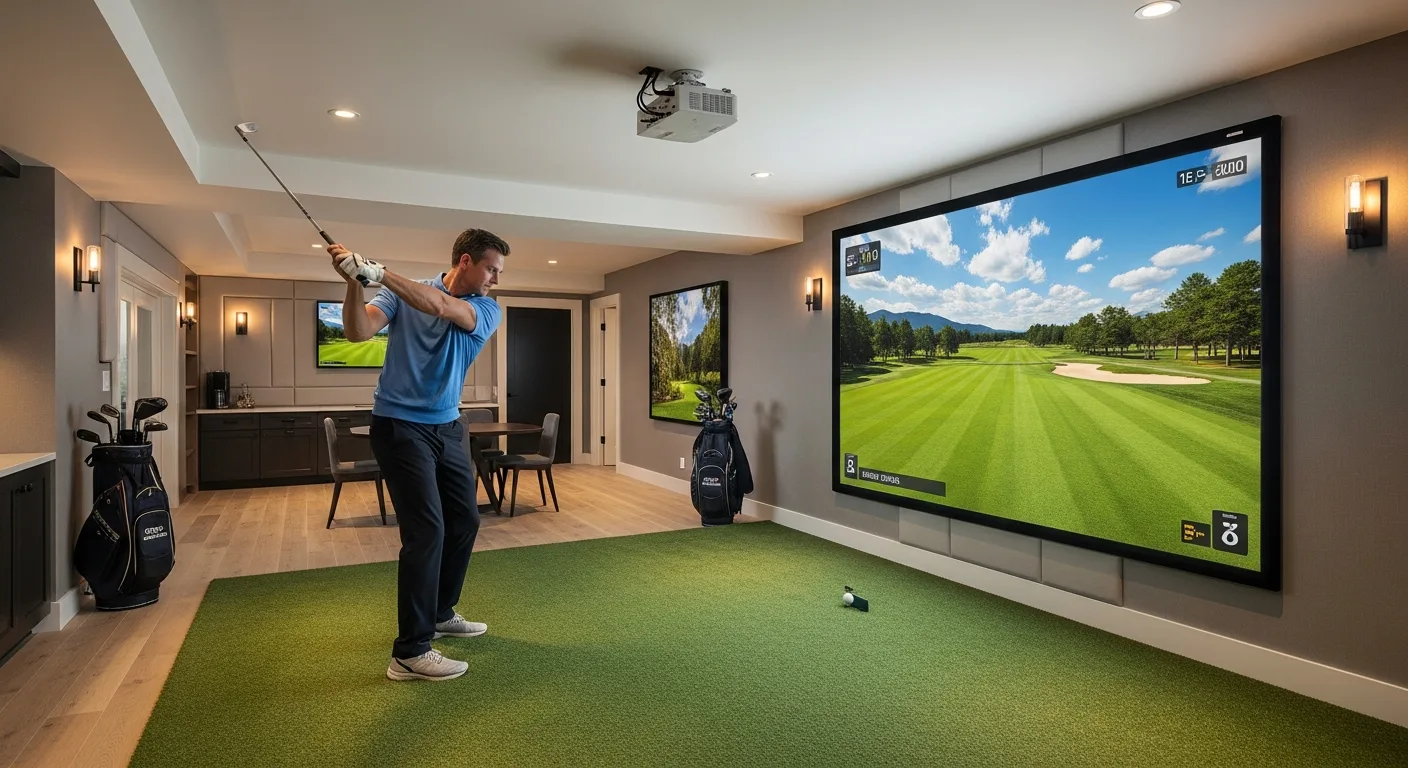
Before a golfer invests in high-end hardware, he must first assess his available space. Most modern simulators require a room with at least 9 to 10 feet of ceiling height to ensure he can swing his driver freely without hitting the overhead structure. Width and depth are equally critical, as he needs enough room for the impact screen and the launch monitor’s radar or camera range to function without interference.
If he is planning to integrate this into a dedicated workout area, he should consider home gym equipment planning to ensure the layout remains functional for both fitness and sport. A well-organized space allows him to transition from strength training to swing practice seamlessly, maximizing the utility of his floor plan.
Photometric vs. Doppler Radar: Which Technology Wins?
There are two primary ways a simulator tracks a ball, and the choice depends largely on his environment. Photometric systems use high-speed cameras to capture images of the ball at the moment of impact. These are generally better for small indoor spaces because they sit beside the golfer and do not require much depth. On the other hand, Doppler Radar systems track the ball’s flight using microwave signals. While incredibly accurate, he will need more depth behind and in front of the hitting area for these units to perform optimally in 2026.
Essential Components for a Premium Indoor Experience
- The Launch Monitor: The “brain” of the system that calculates ball speed, spin, and launch angle.
- Impact Screen and Enclosure: A heavy-duty screen designed to take the hit of a real golf ball while displaying a high-definition image.
- Premium Hitting Mat: Essential for protecting his joints and providing a realistic feel of the turf.
- High-Lumen Projector: A short-throw 4K projector ensures he sees every blade of grass on the virtual course without casting a shadow on the screen.
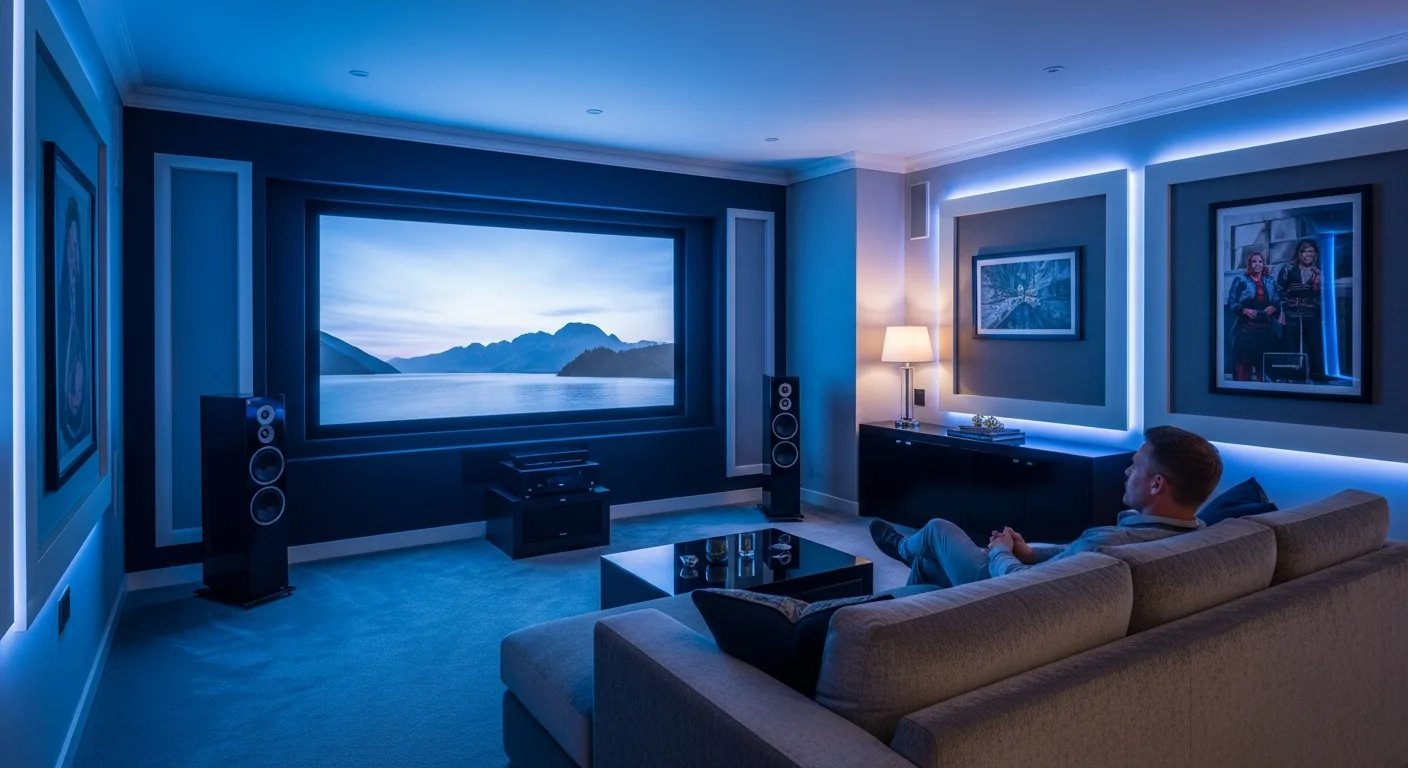
For those looking to build a complete recreational hub, these systems often fit perfectly within broader home entertainment concepts that include theater seating and high-end audio, creating a multi-purpose room that adds significant value to his lifestyle.
The Best Mid-Range and Professional Options in 2026
For the golfer who wants accuracy without spending six figures, mid-range units now offer data points that were once exclusive to pros. These units provide detailed feedback on his club path and face angle, allowing him to diagnose his slice or hook in real-time. In 2026, software integration has become more fluid, allowing him to play famous courses from around the world with stunning realism and even compete in online tournaments from his basement or garage.
Frequently Asked Questions
How much space is actually needed for a home golf simulator?
Ideally, a golfer needs a room that is 12 feet wide, 15 feet deep, and at least 9 feet high. This ensures he has enough clearance for his swing and the necessary distance for the tracking sensors to work correctly without fear of hitting the ceiling with his driver.
Can I use a real golf ball with these systems?
Yes, the best home simulators are designed to be used with standard golf balls. He should use a high-quality impact screen and a net enclosure to safely stop the ball and prevent damage to his walls or furniture.
Is a home golf simulator worth the investment for a high-handicapper?
Absolutely. The instant feedback on swing mechanics helps a golfer identify his mistakes immediately. This data-driven approach is often faster and more effective than hitting balls at a traditional outdoor range where he might not understand why the ball is curving.