Understanding the Unique Challenges of Basement Flooring
When a homeowner decides to finish his basement, he faces a unique set of environmental challenges that do not exist on the upper floors of his house. Basements are inherently prone to moisture, temperature fluctuations, and potential hydrostatic pressure from the surrounding soil. Choosing the wrong material can lead to warped planks, mold growth, and a significant waste of his investment.
To ensure long-term success, he must prioritize materials that are either inorganic or specifically engineered to handle high-humidity environments. In 2026, the market has expanded with advanced synthetic options that offer the aesthetic of natural wood without the risk of rot.
Luxury Vinyl Plank (LVP): The Industry Standard
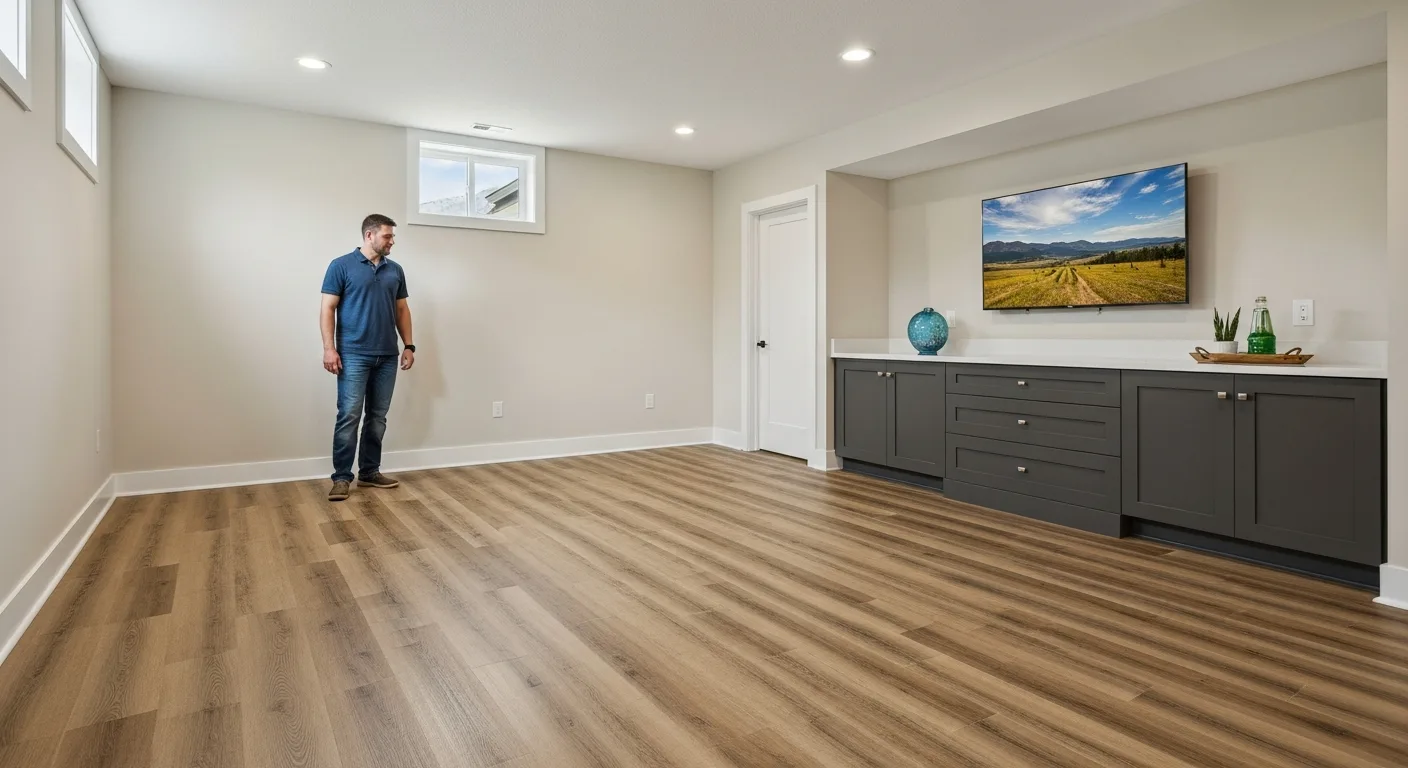
Luxury Vinyl Plank remains the top recommendation for most basement projects. Because it is composed entirely of synthetic materials, it is 100% waterproof. If a homeowner experiences a minor leak or high humidity, his LVP floor will not swell or buckle.
Modern LVP has evolved to include rigid core technologies like SPC (Stone Plastic Composite), which provides incredible stability over slightly uneven concrete subfloors. When a homeowner is looking for the most durable vinyl plank options on the market, he should look for a high wear layer to ensure the floor stands up to heavy foot traffic and furniture movement.
Ceramic and Porcelain Tile for Ultimate Longevity
For the man who wants a floor that will literally last a lifetime, ceramic or porcelain tile is the premier choice. These materials are impervious to water and are available in a staggering array of designs, including those that mimic natural stone or hardwood.
- Pros: Completely waterproof, easy to clean, and extremely durable.
- Cons: Cold to the touch and hard underfoot.
To mitigate the coldness of a tile floor, he might consider installing an electric radiant heating system beneath the tile. This adds a layer of luxury and comfort, making the basement feel like a true extension of the living space rather than a cold storage area.
Engineered Hardwood: A Premium Compromise
If a homeowner insists on the warmth and prestige of real wood, he should avoid solid hardwood at all costs in a basement. Instead, he should opt for engineered hardwood. This product features a thin veneer of real wood bonded to a cross-laminated plywood base. This construction makes the plank more stable and less likely to expand or contract when the basement humidity changes.
However, even engineered hardwood has its limits. He must ensure his basement is consistently dry and that he uses a high-quality moisture barrier during installation to protect his investment from the concrete slab’s natural porousness.
Functional Options: Epoxy and Rubber
Not every basement is destined to be a living room. If the homeowner is planning a workshop or a workout space, he should look toward industrial-strength solutions. Epoxy coatings are applied directly to the concrete, creating a seamless, waterproof, and chemical-resistant surface.
Alternatively, if he is building a dedicated fitness area, rubber flooring is an excellent choice. It provides impact absorption and sound dampening, which is essential if he intends to lift heavy weights. Furthermore, if he intends to convert the space into a media room, he should consider acoustic treatments for a lower-level cinema to complement his flooring choice and manage sound reflections.
The Importance of Subfloor Preparation
Regardless of the material he chooses, the success of a basement floor depends on what lies beneath it. He should always perform a moisture test on his concrete slab before installation. Using a high-quality underlayment or a vapor barrier is non-negotiable for most floating floors. This layer prevents moisture from reaching the flooring material and can provide a small amount of thermal insulation, keeping his feet warmer during the winter months.
Frequently Asked Questions
Can you put solid hardwood in a basement?
No, it is generally advised that a homeowner avoids solid hardwood in a basement. The natural fibers will absorb moisture from the concrete and the air, leading to cupping and permanent damage. Engineered hardwood or wood-look tile are much better alternatives for him.
What is the most affordable waterproof basement flooring?
Sheet vinyl or basic luxury vinyl planks are typically the most budget-friendly options that still offer 100% waterproof protection. These allow a homeowner to achieve a clean, modern look without a massive financial outlay.
Do I need a subfloor over concrete?
While not always required for materials like tile or LVP, a subfloor system (like OSB panels with a plastic bottom) can significantly increase the warmth and comfort of the floor. It creates an air gap that helps manage moisture and provides a more cushioned walking surface for the homeowner.