Understanding Your Kitchen Clog Before Choosing a Solution
A slow-draining kitchen sink is a common frustration for any homeowner. Before a man rushes to the store, he must understand that kitchen clogs are fundamentally different from bathroom clogs. While bathroom drains are often blocked by hair and soap scum, the kitchen sink typically falls victim to solidified grease, fats, and food particles. Choosing the best drain cleaner for a kitchen sink requires a product specifically formulated to break down these organic materials without damaging the plumbing infrastructure.
When a man evaluates his options, he should consider the age of his pipes and the severity of the blockage. A total standing-water backup requires a different approach than a sink that is simply draining sluggishly. Furthermore, if he has a garbage disposal, he must be extra cautious, as many caustic chemicals can damage the internal components of the unit.
The Top-Rated Drain Cleaners for Stubborn Kitchen Grease
In 2026, the market offers three primary categories of drain cleaners: liquid chemicals, enzymatic solutions, and mechanical tools. Each has its place in a man’s maintenance arsenal.
Chemical Cleaners: High-Strength Results
Chemical cleaners are often the first choice for a man facing a complete blockage. These typically fall into two categories: caustic and oxidizing. Caustic cleaners use ingredients like sodium hydroxide (lye) to convert grease into a soap-like substance that dissolves in water. Oxidizing cleaners use bleach or nitrates to break down organic matter through heat and oxygen release. While highly effective, he should use these sparingly to avoid corroding older metal pipes.
Enzymatic Cleaners: The Preventative Powerhouse
For those who prefer a more sustainable approach, enzymatic cleaners are the gold standard. These products use living bacteria or concentrated enzymes to literally eat away at the biological film inside the pipes. While they work slower than chemicals—often requiring an overnight soak—they are the safest option for long-term pipe health. When a man is deciding on his plumbing setup, he might also look into the best kitchen sink material and style to ensure his hardware is as resilient as his cleaning routine.
How to Safely Apply Drain Cleaners
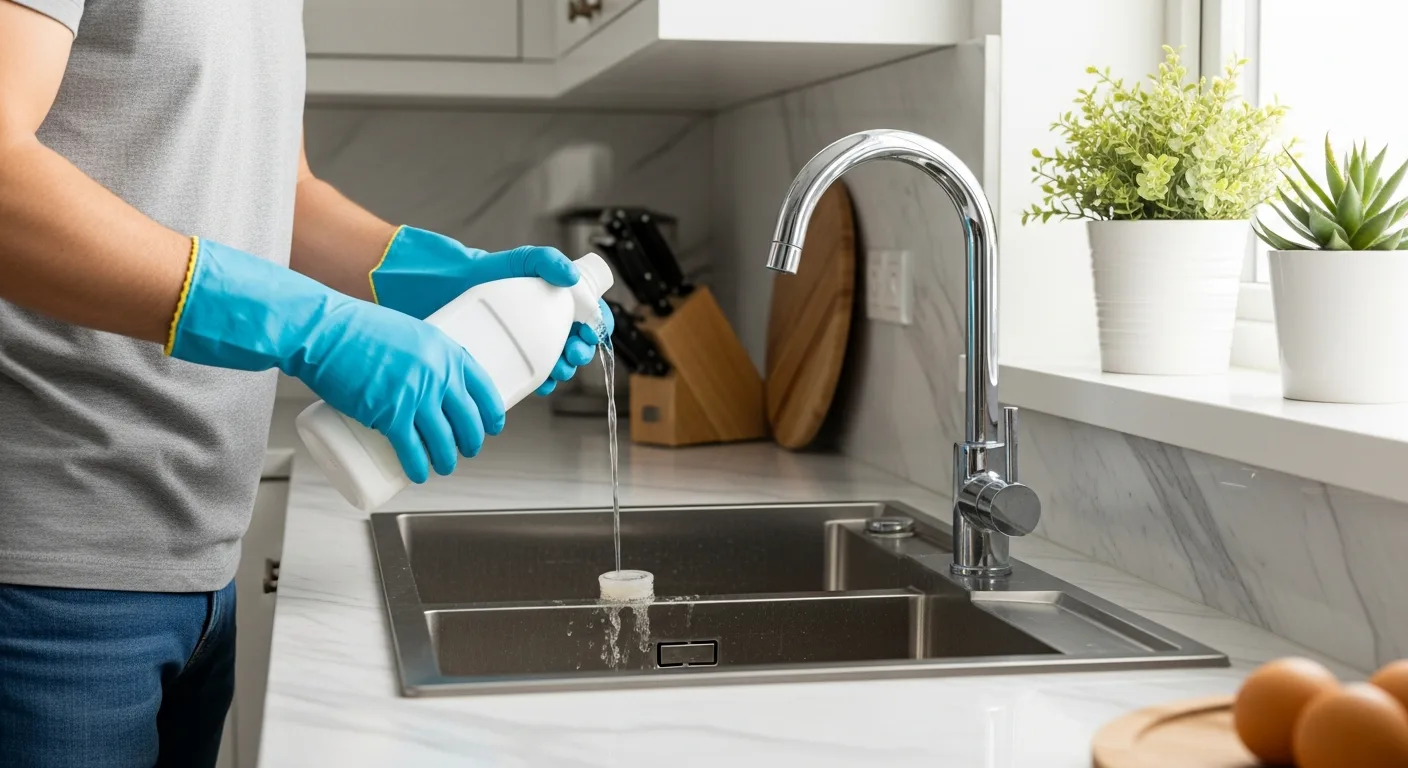
Safety is paramount when dealing with high-performance chemicals. A man should always ensure he is wearing heavy-duty rubber gloves and eye protection before opening a bottle of professional-grade cleaner. He must also ensure the kitchen is well-ventilated to prevent the inhalation of fumes.
- Read the Label: He should never assume all cleaners work the same way. Some require hot water, while others must be used with cold.
- Avoid Mixing: Never mix different types of drain cleaners. Combining an acid-based cleaner with a bleach-based one can create toxic chlorine gas.
- Flush Thoroughly: After the recommended waiting period, he should flush the drain with plenty of water to ensure all residue is gone.
- Check Water Quality: Sometimes, recurring clogs are exacerbated by mineral buildup. Exploring water quality solutions for the home can help him understand if hard water is contributing to his plumbing woes.
Natural Alternatives for Minor Blockages
If a man prefers to avoid harsh chemicals entirely, he can often find success with items already in his pantry. The classic combination of baking soda and white vinegar creates a foaming action that can dislodge minor grease buildup. He should pour half a cup of baking soda down the drain, followed by half a cup of vinegar, and let it sit for thirty minutes before flushing with boiling water.
For more stubborn physical obstructions, a sink plunger or a handheld drain snake is often more effective than any liquid. These tools allow him to apply direct physical force to the clog, breaking it apart so it can flow through the P-trap and into the main sewage line.
Long-Term Maintenance Strategies
The best way to deal with a clogged sink is to prevent it from happening in the first place. A man should make it a habit to never pour liquid grease down the drain; instead, he should collect it in a container and dispose of it in the trash. Using a mesh sink strainer can also catch small food particles before they enter the plumbing system. A weekly flush with a gallon of boiling water can go a long way in keeping the interior of the pipes smooth and clear of debris.
Frequently Asked Questions
Is it safe to use drain cleaner in a sink with a garbage disposal?
Not all cleaners are safe for disposals. A man should specifically look for products labeled “disposal safe.” Caustic chemicals can damage the seals and blades of the unit, leading to leaks and mechanical failure.
How often should I use enzymatic drain cleaners?
For preventative maintenance, using an enzymatic cleaner once a month is ideal. This keeps the bacterial colony active, allowing it to continuously break down food residue before it turns into a solid blockage.
Can drain cleaners damage PVC pipes?
Most modern liquid drain cleaners are formulated to be safe for PVC. However, heat-generating cleaners (oxidizing) can occasionally soften or warp plastic pipes if used excessively or left in the drain for too long. He should always follow the timing instructions on the bottle strictly.
Why is my kitchen sink still clogged after using a cleaner?
If a chemical cleaner fails, the blockage is likely a solid object (like a bottle cap or a large bone) or a deep clog in the main line. In this case, he should stop using chemicals—which can become a hazard for a plumber—and use a mechanical snake or call a professional.