The Timeless Appeal of Natural Beeswax
In an era dominated by synthetic aerosols and silicone-based sprays, the discerning homeowner often returns to the classics. Beeswax furniture polish has remained a staple in the workshop of the master craftsman for centuries, and for good reason. It provides a level of protection and a depth of glow that modern chemicals simply cannot replicate. When a man takes pride in his environment, he looks for solutions that respect the integrity of the materials he brings into his home.
Beeswax is a natural secretion from honeybees, used to build the structure of their hives. This same structural integrity translates beautifully to wood care. It acts as a breathable sealant, allowing the wood to expand and contract with humidity while shielding it from the drying effects of central heating and the dulling impact of dust.
How Beeswax Protects the Wood Grain
Unlike liquid polishes that often sit on the surface, a high-quality beeswax paste penetrates the upper fibers of the wood. It fills in microscopic scratches and creates a sacrificial layer against daily wear and tear. This is particularly important for those who invest in solid timber pieces rather than disposable composite furniture.
Whether he is relaxing after finishing a series of woodwork projects or simply maintaining his home, the tactile satisfaction of buffing wood to a soft, satin sheen is unmatched. The wax prevents oxidation, which is the primary cause of wood losing its color and becoming brittle over time. By applying a thin layer of beeswax, he ensures that the natural oils within the wood remain trapped, preserving the flexibility and strength of the grain.
Key Benefits of Using Beeswax Over Synthetic Alternatives
- Non-Toxic Composition: Most commercial sprays contain volatile organic compounds (VOCs) that can affect indoor air quality. Beeswax is food-safe and chemically inert.
- Water Resistance: Beeswax is naturally hydrophobic. It provides a protective barrier against accidental spills and condensation rings from glassware.
- Long-Lasting Luster: While silicone sprays provide an instant, oily shine that disappears in days, a beeswax finish can last for months, developing a rich patina over time.
- No Silicone Build-Up: Many modern polishes leave a smeary residue that actually attracts more dust. Beeswax cures to a hard, dry finish that stays clean longer.
Professional Application Techniques for the Best Results
To achieve a professional-grade finish, a man must understand that preparation is just as vital as the application itself. He should always start with a clean, dry surface. If there is old wax build-up or grime, a gentle cleaning with a damp cloth and mild soap is necessary before he begins the waxing process.
The Application Process
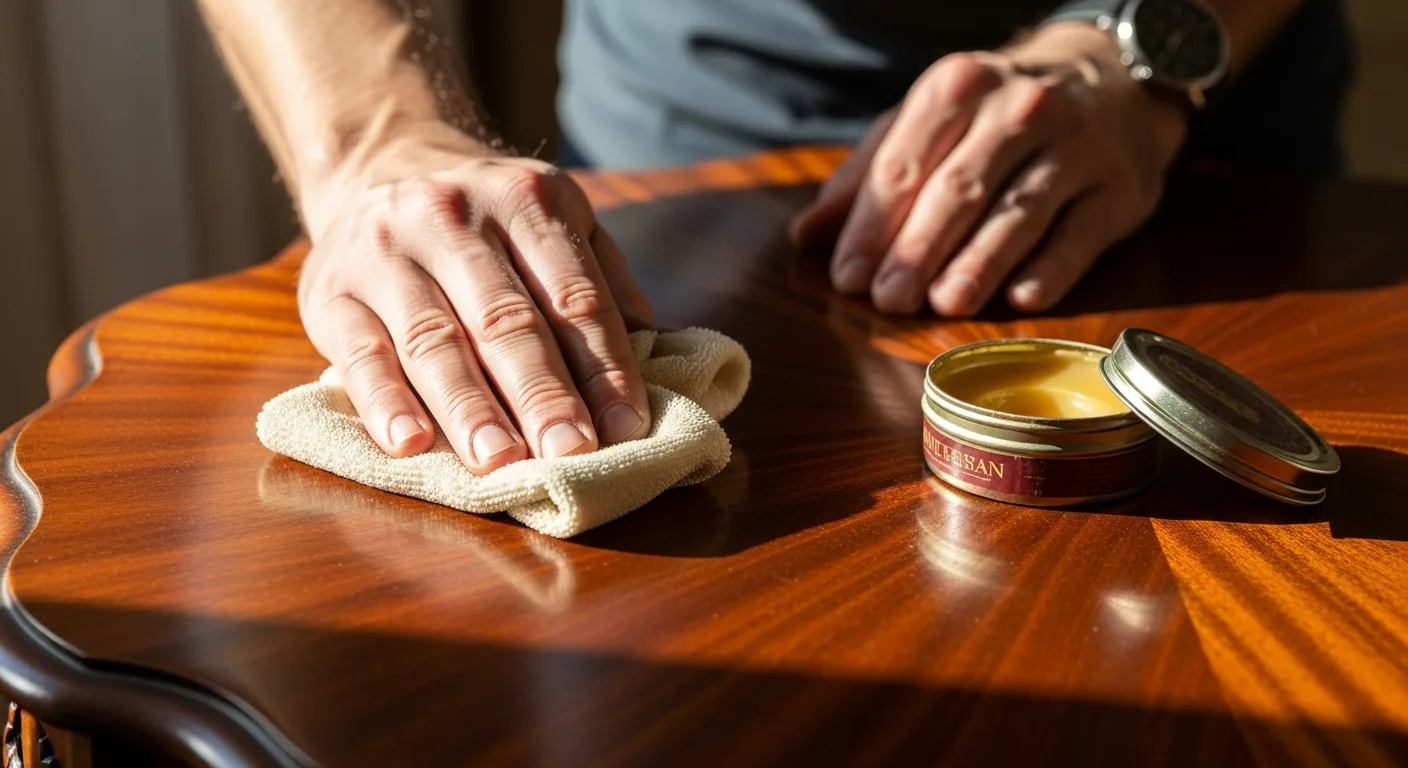
Using a lint-free cotton cloth or a specialized applicator pad, he should apply the beeswax in small, circular motions. The goal is to work the wax into the grain without over-applying. A thin, even coat is far superior to a thick, gloopy layer, which will only make buffing more difficult later.
The Curing and Buffing Stage
Once the wax has been applied, it needs time to “set.” Depending on the ambient temperature of the room, this usually takes between 15 and 30 minutes. He will know it is ready when the surface looks slightly hazy and feels dry to the touch. Using a fresh, clean cloth, he should then buff the surface vigorously in the direction of the wood grain. This friction generates a small amount of heat, which levels the wax and creates that iconic, deep-seated glow.
Preserving Quality for the Next Generation
When a man spends time identifying premium furniture pieces for his study or living room, he is making an investment in the future. Beeswax polish is the insurance policy for that investment. It is particularly effective on open-grained woods like oak, walnut, and mahogany, where the wax can truly settle into the texture of the timber.
By establishing a semi-annual maintenance routine, he ensures that his furniture does not just age, but matures. The transition from a new piece of furniture to a cherished heirloom is paved with regular care and the right choice of traditional materials.
Frequently Asked Questions
How often should I apply beeswax furniture polish?
For most indoor furniture, applying a fresh coat every six months is sufficient. However, high-traffic surfaces like dining tables may benefit from a light application every three to four months to maintain their water resistance.
Can beeswax be used on painted furniture?
Yes, beeswax can be used as a topcoat for chalk-painted or milk-painted furniture. It provides a durable seal and gives the paint a soft, hand-rubbed finish that protects it from chipping and stains.
Does beeswax polish expire?
Pure beeswax has an almost indefinite shelf life. However, blended furniture polishes that contain oils or solvents may eventually dry out or separate. If the polish smells rancid or has become rock-hard, it is time to replace it.
Is beeswax safe for antique finishes?
Beeswax is one of the safest options for antiques. It does not contain the harsh solvents found in many modern cleaners that can dissolve original shellac or lacquer finishes. It is the preferred choice of museum conservators worldwide.