Why Under Cabinet Lighting is a Non-Negotiable Upgrade
A dark kitchen counter isn’t just a nuisance; it’s a safety hazard when a man is handling sharp knives or measuring precise ingredients for a complex recipe. Standard overhead lighting often casts a shadow right where he needs to see the most. By installing the best under cabinet lighting, he eliminates these shadows, improves safety, and adds a layer of sophisticated ambiance that makes the kitchen feel high-end.
In 2026, the options have moved far beyond flickering fluorescent tubes. Modern solutions are sleek, energy-efficient, and often invisible until they are switched on. Whether he is looking for a weekend DIY project or a permanent hardwired installation, the right choice depends on his specific workspace needs and the existing layout of his cabinetry.
LED Strips vs. Puck Lights: Finding the Right Profile
The two most popular styles of under cabinet lighting are LED tape (strips) and puck lights. Each serves a distinct purpose in a kitchen’s design language.
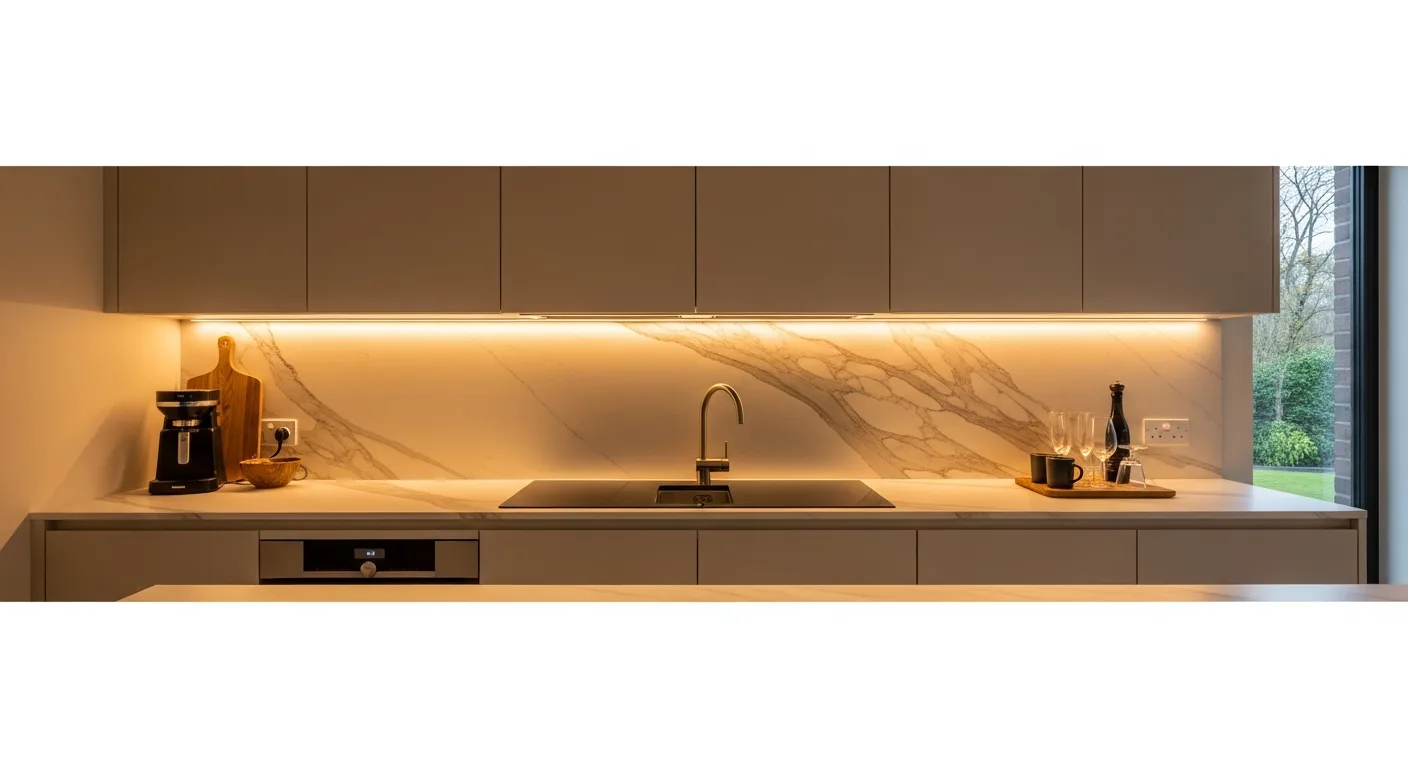
- LED Strip Lighting: These provide a continuous, even glow across the entire countertop. They are ideal for eliminating dark spots and work exceptionally well when he is designing a space with 2-tone kitchen cabinets, as the uniform light highlights the contrast between different finishes.
- Puck Lights: These circular fixtures create a “scalloped” light effect, focusing beams on specific areas. They are perfect for creating visual drama or highlighting a high-end backsplash. However, they can create more glare on reflective surfaces like polished granite.
Power Sources and Installation Methods
Before he buys a kit, he must decide how he wants to power the system. This decision usually dictates the complexity of the installation and the final aesthetic.
Hardwired Systems are the gold standard. They connect directly to the home’s electrical grid, meaning no visible wires and the ability to control everything from a wall switch. This is the best route for a permanent renovation where he wants a seamless look.
Plug-in Fixtures offer a middle ground. They are easy to install—usually requiring just a few screws or adhesive—and plug into a standard outlet. The challenge here is hiding the cord that runs from the light to the wall socket. Battery-operated lights are the easiest to install but require frequent recharging or battery swaps, making them better suited for low-traffic areas or rental properties where he cannot modify the wiring.
The Importance of Color Temperature and CRI
Not all white light is created equal. When selecting the best under cabinet lighting, he should pay close attention to the Color Temperature (measured in Kelvin) and the Color Rendering Index (CRI).
For a kitchen, a temperature between 3000K and 4000K is ideal. This range provides a crisp, neutral white that makes the space feel clean without looking like a sterile hospital wing. A high CRI (90 or above) ensures that the colors of his food look natural and vibrant, which is essential for accurate food preparation.
Smart Integration and Control
The modern kitchen is increasingly connected. For the tech-savvy homeowner, smart home integration explained simply means he can control his kitchen ambiance via voice commands or a smartphone app. Many high-end LED systems now include Wi-Fi or Zigbee controllers that allow him to dim the lights, set schedules, or even change the color temperature based on the time of day.
Motion sensors are another practical addition. Having the lights automatically kick on when he walks into the kitchen for a midnight snack adds a level of convenience that is hard to live without once experienced.
Frequently Asked Questions
How many lumens do I need for under cabinet lighting?
For effective task lighting, he should look for fixtures that provide roughly 250 to 450 lumens per foot. This ensures the workspace is bright enough for detailed tasks without being blindingly bright.
Can I install under cabinet lighting myself?
Yes, plug-in and battery-operated LED strips are very DIY-friendly. However, if he chooses a hardwired system, it is often safer to hire a licensed electrician to ensure the wiring meets local building codes.
Should I place the lights at the front or back of the cabinet?
For the best results, he should mount the lights toward the front of the cabinet (behind the light rail). This placement directs the light toward the center of the countertop rather than just reflecting it off the backsplash.
Do LED lights get hot under cabinets?
Modern LEDs produce very little heat compared to old halogen or xenon bulbs. While they may feel slightly warm to the touch after hours of use, they will not damage his cabinets or heat up the items stored inside them.