The Art of Layering Dining Room Light
Lighting a dining room effectively requires more than just hanging a single fixture over the table and calling it a day. To create a space that feels both sophisticated and functional, a man must understand the concept of layered lighting. This involves combining three distinct types of illumination: ambient, task, and accent lighting.
- Ambient Lighting: This is the general illumination of the room. While a chandelier often provides this, recessed cans or flush mounts can fill in the shadows.
- Task Lighting: In the dining room, the task is eating and conversation. The light should be bright enough to see the meal clearly without causing glare.
- Accent Lighting: Use this to highlight architectural features or artwork. Wall sconces or picture lights add depth and prevent the room from feeling flat.
When a homeowner selects his fixtures, he should ensure they complement his existing high-quality dining room furniture to maintain a cohesive aesthetic throughout the space.
Proportion and Scale: Getting the Size Right
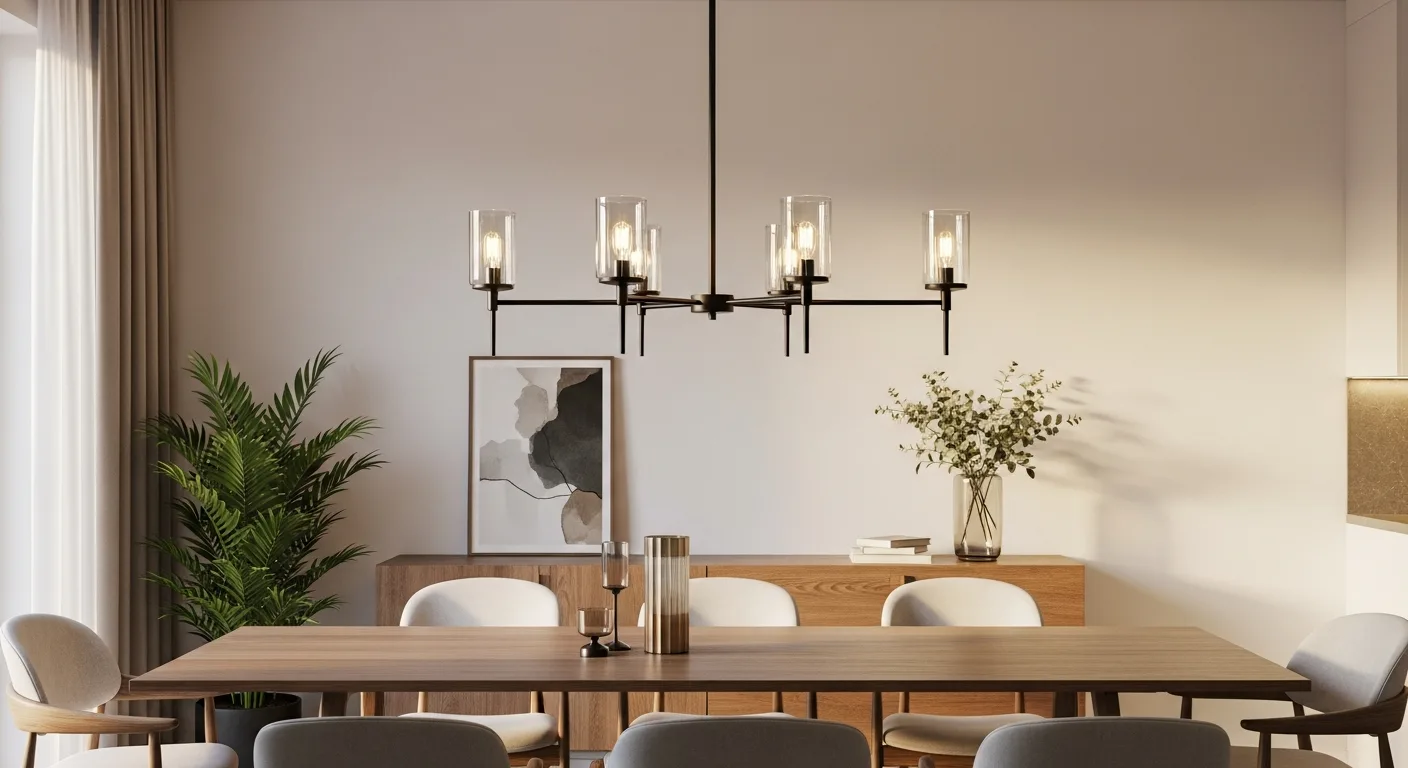
One of the most common mistakes is choosing a light fixture that is either too small, making it look like an afterthought, or too large, which overwhelms the table. A reliable rule of thumb is to choose a fixture that is one-half to two-thirds the width of the dining table. For a circular table, a round chandelier or a single large pendant works best. For long, rectangular tables, consider linear chandeliers or a series of multiple pendants to ensure even light distribution across the entire surface.
Height is equally critical. The bottom of the fixture should typically hang 30 to 36 inches above the tabletop. This height ensures that the light doesn’t block the view of guests sitting across from each other while providing enough clearance for centerpieces and serving platters.
Smart Integration and Mood Control
In 2026, static lighting is a relic of the past. Every modern dining room should be equipped with dimmer switches. Dimming allows a man to transition the room from a bright, energetic breakfast spot to an intimate, low-lit environment for evening cocktails. Beyond manual dimmers, many are opting for smart home integration to automate these transitions.
With smart bulbs or switches, he can program “scenes” that adjust the brightness and color temperature based on the time of day. For instance, a warm 2700K glow is ideal for dinner, as it makes food look more appetizing and creates a relaxed atmosphere, whereas a cooler 3500K light might be better for a morning meeting at the table.
Choosing the Right Style for 2026
Current trends favor organic minimalism and industrial refinement. We are seeing a shift away from overly ornate crystal chandeliers toward fixtures that use raw materials like hand-blown glass, blackened steel, and sustainable wood. If the dining room has a high ceiling, a multi-tier fixture can draw the eye upward, emphasizing the volume of the room.
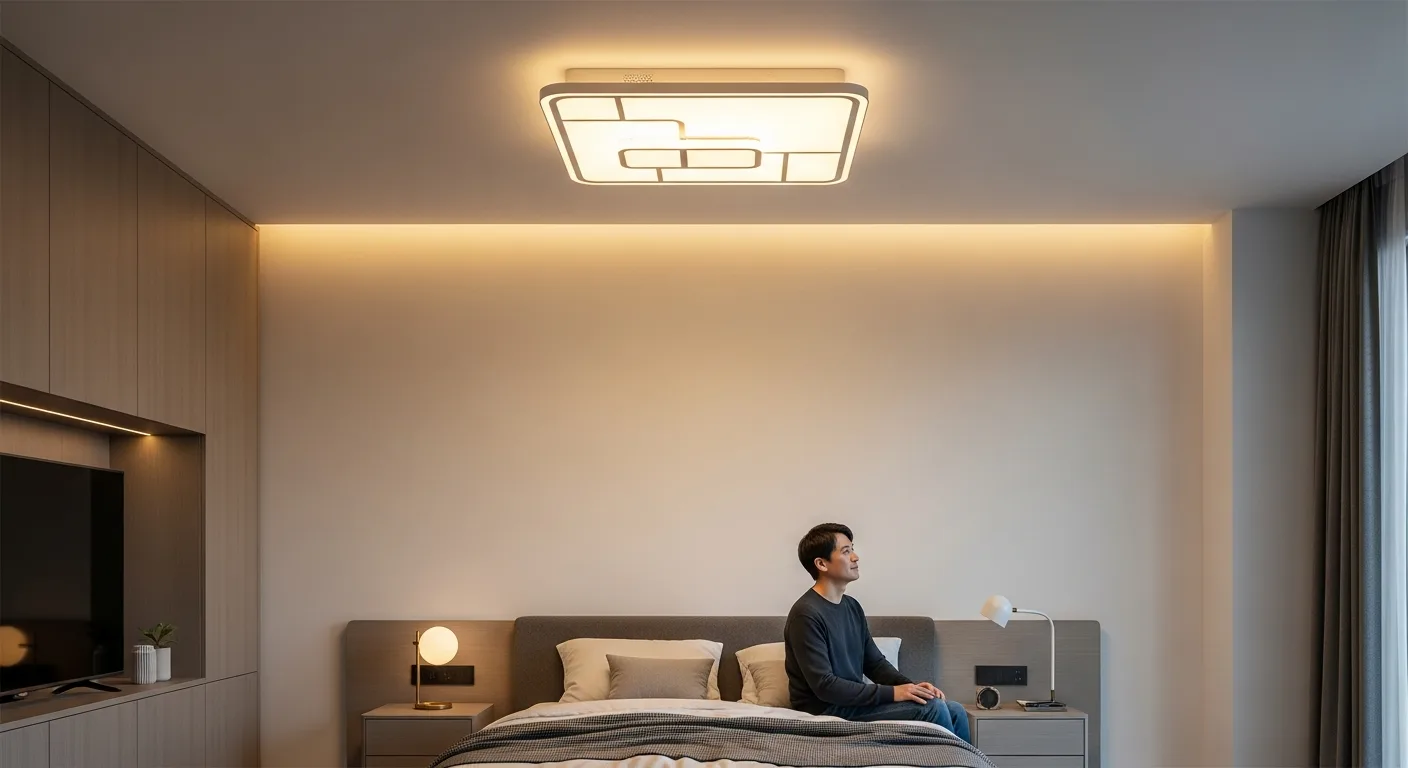
For those with lower ceilings, a large-scale flush mount or a semi-flush fixture with a wide diameter can provide the necessary visual impact without the physical intrusion of a hanging chain. The goal is to find a piece that acts as a focal point—a conversation starter that reflects the homeowner’s personal taste and the architectural integrity of his home.
Frequently Asked Questions
How many lumens do I need for a dining room?
For a standard dining area, aim for a total of 30 to 40 lumens per square foot. If the room is 100 square feet, you would want a combined output of 3,000 to 4,000 lumens across all light sources.
Can I mix different metal finishes in my lighting?
Yes, mixing metals is a sophisticated design choice. A man can pair a matte black chandelier with brass wall sconces, provided there is a common design element, such as a similar geometric shape, to tie them together.
Should the light fixture be centered in the room or over the table?
The fixture should always be centered over the dining table. If the table is not centered in the room, the light should follow the table’s placement to maintain visual balance and functional illumination.