The Psychology of Feline Vertical Space
Most pet owners focus on the floor, filling it with beds and scratching posts that eat up valuable square footage. However, a cat views his environment in three dimensions. In the wild, high vantage points provide safety from predators and a clear line of sight for hunting. When you bring cat wall furniture into your home, you aren’t just buying a shelf; you are providing him with a sense of security and territorial control.
For a cat, being up high reduces stress. If he feels overwhelmed by a busy household or a loud vacuum, he can retreat to a wall-mounted perch where he feels untouchable. This vertical territory is especially vital in multi-cat homes, as it allows cats to coexist by occupying different levels of the room, effectively expanding their living area without increasing the home’s footprint.
Essential Components of a Cat Wall
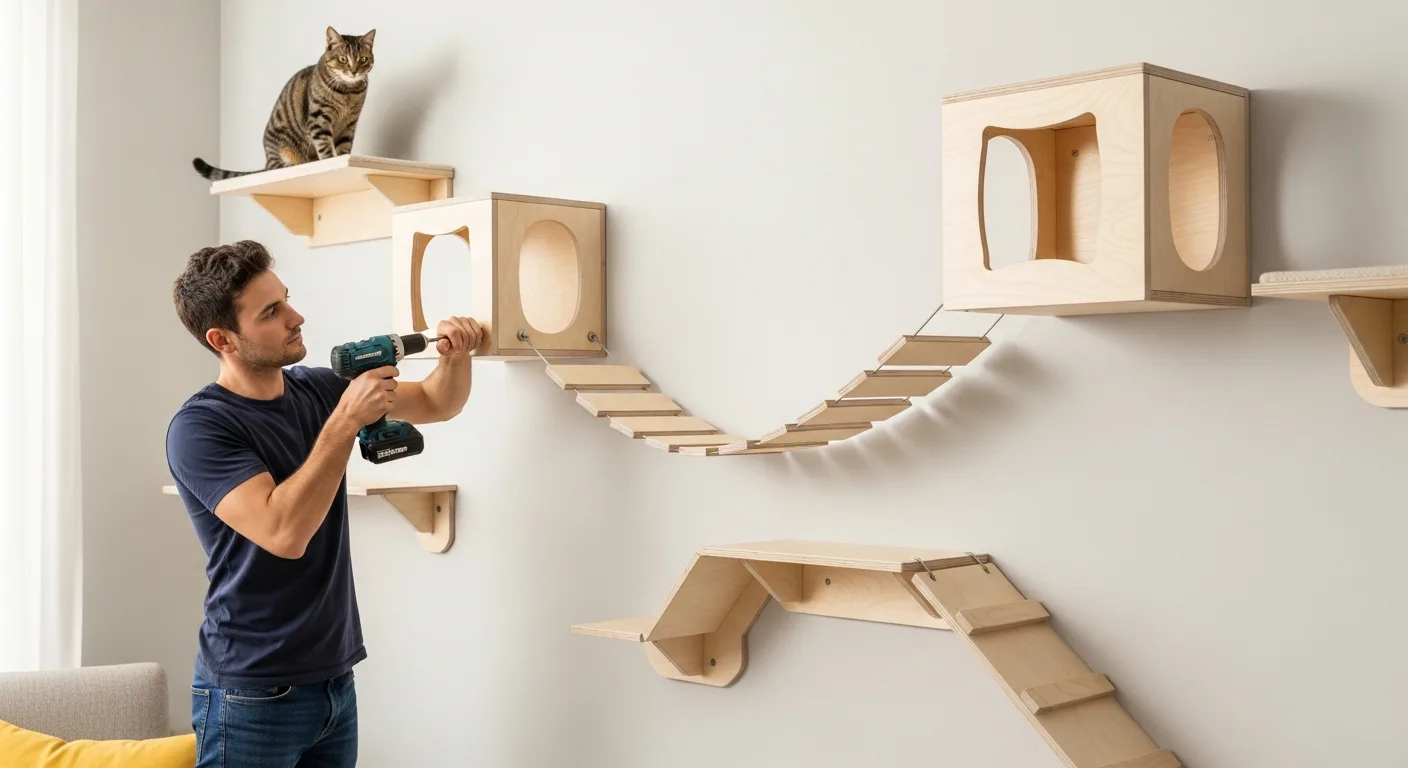
Building a vertical playground requires more than just a few random planks. To keep him engaged, you need a variety of textures and functional pieces. A well-rounded setup usually includes:
- Floating Shelves: These serve as the primary walkways and landing pads. Look for shelves with a non-slip surface like felt or carpet so he doesn’t slide off during a high-speed climb.
- Wall-Mounted Bridges: These flexible suspension bridges add a bit of challenge and movement, mimicking the feel of a tree branch.
- Cat Hammocks: Perfect for long naps, these fabric perches contour to his body and provide a cozy, elevated sleeping spot.
- Vertical Scratching Posts: Mounting a sisal-wrapped pillar to the wall encourages him to stretch his full body length while maintaining his claws.
To create a truly cohesive environment, many owners pair these vertical elements with discrete floor-level solutions. For instance, integrating cat litter box furniture nearby ensures that his entire routine—from play to rest to hygiene—is handled with style and efficiency.
Planning Your Layout for Maximum Flow
Before you start drilling holes, you must map out the path. A common mistake is placing shelves too far apart, making it difficult for an older or less athletic cat to navigate. Aim for a stair-step pattern with no more than 12 to 18 inches of vertical or horizontal distance between each piece.
Consider the “exit strategy.” A cat should never feel cornered on a high shelf. Ensure there are at least two ways to get up and down from the highest point. This prevents a more dominant cat from trapping another on a single perch. You can also enhance the aesthetic of these high-traffic areas by placing cat-safe house plants on nearby human-only shelves, creating a lush, jungle-like atmosphere that is safe for him to sniff.
Installation Safety and Weight Limits
Safety is the most critical factor when installing cat wall furniture. A 15-pound cat leaping from a distance can exert significant force upon landing. If the shelf isn’t secured properly, it will eventually pull out of the wall, potentially injuring him and damaging your home.
Always mount brackets into wall studs. Use a high-quality stud finder to locate the wooden framing behind your drywall. If the layout requires a shelf where no stud exists, use heavy-duty toggle bolts rather than standard plastic anchors. Check the manufacturer’s weight rating for every piece; most premium cat shelves are designed to hold at least 30 to 50 pounds to account for the kinetic energy of a jump.
Choosing Durable Materials
Not all cat furniture is built to last. Avoid cheap particle board, which can crumble under repeated stress or moisture. Instead, opt for solid wood or high-grade plywood. These materials hold screws better and offer a more premium look that complements your interior design.
For the surfaces, look for replaceable components. Sisal pads and carpet inserts will eventually wear out from his scratching. Choosing a system where these can be swapped out ensures the furniture remains functional for years without requiring a full replacement of the wooden structure.
Frequently Asked Questions
How high should I mount the highest shelf?
The highest shelf should be about 6 to 12 inches below the ceiling. This gives him enough head clearance to sit upright comfortably without feeling cramped, while still providing the high-altitude view he craves.
Will cat wall furniture damage my walls?
Like any shelving, it requires drilling holes. However, if installed correctly into studs, the damage is limited to small screw holes that can be easily patched and painted if you decide to move the furniture later.
How do I encourage my cat to use the wall?
Use treats or catnip to lure him onto the lower levels first. Never force him onto a shelf, as this can create a negative association. Let him explore at his own pace, and he will eventually realize the benefits of the high ground.