The Science Behind the Cardboard Obsession
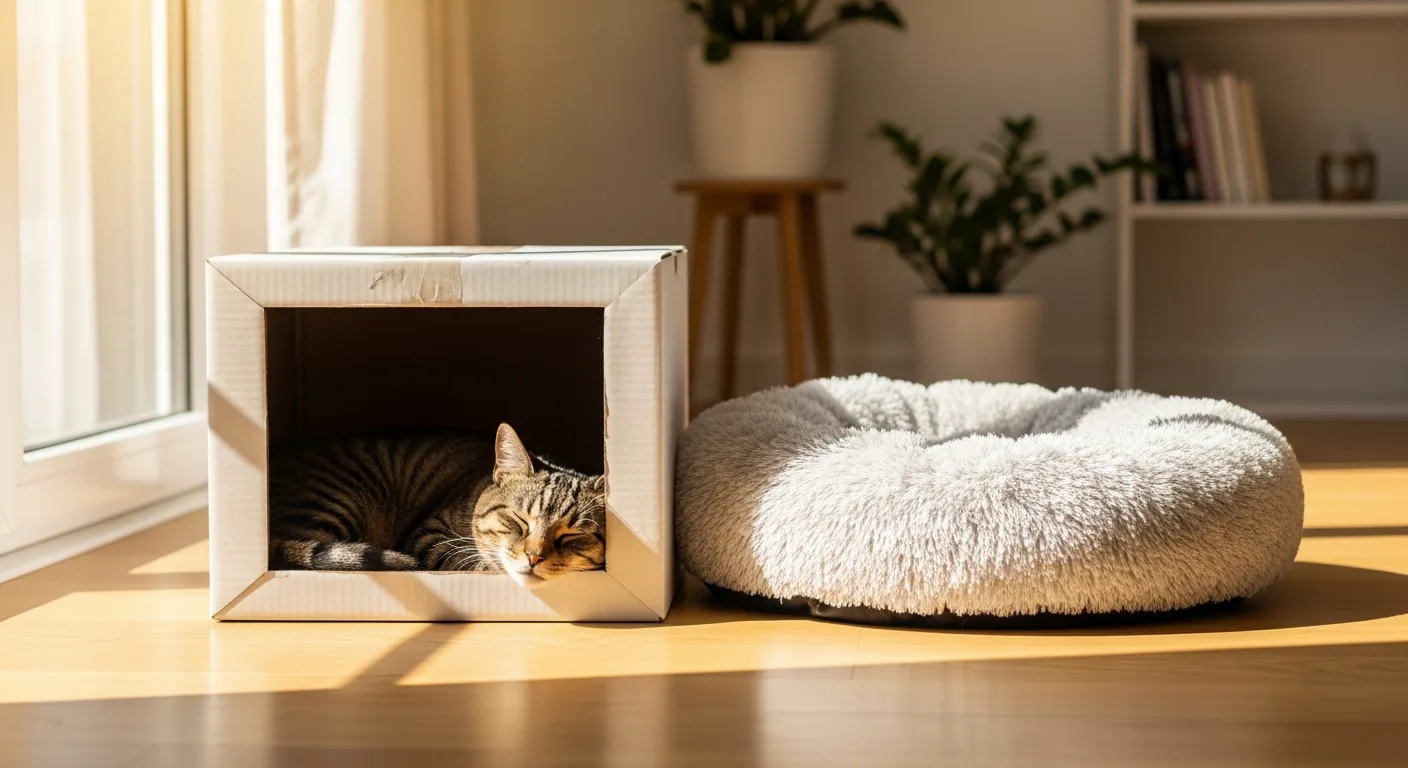
Every cat owner has experienced the same frustration: he spends fifty dollars on a plush, orthopedic bed, only for his cat to spend the next six hours sleeping in the shipping box it came in. This isn’t just feline spite. Cardboard cat houses tap into a cat’s primal instincts for security and warmth. In the wild, a small feline is both a predator and prey. A confined space with thick walls allows him to monitor his surroundings without being seen from behind.
Cardboard is also a phenomenal insulator. Cats have a higher basal body temperature than humans, often hovering around 101.5 degrees Fahrenheit. Corrugated cardboard traps air between its layers, creating a thermal barrier that helps him maintain his body heat without expending extra energy. Integrating a cardboard sanctuary into his environment is a simple way of understanding pet health remedies that focus on stress reduction and physical comfort.
Choosing the Right Design for His Personality
Not all cardboard houses are created equal. When a man looks for the perfect structure for his pet, he should consider the cat’s specific habits. Does he like to climb, or does he prefer to burrow?
- The Classic Cabin: A simple four-walled structure with a single entry point. This is best for “bush dwellers” who like to hide at floor level.
- The Multi-Level Tower: These often feature reinforced cardboard to support the weight of a jumping cat. Ideal for “tree dwellers” who feel safest when they are high above the ground.
- The Scratch-Integrated House: Many modern designs include a corrugated floor specifically meant for scratching. This saves his furniture while giving the cat a place to mark his territory.
Durability and Structural Integrity
A common misconception is that cardboard is flimsy. High-quality cardboard cat houses use double-walled corrugated board, which can withstand significant weight and the occasional zoomie-induced collision. If he is worried about the house sliding across hardwood floors, he can apply small rubber adhesive pads to the bottom corners to keep it anchored.
While a cardboard house provides a safe retreat, a responsible owner should keep a pet emergency care home guide accessible to handle any unexpected issues, ensuring his companion stays healthy and active. Cardboard is also incredibly easy to replace. Unlike fabric beds that trap dander and odors, a cardboard house can be recycled and replaced once it becomes worn or soiled, maintaining a cleaner living environment for both the man and his pet.
DIY vs. Pre-Fabricated Options
For the man who enjoys a weekend project, building a custom cardboard house is straightforward. He can use heavy-duty shipping boxes and non-toxic, water-based glue to create a bespoke fortress. However, pre-fabricated options offer precision-cut ventilation holes and aesthetic designs that blend better with modern interior decor. Many of these kits snap together without the need for tools, providing a sturdy structure in minutes.
When selecting a pre-made house, he should check for soy-based inks. Cats often chew on the edges of cardboard to relieve stress or clean their teeth, so ensuring the dyes are safe is a top priority. Avoid any designs that use plastic coatings or heavy lamination, as these reduce the breathability of the house and can be harmful if ingested.
Where to Place the New Fortress
Location is everything. If he places the house in a high-traffic area, the cat may feel too exposed to relax. The best spot is usually a quiet corner of the living room or a sun-drenched area near a window. By elevating the house slightly—perhaps on a sturdy side table—he can give his cat a better vantage point to survey his kingdom, further reducing the animal’s anxiety levels.
Frequently Asked Questions
How long does a cardboard cat house typically last?
Depending on the cat’s activity level and whether he uses it as a scratching post, a high-quality cardboard house can last anywhere from six months to two years. Once the structural integrity begins to fail, it is time to recycle it.
Are cardboard houses safe for kittens?
Yes, they are excellent for kittens as they provide a soft, warm environment. Just ensure there are no small detachable parts or sharp plastic fasteners that a curious kitten could swallow.
Can I paint a cardboard cat house?
A man can certainly customize the house, but he must use pet-safe, non-toxic paint. Avoid oil-based paints or those with heavy fumes, as a cat’s sense of smell is much more sensitive than a human’s.