The Evolution of the Small-Space Workout
Gone are the days when a home workout meant a dusty treadmill in a dark basement. In 2026, the compact home gym has become a marvel of engineering, allowing a man to achieve elite-level fitness within the footprint of a walk-in closet. He no longer needs to sacrifice his living room’s aesthetic or his bedroom’s floor space to maintain a rigorous strength routine. The secret lies in choosing gear that works twice as hard while taking up half the room.
Selecting Multi-Functional Strength Tools
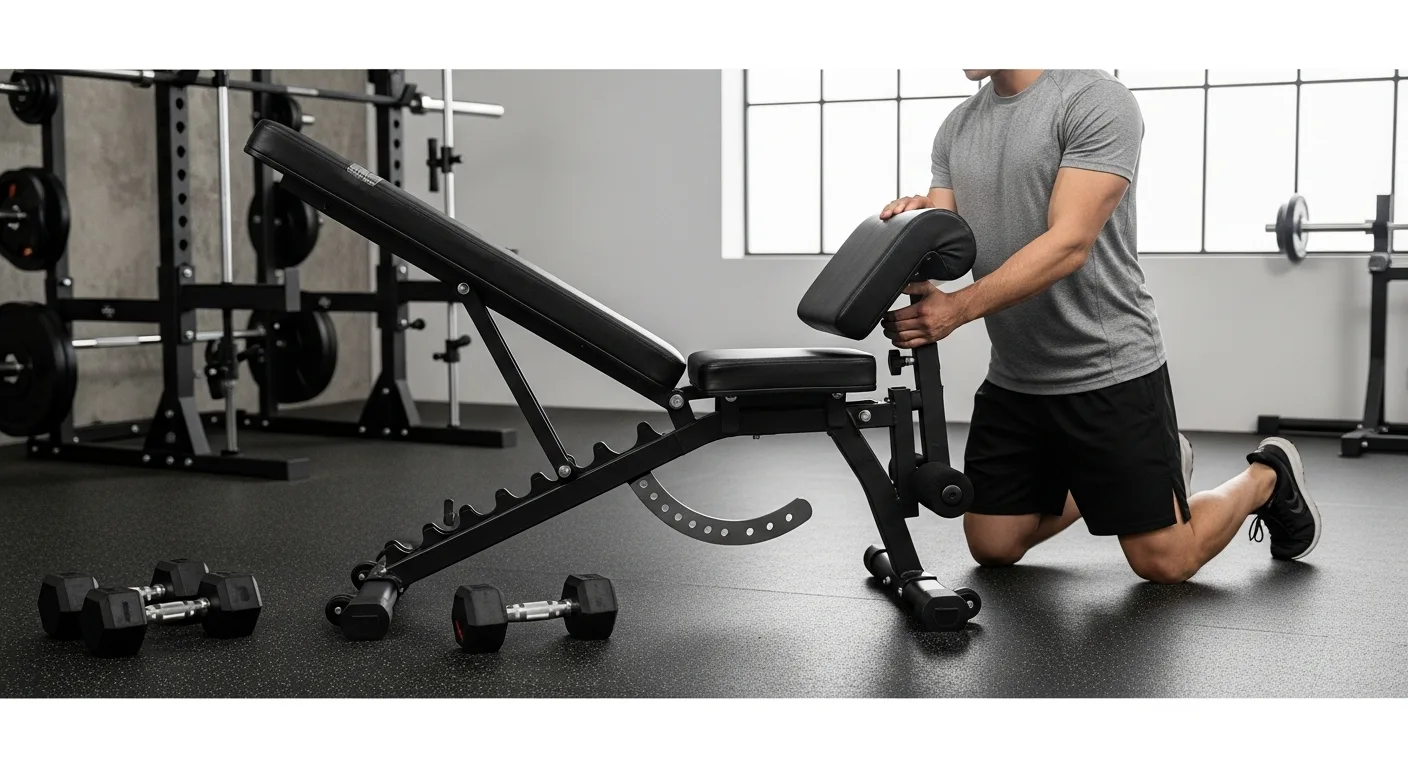
The foundation of any space-efficient setup is versatility. Instead of a rack of fixed dumbbells, he should opt for a high-quality set of adjustable dumbbells that can replace 15 pairs of weights. This single investment saves several square feet of floor space immediately. To complement this, a cornerstone of any versatile setup is a high-quality adjustable bench for his home gym, which allows him to transition from incline presses to seated rows without taking up a permanent footprint.
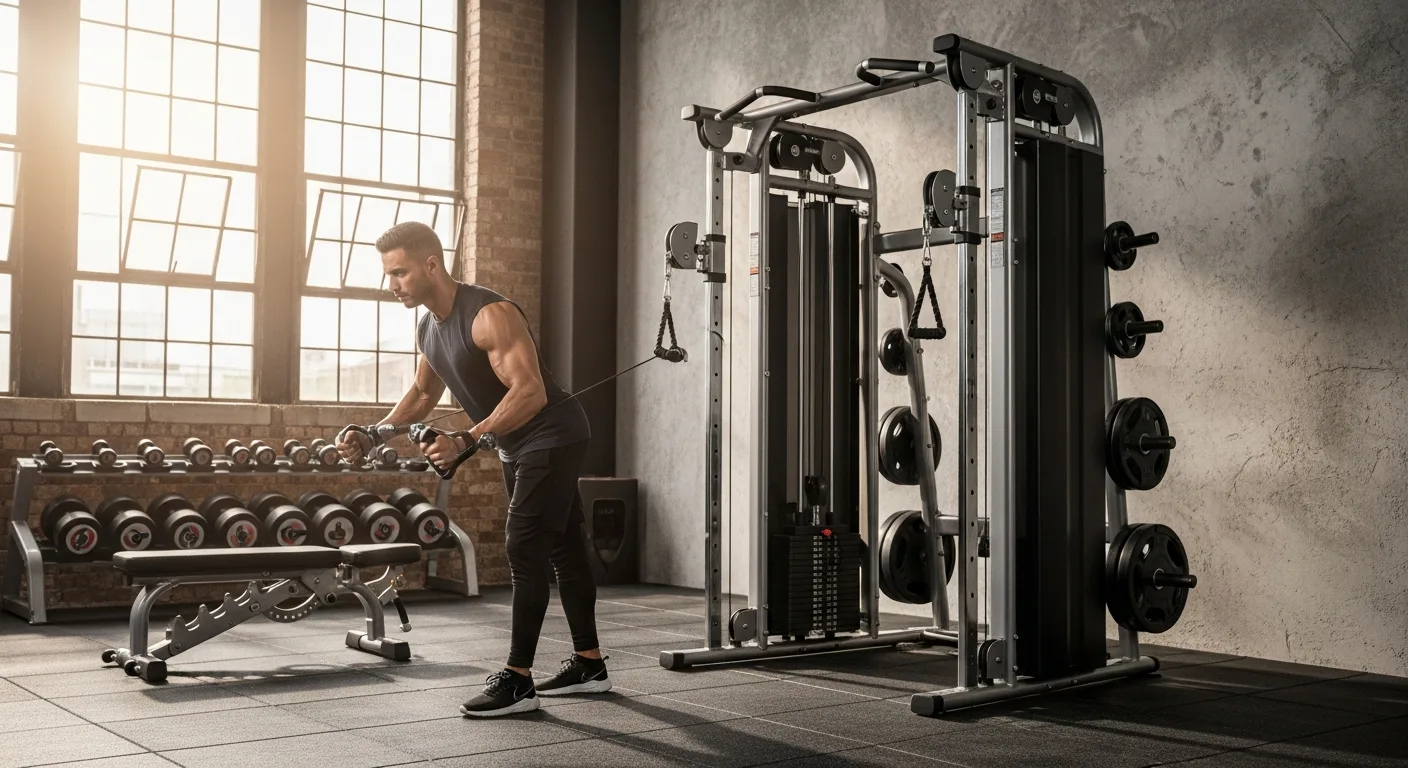
He should also look for equipment that utilizes resistance cables. Modern wall-mounted cable machines offer hundreds of exercise variations with a depth of only a few inches. These systems provide constant tension, which is often more effective for muscle hypertrophy than traditional free weights alone, all while keeping the center of the room clear for movement.
Vertical Storage and Wall-Mounted Solutions
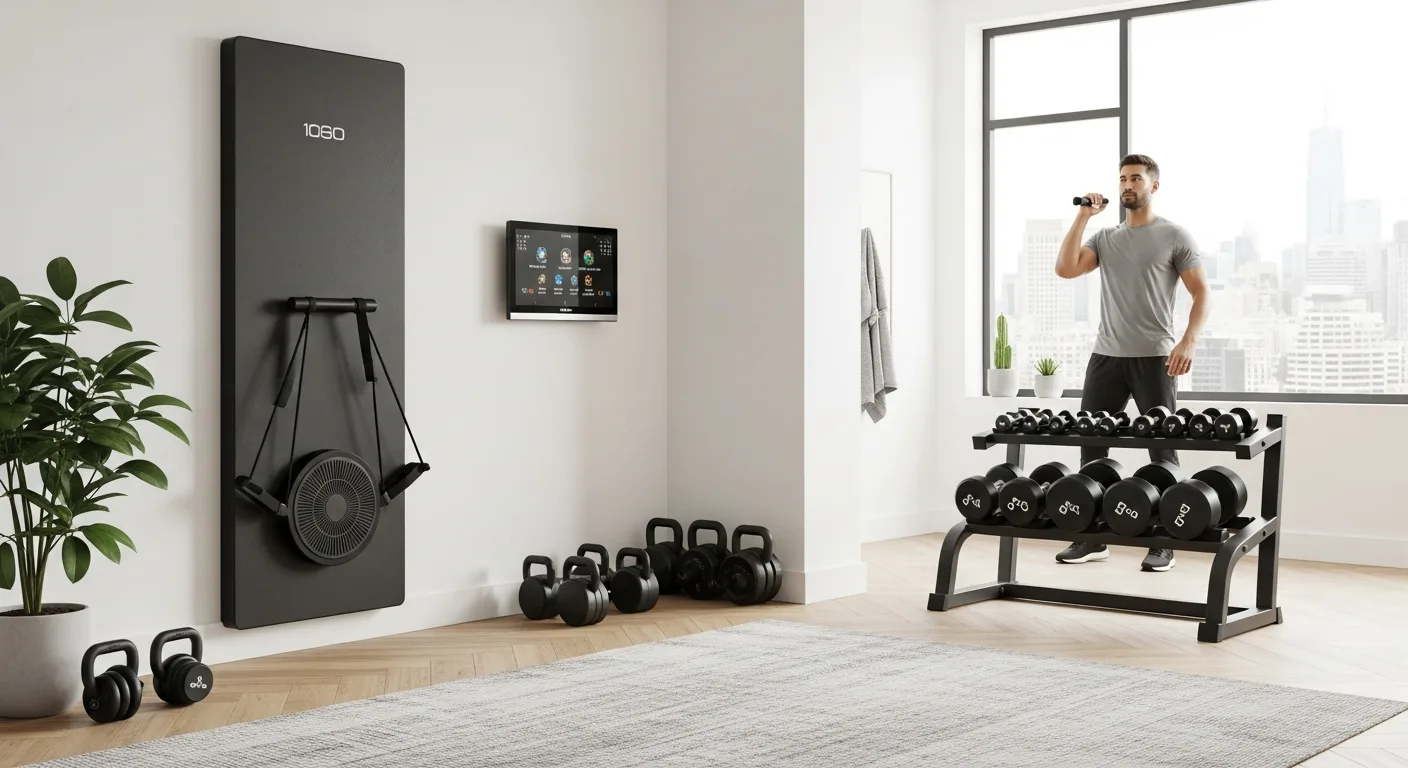
When floor space is at a premium, he must look at his walls. Verticality is the best friend of the compact gym owner. Wall-mounted folding racks are a game-changer; they provide a sturdy platform for squats and pull-ups but fold flat against the wall when the workout is over. This allows the room to return to its original purpose—whether that is a home office or a guest bedroom—in less than sixty seconds.
Pegboards and heavy-duty wall hooks are excellent for hanging resistance bands, jump ropes, and weight belts. By keeping his gear off the floor, he eliminates tripping hazards and creates a more focused, professional environment. When he starts mapping out his zone, he should prioritize home gym setup flooring and storage to ensure his subfloor stays intact and his gear remains organized and accessible.
Flooring Essentials for Apartment Dwellers
He cannot overlook the importance of what is under his feet. In a compact setting, especially in an apartment or a shared home, sound dampening is a necessity. High-density rubber tiles are the gold standard. They protect the foundation from dropped weights and significantly reduce the vibration that travels through the joists. He should look for tiles that are at least 8mm thick to provide adequate cushioning for his joints during high-impact movements like burpees or box jumps.
Smart Tech: The Invisible Personal Trainer
The most significant advancement in 2026 is the integration of smart mirrors and AI-driven coaching. These devices act as a full-length mirror when off, but when activated, they provide a digital personal trainer who tracks his form and counts his reps. This eliminates the need for bulky TV stands or tablets. He gets real-time feedback on his squat depth and shoulder alignment, ensuring he stays injury-free while pushing his limits in a confined space.
Maximizing Efficiency with HIIT and Calisthenics
A compact home gym thrives when the user focuses on high-intensity interval training (HIIT) and bodyweight mastery. A simple door-frame pull-up bar and a set of gymnastic rings can provide a more challenging upper-body workout than many commercial machines. By combining these with short, explosive bursts of movement, he can burn more calories in twenty minutes than he would in an hour of steady-state cardio on a bulky elliptical.
Frequently Asked Questions
How much space do I actually need for a compact home gym?
A man can build a highly effective gym in as little as 50 square feet. A 7’x7′ area is typically enough to accommodate an adjustable bench, a set of dumbbells, and enough clearance for dynamic movements.
Are compact gyms as effective as commercial gyms?
Yes. With the right selection of adjustable weights and a sturdy pull-up station, he can hit every major muscle group. The key is progressive overload—continually increasing the weight or intensity of his lifts.
What is the best way to prevent floor damage in a small room?
He should use interlocking rubber mats or a heavy-duty deadlift platform if he plans on using heavy barbells. For most compact setups, 1/2-inch thick rubber flooring is sufficient to protect the subfloor.
Is it worth buying a smart fitness mirror?
If he values form correction and has limited space for a screen, a smart mirror is an excellent investment. It provides the guidance of a trainer without taking up any floor space at all.