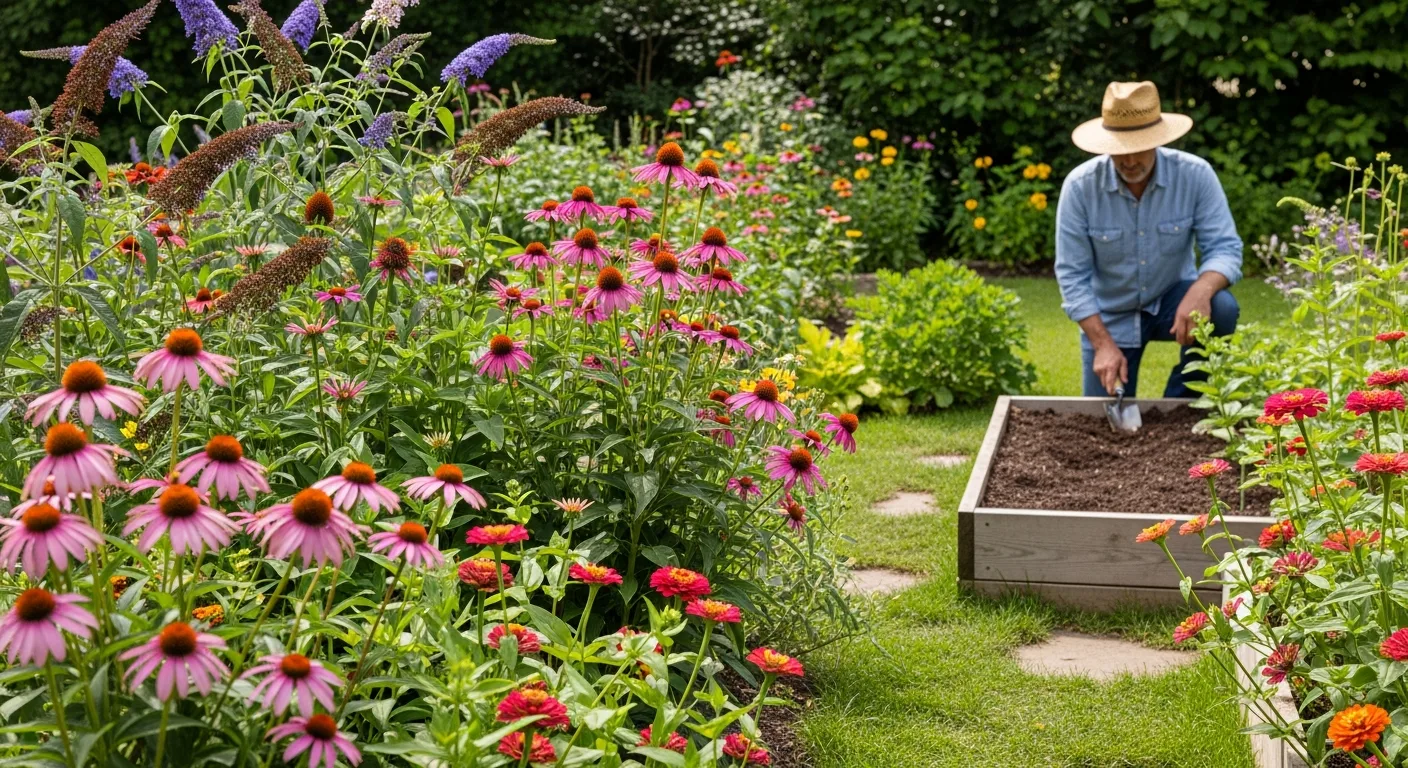
The Foundation of a Thriving Butterfly Habitat
A garden without butterflies is a missed opportunity for any homeowner looking to connect with the local ecosystem. To attract these vibrant insects, a gardener must look beyond simple aesthetics and focus on biological necessity. Butterflies require two distinct types of plants: nectar plants for the adults to feed on and host plants where they can lay their eggs and provide food for developing caterpillars.
When a man starts his project, he should prioritize native species. Native plants have co-evolved with local butterfly populations, offering the exact chemical composition and bloom timing these insects need. Choosing the right foundation is key; just as he would select the best soil for vegetable garden success, a butterfly enthusiast must prioritize nutrient-dense, well-draining earth to ensure his floral investments reach their full potential.
Top Nectar Plants for Adult Butterflies
Adult butterflies are high-energy flyers that require constant refueling. They are attracted to bright colors—specifically purples, yellows, and oranges—and flat-topped flowers that provide a sturdy landing pad.
- Purple Coneflower (Echinacea): A hardy perennial that stands up to heat and provides a massive amount of nectar. Its central cone is a magnet for Fritillaries and Monarchs.
- Butterfly Bush (Buddleia): While highly effective at attracting insects, he should ensure he selects a non-invasive variety suitable for his specific region.
- Zinnias: These are perhaps the easiest annuals to grow from seed. They bloom continuously from mid-summer until the first frost, providing a late-season lifeline for migrating species.
- Black-Eyed Susans (Rudbeckia): These provide a vibrant yellow splash and are incredibly resilient against common garden pests.
If space is limited, he can still cultivate a vibrant habitat using a 5 gallon bucket garden guide to grow compact nectar sources like Lantana or Pentas on a patio or balcony.
Host Plants: Feeding the Next Generation
To have a true butterfly garden, a man must be willing to let his plants be eaten. Host plants are the only thing caterpillars consume. Without them, the lifecycle is broken, and the butterflies will simply pass through his yard rather than staying to colonize it.
Milkweed (Asclepias) is the most famous example. It is the mandatory host plant for the Monarch butterfly. Without it, the Monarch cannot survive. He should look for Swamp Milkweed or Common Milkweed depending on his soil moisture levels. Other essential host plants include Dill, Fennel, and Parsley, which serve as the primary food source for Black Swallowtail caterpillars. If he notices the leaves being stripped away, he should take it as a sign of success rather than a reason for alarm.
Strategic Garden Design for Pollinators
Placement is just as important as plant selection. Butterflies are cold-blooded and require the sun’s warmth to fly. He should site his garden in a spot that receives at least six hours of direct sunlight daily. Furthermore, providing a “puddling station”—a shallow dish of damp sand or mud—allows male butterflies to extract necessary minerals and salts.
Wind protection is another often-overlooked factor. Large, flat leaves or a nearby hedgerow can act as a windbreak, preventing delicate wings from being battered during a storm. He should also avoid all chemical pesticides. Even “organic” sprays can be lethal to caterpillars and adult butterflies alike. Integrated pest management and manual removal of harmful insects are the only ways to maintain a safe sanctuary.
Maintenance and Seasonal Continuity
A well-planned garden provides food from early spring through late autumn. He should aim for a succession of blooms. Early bloomers like Chives or Lilacs get the season started, while late-season stars like Asters and Goldenrod provide the fuel necessary for species preparing for migration or overwintering.
In the fall, he should resist the urge to “clean up” the garden too thoroughly. Many butterflies overwinter as eggs, larvae, or chrysalises tucked away in leaf litter or hollow plant stems. By leaving the stalks standing until spring, he protects the very life he worked all summer to attract.
Frequently Asked Questions
What is the single best plant for a butterfly garden?
While many plants are beneficial, Milkweed is considered the most critical because it is the exclusive host plant for the Monarch butterfly, a species currently facing significant population declines.
Do butterflies prefer certain colors?
Yes, butterflies are naturally drawn to bright, vibrant colors. They are particularly attracted to red, yellow, orange, pink, and purple flowers that are easy to spot from a distance.
Can I grow butterfly plants in pots?
Absolutely. Many nectar plants like Zinnias, Lantana, and even certain varieties of Milkweed thrive in containers, provided they receive enough sunlight and regular watering.
Why are my butterfly plants being eaten?
This is actually a good sign. It means butterflies have laid eggs and caterpillars are feeding. Host plants like Dill and Milkweed are meant to be consumed as part of the butterfly’s lifecycle.