The Powerhouse of Exotic Hardwoods: Why Brazilian Cherry Dominates
Brazilian cherry, scientifically known as Jatoba, isn’t actually a cherry tree. It is a legume, but its legendary status in the flooring world comes from its sheer physical dominance. If a man wants a floor that can withstand heavy foot traffic, dropped tools, or the chaotic energy of large pets, this is his top contender. It offers a level of structural integrity that few domestic woods can match.
Unmatched Durability and the Janka Scale
When evaluating flooring, the Janka hardness scale is the gold standard. Brazilian cherry sits at a staggering 2,350 lbf, making it nearly twice as hard as domestic Red Oak (1,290 lbf). This density means it resists dents and scratches with ease. For a homeowner focused on boosting the market worth of his property, installing a material this resilient ensures the floor looks pristine for decades rather than years.
The Signature Color Shift
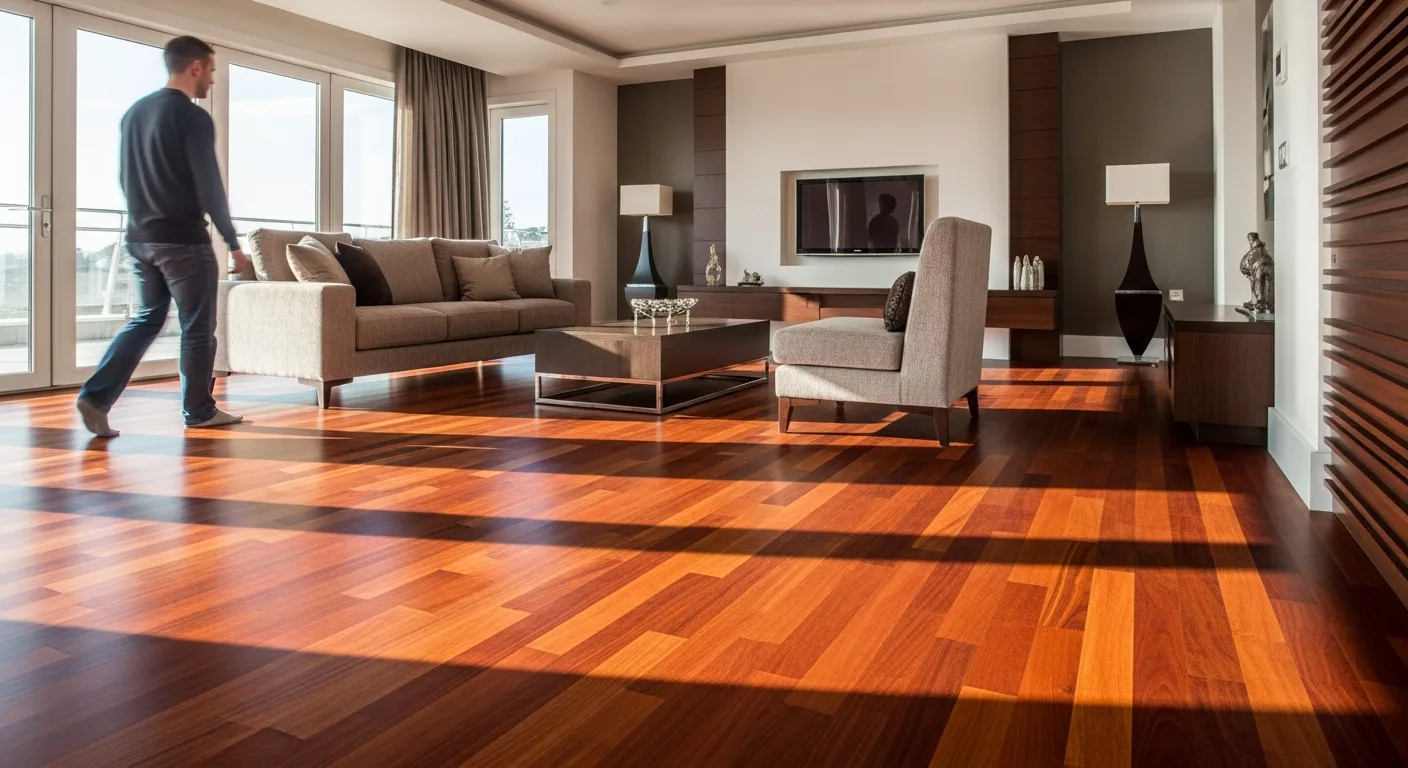
One of the most distinct traits of Jatoba is its dramatic color transformation. When first installed, the wood often displays a mix of salmon, tan, and yellow hues. However, as it is exposed to light, it matures into a deep, rich burgundy and reddish-brown. A man should be aware that rugs or furniture left in one spot for the first six months will leave “ghost” marks because the wood underneath hasn’t darkened at the same rate as the exposed areas. This natural aging process is part of the wood’s character and cannot be stopped, only managed through even light exposure.
Installation Challenges for the Modern Homeowner
Because the wood is so incredibly dense, it is notoriously difficult to work with. Standard saw blades will dull quickly, and pre-drilling is a necessity to avoid splitting the planks. If he is comparing different natural wood options, he might find that softer woods are easier to handle for a DIY project, but they lack the longevity of Brazilian cherry. Professional installation is highly recommended to ensure the moisture content is balanced before the planks are nailed down, preventing future gaps or buckling.
Maintenance and Long-Term Care
Maintaining this floor is straightforward but requires consistency to protect the investment. He should follow these core principles:
- Dusting: Use a microfiber mop daily to remove grit that can act like sandpaper underfoot.
- Cleaning: Use a pH-neutral cleaner specifically designed for hardwood. Avoid steam mops, which can force moisture into the grain.
- Sunlight: Rotate area rugs periodically to ensure an even tan across the entire floor surface.
- Protection: Use felt pads under all furniture legs to prevent surface scuffs.
Is Brazilian Cherry Still Trendy in 2026?
While the early 2000s saw an obsession with high-gloss red floors, the modern approach is more refined. Designers are now opting for matte or satin finishes on Brazilian cherry to highlight the intricate grain without the dated “plastic” look. It provides a grounded, masculine aesthetic that pairs perfectly with industrial or mid-century modern furniture. It remains a staple for those who value substance and natural beauty over fleeting design fads.
Frequently Asked Questions
How long does it take for Brazilian cherry to darken?
The most significant color change occurs within the first three to six months of light exposure. It will continue to deepen slightly for up to two years before reaching its final, stable hue.
Is it harder than American Walnut?
Yes, significantly. Brazilian cherry is more than twice as hard as American Walnut, which ranks around 1,010 on the Janka scale. This makes it much better suited for high-traffic areas.
Can Brazilian cherry floors be refinished?
Yes. Due to its thickness and density, a solid Brazilian cherry floor can be sanded and refinished multiple times over its lifespan, often lasting over 50 years if maintained properly.
Is it water-resistant?
While its high density makes it more resistant to moisture than softer woods, it is not waterproof. Spills should be wiped up immediately to prevent staining or warping of the planks.