The Reality of Garden Theft
A gardener’s worst nightmare is the morning discovery of a decimated berry patch. He puts in the sweat equity, monitors the water levels, and ensures his plants have the best soil for vegetable garden growth, only to lose the harvest to a flock of starlings in minutes. Bird netting is the most reliable physical barrier to stop this theft, but only if it is installed with precision.
Unlike chemical repellents that wash away in the rain or plastic owls that birds eventually ignore, netting provides a 100% physical block. However, choosing the wrong material or mesh size can lead to trapped wildlife or fruit that gets pecked right through the holes. To protect his investment, a man must understand the technical specs of the netting he buys.
Choosing the Right Mesh Size
Mesh size is the most critical factor when selecting bird netting for garden beds. If the holes are too large, small birds like sparrows or finches will simply hop through. If they are too small, he might block essential pollinators like bees from reaching the blossoms.
- 3/4-Inch Mesh: The industry standard. It keeps out most medium-to-large birds while allowing bees to pass through easily.
- 1/2-Inch Mesh: Necessary if he is dealing with very small, persistent birds. This size is excellent for blueberry bushes.
- 1-Inch Mesh: Only suitable for larger birds like crows or pigeons. Small birds will treat this like an open door.
Material Matters: Polyethylene vs. Nylon
Not all netting is built to survive the sun. A gardener should look for UV-stabilized polyethylene. This material is lightweight, doesn’t absorb water, and won’t rot after a single season of rain. It is the backbone of effective diy pest control methods for those who want a multi-year solution.
Nylon netting is stronger and often used in commercial vineyards, but it can be heavier and more expensive. For the average backyard setup, a high-quality extruded plastic net is usually sufficient. He should avoid the ultra-thin, “tangle-prone” nets often sold in big-box stores; these are difficult to handle and often end up in a knotted mess before the season is over.
How to Install Netting Without Harming Wildlife
The biggest mistake a man can make is draping the net directly over his plants. This allows birds to land on the net and peck the fruit through the mesh. It also increases the risk of birds getting their feet or wings tangled in the loose folds.
Build a Support Frame
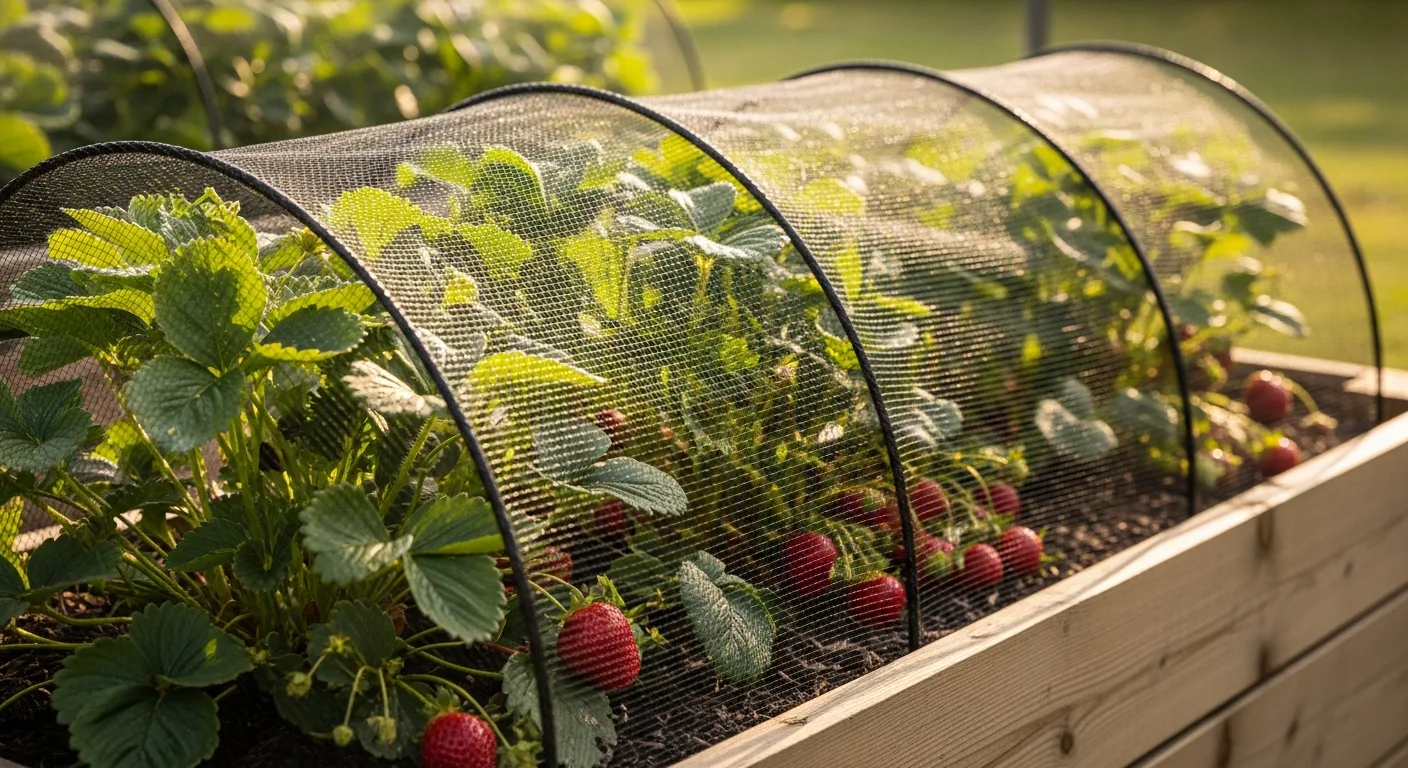
He should construct a simple frame using PVC pipes, bamboo stakes, or timber. By keeping the netting taut and several inches away from the foliage, he creates a “no-fly zone” that birds cannot penetrate. A taut net is also much safer for the birds, as they will bounce off it rather than getting caught in sagging pockets.
Secure the Perimeter
Birds are clever; they will walk under the edge of a net if it isn’t secured to the ground. He should use landscape staples or heavy stones to pin the bottom of the netting to the soil. If he is protecting a fruit tree, he must tie the netting firmly around the trunk to prevent birds from flying up from underneath.
Maintenance and Off-Season Storage
Once the harvest is over, he should remove the netting promptly. Leaving it up through the winter exposes it to unnecessary UV damage and heavy snow loads that can snap the support frame. He should shake out any debris, fold it neatly, and store it in a cool, dry place away from rodents, who might use the mesh for nesting material.
Frequently Asked Questions
What is the best color for bird netting?
Black is generally the best choice because it offers the highest UV resistance and blends into the landscape better than green or white. It is also more visible to birds, which helps them avoid flying into it.
Will bird netting stop squirrels?
Standard bird netting is usually too thin to stop a determined squirrel. He will likely chew right through the plastic. For squirrels, a heavier wire mesh or hardware cloth is a better solution.
How do I stop birds from getting tangled?
The key is tension. He must ensure the net is pulled tight across a frame. Loose, billowing netting is a trap; a drum-tight net is a deterrent.