Understanding Your Lighting Goals
When a homeowner begins his journey toward a better-lit exterior, he must first define his primary objectives. The best landscape lighting is not a one-size-fits-all solution; it is a strategic layer of light that serves specific functional and aesthetic purposes. Whether he wants to showcase a majestic oak tree or illuminate a treacherous walkway, having a clear plan ensures he invests in the right hardware.
A man should consider how he uses his outdoor space after dark. If he enjoys hosting evening gatherings, ambient lighting becomes his priority. Conversely, if he is concerned about potential intruders, his focus should shift toward high-intensity security fixtures. By understanding these goals, he can create a balanced system that makes his property both beautiful and safe.
Aesthetic Enhancement
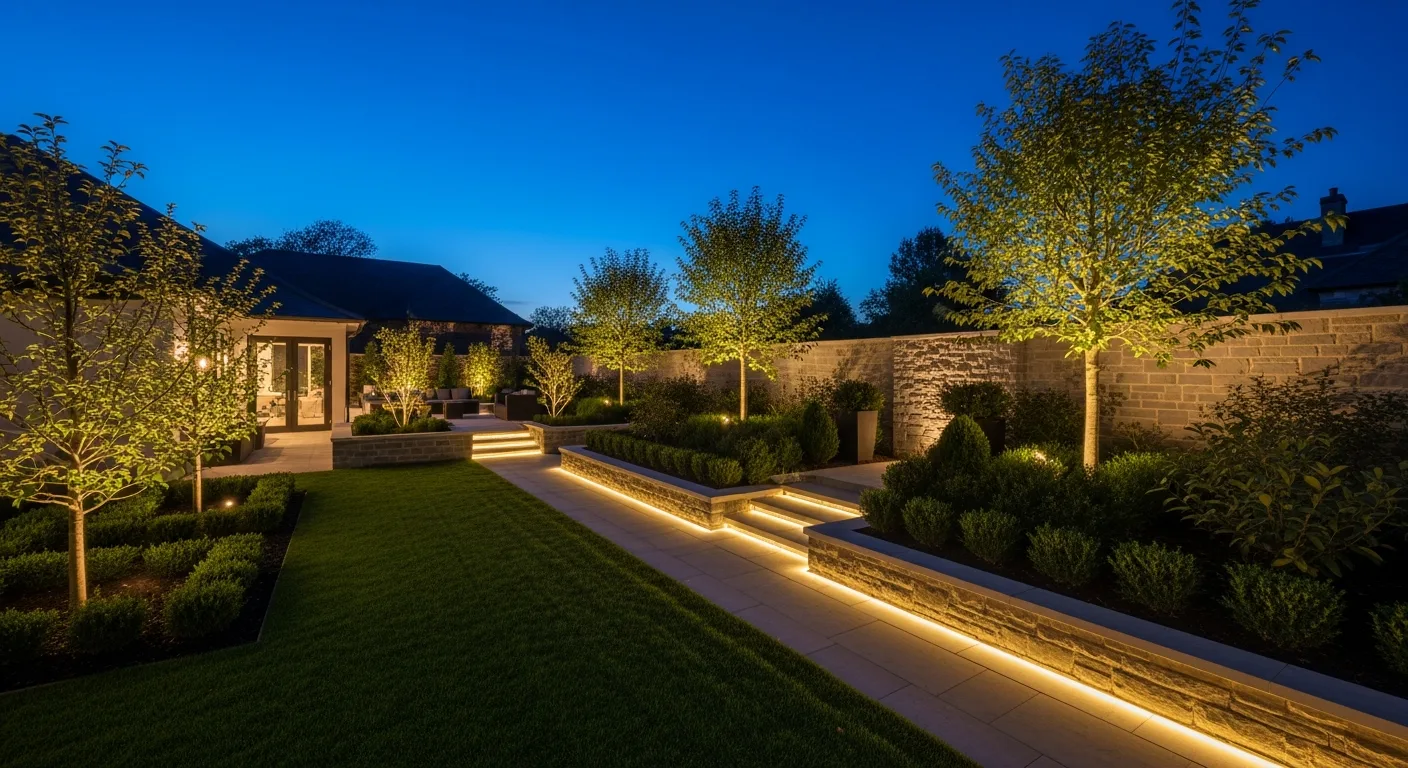
The visual appeal of a home changes dramatically once the sun sets. Through the clever use of uplighting and shadowing, a man can highlight the textures of his stone siding or the intricate branches of his favorite shrubs. This process is a key factor in increasing home value, as it boosts curb appeal and makes the property stand out in the neighborhood.
Safety and Security
Illumination is the first line of defense for any property. When a homeowner installs bright, reliable fixtures in dark corners, he is effectively practicing home security fundamentals. Well-lit paths prevent trips and falls, while motion-activated floodlights deter unwanted visitors by removing the cover of darkness.
Types of Landscape Lighting Fixtures
To achieve a professional look, a man must familiarize himself with the various types of fixtures available on the market. Each serves a distinct role in the overall lighting scheme. Using a mix of these tools allows him to create depth and dimension in his landscape.
- Path and Area Lights: These are small posts that cast light downward. They are essential for guiding a man and his guests along walkways and driveways.
- Spotlights and Uplights: These fixtures provide a narrow, intense beam of light. He can use them to draw attention to architectural features or tall trees.
- Floodlights: Designed for broad coverage, these are perfect for large areas like lawns or wide driveways.
- Well Lights: These are recessed into the ground, making them ideal for areas where he wants to hide the fixture itself while still providing upward illumination.
Technical Specifications to Consider
Choosing the best landscape lighting requires more than just picking a style; a man must also understand the technical side of the equipment. In 2026, the industry has shifted almost entirely toward high-efficiency LED technology, which offers superior longevity and lower energy costs compared to traditional halogen bulbs.
LED vs. Solar Options
While solar lights are easy to install, a serious homeowner often prefers low-voltage LED systems connected to a transformer. This setup provides consistent brightness regardless of how much sun the property received during the day. He knows that a wired system offers the reliability he needs for year-round performance, especially during the shorter days of winter.
Color Temperature and Lumens
The “feel” of the light is determined by its color temperature, measured in Kelvins (K). For a warm, inviting glow, a man should look for bulbs in the 2700K to 3000K range. Lumens, on the other hand, measure the brightness. He might choose 100-200 lumens for a path light, but upwards of 700 lumens for a security floodlight to ensure maximum visibility.
Installation Strategies for the Modern Homeowner
Once he has selected his fixtures, the installation process begins. A man should start by placing his transformer in a central, accessible location. He must then dig shallow trenches for his low-voltage wires, ensuring they are protected from lawnmowers and foot traffic. By testing the system at dusk, he can adjust the angles of his spotlights to achieve the perfect balance of light and shadow before burying the cables permanently.
Frequently Asked Questions
What is the best voltage for residential landscape lighting?
Low-voltage (12V) systems are the industry standard for residential use. They are safer for a man to install himself, more energy-efficient, and offer a wide variety of fixture options compared to high-voltage systems.
How long do LED landscape lights typically last?
High-quality LED fixtures can last anywhere from 25,000 to 50,000 hours. For the average homeowner, this means he may not need to replace a bulb for over a decade, depending on his nightly usage patterns.
Can I mix different brands of lighting fixtures?
Yes, as long as the voltage requirements match his transformer. However, he should be mindful that different brands may have slight variations in color temperature, which could lead to an inconsistent look across his property.
Do I need a professional to install my landscape lighting?
While a man can certainly handle a low-voltage DIY installation, he might hire a professional for complex designs or if he needs to integrate the system with his smart home network for automated scheduling.