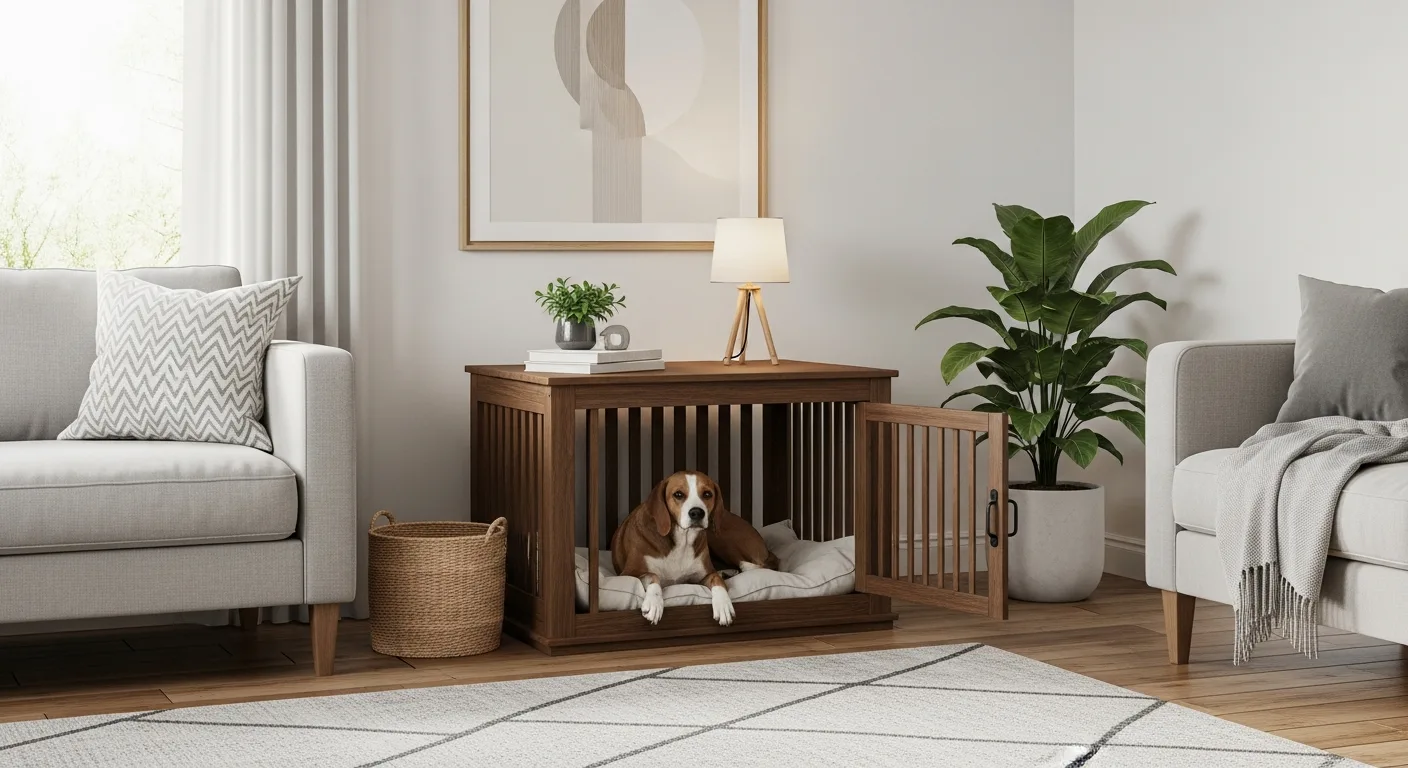
The End of the Eyesore: Why Furniture-Style Crates Matter
For years, dog owners have struggled with the aesthetic nightmare of the standard wire crate. While functional, these metal cages often stick out like a sore thumb in a carefully curated living room. Dog cage furniture changes the dynamic by transforming a necessary pet tool into a functional piece of home decor. Instead of a cold, industrial cage, your dog gets a secure den that doubles as an end table, nightstand, or even a TV console.
Choosing a furniture-style crate isn’t just about looks; it’s about maximizing space. In smaller homes or apartments, every square foot counts. By integrating your dog’s sleeping quarters into a piece of furniture you already need, you eliminate clutter and create a more cohesive environment. When selecting a piece, understanding how to identify high-quality furniture ensures your investment lasts through years of use and resists the wear and tear a dog might inflict.
Selecting the Right Material for Durability and Safety
Not all dog cage furniture is built the same. Since this piece will house a living animal, the material choice is paramount. You generally have three main options:
- Solid Wood: Offers the most premium look and feel. It is heavy, stable, and blends perfectly with traditional or rustic decor. However, it may not be ideal for a puppy that is still in the chewing phase.
- MDF or Engineered Wood: A more budget-friendly option that provides a sleek, modern finish. It is easier to clean but less resistant to heavy moisture.
- Metal and Wood Hybrids: These provide the best of both worlds. The metal bars offer superior ventilation and visibility for the dog, while the wooden frame ensures it looks like a high-end side table.
If you are a fan of hands-on projects, you might have looked into a custom dog house build for the backyard, but indoor furniture requires a more refined touch. Ensure the finish used on the wood is non-toxic, as he may occasionally lick or nudge the frame.
Sizing: Ensuring He Has Enough Room to Relax
The biggest mistake men make when buying dog cage furniture is prioritizing the table’s surface area over the dog’s internal comfort. He needs to be able to stand up, turn around, and lie down completely flat without hitting the sides. If the crate is too small, he will feel cramped and may develop an aversion to his den.
Measure your dog from the tip of his nose to the base of his tail, then add four inches for the ideal length. For height, measure him while he is sitting; the crate should be at least three inches taller than his head. Remember, the goal is to create a sanctuary where he feels safe, not a cramped box.
Integration Tips for Your Living Space
To make the most of your new furniture, place it in a high-traffic area where he can still feel like part of the family. Dogs are pack animals; he wants to see what is going on. Placing a furniture crate in a lonely corner of the basement defeats the purpose of a “den.”
Use the top surface for lightweight decor like books, a lamp, or a remote tray. Avoid placing heavy electronics or vibrating speakers directly on top, as the noise and movement can be stressful for him while he tries to sleep. A high-quality orthopedic bed placed inside the furniture crate will complete the setup, providing him with the joint support he needs as he ages.
Maintenance and Longevity
Keeping dog cage furniture clean is simpler than cleaning a wire crate, but it requires consistency. Most furniture crates feature a removable tray at the bottom. Slide this out weekly to remove hair and dander. Wipe down the wooden surfaces with a damp cloth and a pet-safe cleaner to prevent odors from soaking into the grain. If he is prone to accidents, look for models with a waterproof sealant on the interior floor to prevent warping.
Frequently Asked Questions
Is dog cage furniture safe for puppies?
It depends on the puppy’s chewing habits. If he is currently teething and prone to chewing wood, a solid wood crate might get damaged. In this case, a metal-heavy hybrid design is a safer bet until he grows out of the chewing phase.
Can I use a furniture crate as a permanent bed?
Absolutely. Many dogs prefer the enclosed, cave-like feel of a furniture crate. As long as it is fitted with a comfortable mat or bed, he can sleep there every night comfortably.
Does furniture-style cage provide enough ventilation?
Most high-quality designs feature slats or mesh on at least three sides. This ensures he gets plenty of airflow. Avoid designs that are almost entirely enclosed, as these can become too hot and restrictive for him.