The Versatility of the Modern Cable Machine
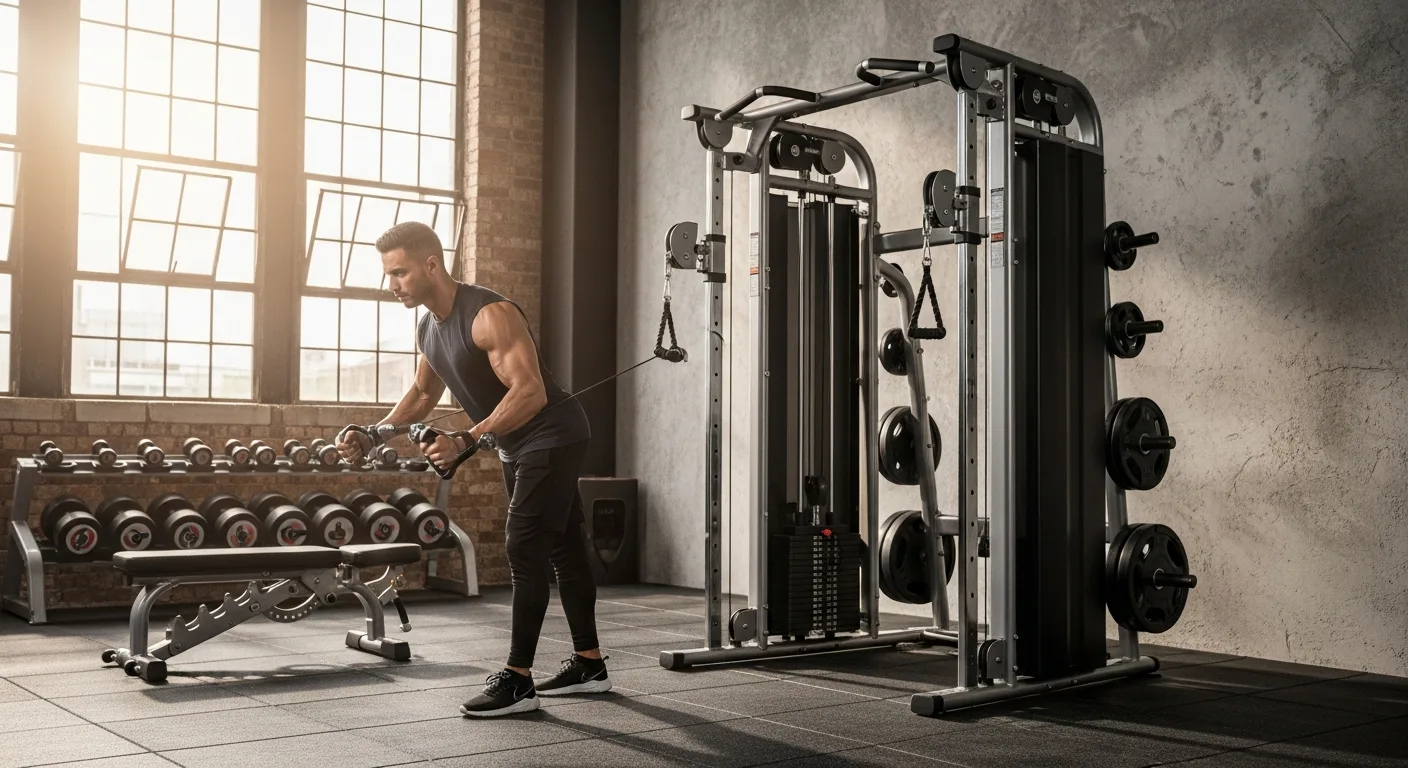
A cable machine is often the crown jewel of a man’s training space. Unlike free weights, which rely strictly on gravity, a cable machine provides constant tension throughout the entire range of motion. This means his muscles are working just as hard at the start of a chest fly as they are at the peak contraction. In 2026, the engineering of these units has reached a point where a single machine can replace an entire row of selectorized equipment found in commercial facilities.
When he begins to map out his training area, the cable machine often dictates the entire layout. Its ability to facilitate hundreds of exercises—from face pulls and cable crossovers to heavy lat pulldowns—makes it the most efficient use of square footage available. He can transition from a heavy compound movement to a high-volume isolation exercise simply by moving a pin and swapping a handle.
Functional Trainers vs. Single Stack Units
Choosing the right architecture for a home setup depends on his specific goals and available space. There are two primary contenders in the market:
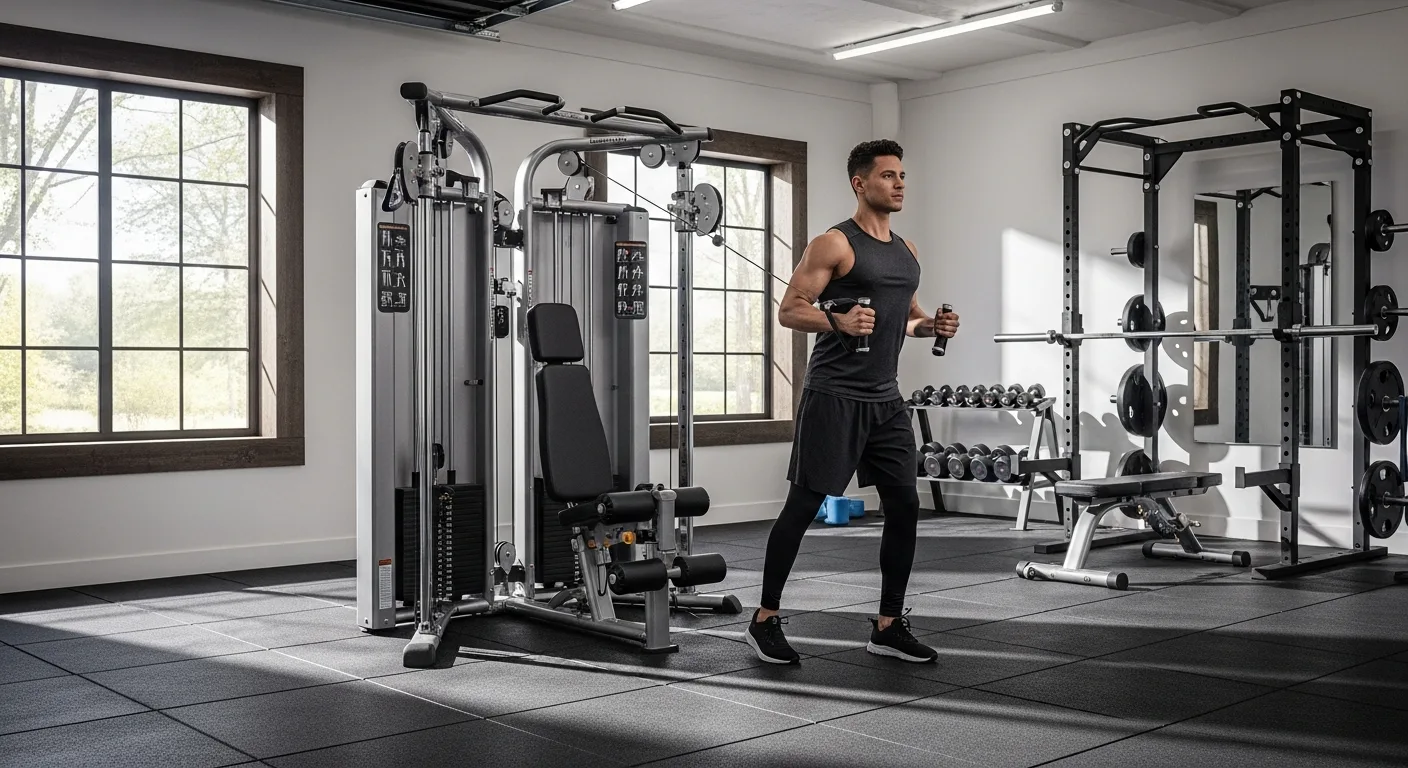
- Functional Trainers: These feature two independent weight stacks and adjustable pulleys. This is the gold standard for versatility, allowing him to perform bilateral movements or mimic athletic motions with ease.
- Single Stack/Lat Pulldown Machines: These are more compact and usually focused on vertical pulling and seated rowing. While less versatile for functional movement, they are often built for much heavier loads, catering to the man focused on raw back thickness.
For the man who wants a total-body solution, the functional trainer is unbeatable. It allows him to set the pulleys at any height, enabling everything from low-to-high woodchops to overhead tricep extensions. The independent stacks also ensure that his dominant side doesn’t overcompensate for his weaker side, promoting muscular symmetry.
Understanding Pulley Ratios: 1:1 vs. 2:1
One technical detail he must master before purchasing is the pulley ratio. This determines how the weight on the stack actually feels in his hands. A 1:1 ratio means 100 pounds on the stack feels like 100 pounds of resistance. This is common in lat pulldowns where heavy weight is the priority.
Conversely, a 2:1 ratio means 100 pounds on the stack feels like 50 pounds of resistance. While this might sound like a disadvantage, it actually provides a much longer cable travel and smoother increments. This is ideal for functional training and explosive movements where he needs the cable to follow his full range of motion without the weight stack slamming at the top.
Optimizing the Training Environment
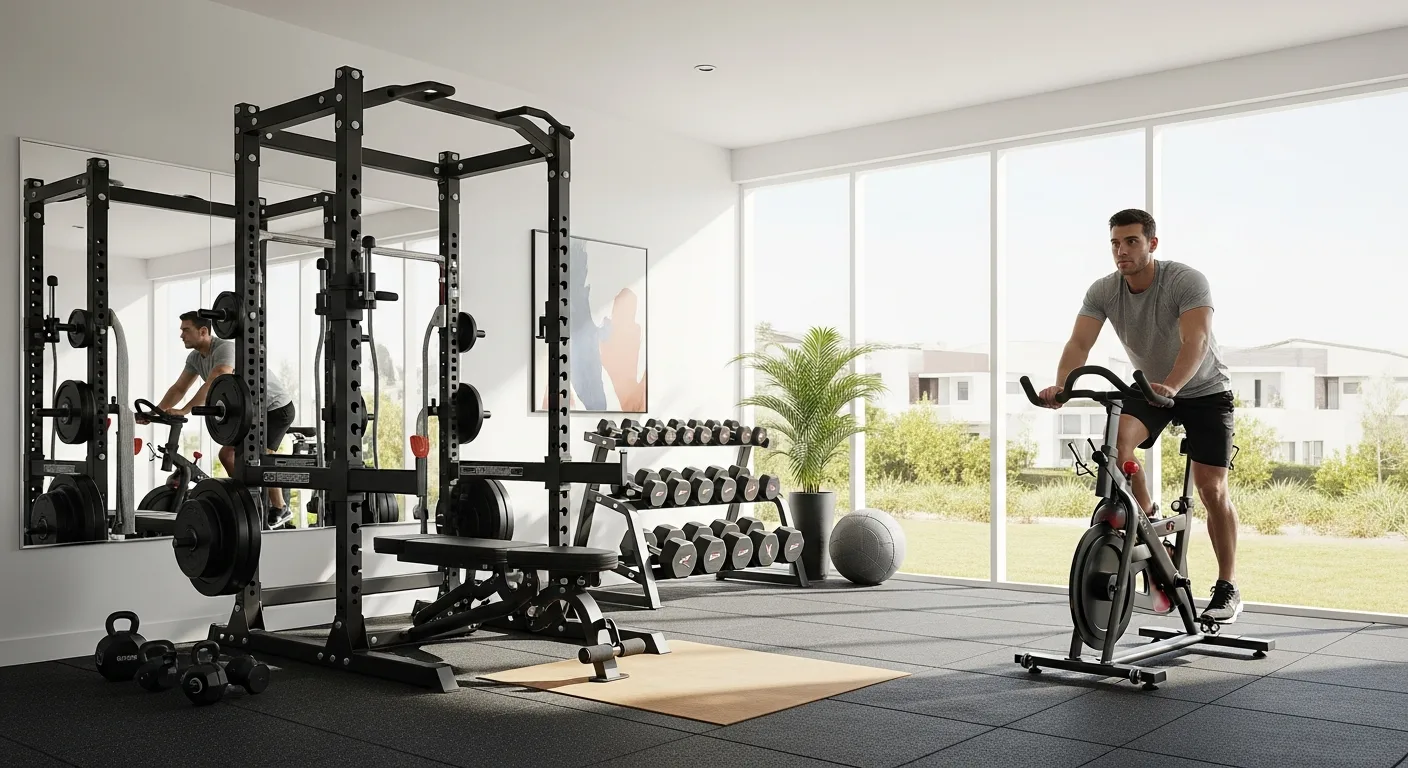
A cable machine is a heavy piece of hardware, often weighing between 400 and 800 pounds once the stacks are loaded. He should also consider the structural requirements, such as heavy-duty rubber flooring to protect his subfloor from dropped attachments and to prevent the machine from shifting during intense sets.
Lighting and mirrors also play a role in his performance. Being able to see his form during a cable lateral raise or a single-arm row helps him maintain the mind-muscle connection. He should ensure he has at least three to four feet of clearance in front of the machine to allow for lunges and extended cable movements.
Essential Attachments for Maximum Gains
The machine is only as good as the tools he connects to it. To get the most out of his investment, he should curate a collection of high-quality attachments:
- Tricep Rope: Essential for pushdowns and face pulls, allowing for a neutral grip and a greater range of motion at the bottom of the rep.
- D-Handles: Preferably with a revolving grip to reduce wrist strain during chest presses or rows.
- Straight Bar and EZ-Curl Bar: For heavy curls and upright rows.
- Ankle Straps: Often overlooked, these are excellent for standing hip abductions or cable leg curls.
Maintenance for Longevity
To keep the cables gliding smoothly, he needs to perform basic maintenance every few months. This involves wiping down the guide rods with a silicone-based lubricant. He should avoid using WD-40, as it can attract dust and create a gummy residue that ruins the feel of the lift. Checking the cables for fraying is also a vital safety step; if he notices any plastic coating peeling or wire strands snapping, he must replace the cable immediately to avoid injury.
Frequently Asked Questions
Is a cable machine better than free weights?
It isn’t necessarily better, but it is different. A cable machine provides constant tension and a safer environment for training to failure, whereas free weights are superior for building stabilizing muscle strength and raw power.
How much ceiling height do I need for a cable machine?
Most standard functional trainers require a ceiling height of at least 82 to 84 inches. He should always measure his space twice, accounting for any low-hanging beams or HVAC ducts that might obstruct the top of the frame.
Can I build a significant amount of muscle with just cables?
Absolutely. Because he can manipulate the angle of resistance and maintain tension on the muscle throughout the entire set, cables are an elite tool for hypertrophy (muscle growth). Many professional bodybuilders use cables for the majority of their accessory work.
Are plate-loaded cable machines worth it?
Plate-loaded machines are a cost-effective alternative to selectorized weight stacks. They allow him to use his existing Olympic plates, though they lack the quick-change convenience of a pin-loaded system.