The Visual Litmus Test: Markings and Coloration
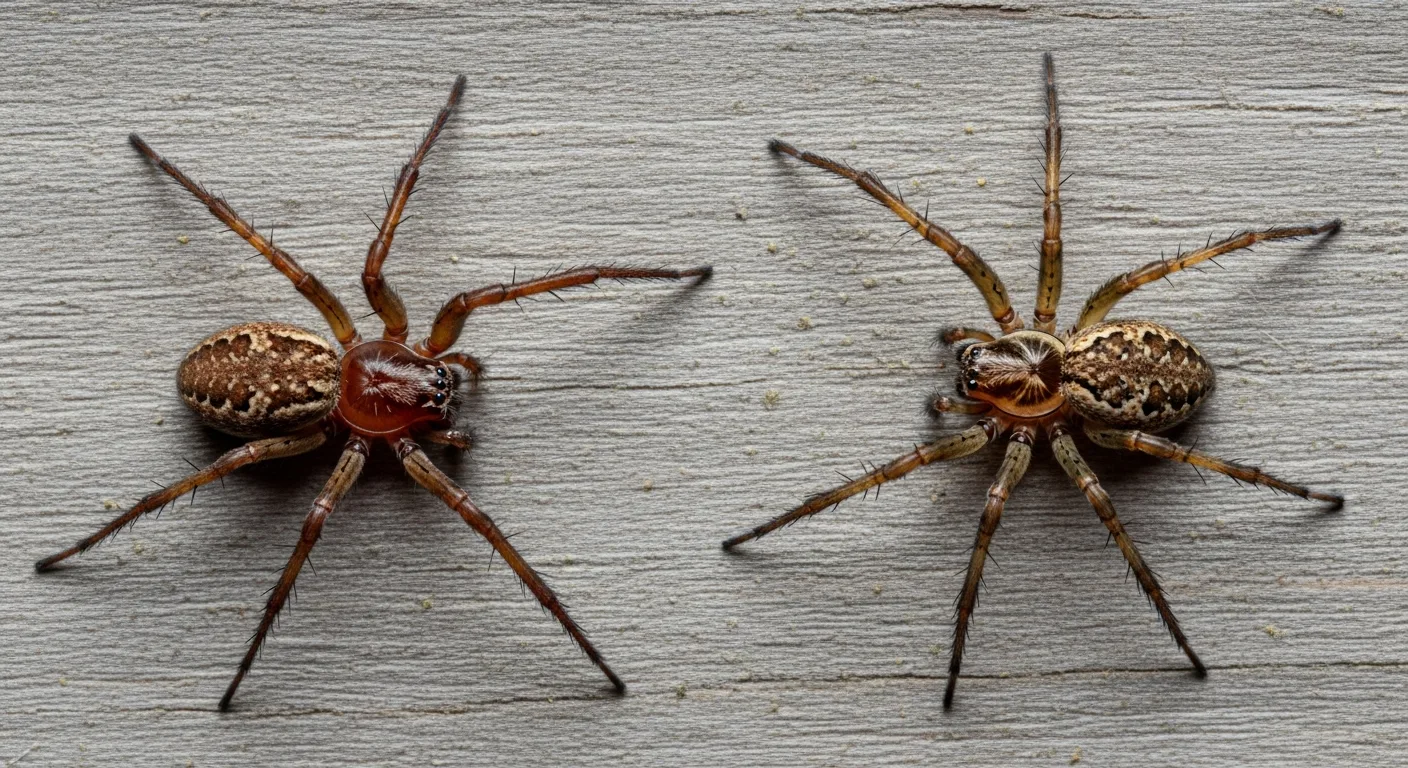
Spotting a brown spider scurrying across the floor can trigger an immediate sense of dread for any homeowner. However, most of the time, he is looking at a harmless visitor rather than a medical threat. The most famous identifier for the brown recluse (Loxosceles reclusa) is the violin-shaped mark on its cephalothorax (the front part of the body). This dark brown “fiddle” points toward the spider’s abdomen. While distinct, this mark can be faint in younger spiders or those that have recently molted.
In contrast, the common house spider (Parasteatoda tepidariorum) usually lacks any uniform dark markings. Instead, he will notice a mottled pattern of tans, browns, and grays. House spiders often have banded legs, featuring dark rings at the joints, whereas a brown recluse has solid-colored legs with no stripes or spines. If a man sees a spider with thick, spiny hairs on its legs, he can almost certainly rule out a recluse, which has fine, velvety hair.
Eye Patterns: The Definitive Proof
If he is brave enough to get a close look—perhaps with a magnifying glass or a high-resolution phone camera—the eyes provide the most accurate identification. Most spiders, including the common house spider, have eight eyes arranged in two rows of four. The brown recluse is an outlier in the arachnid world, possessing only six eyes.
These six eyes are arranged in three pairs (dyads): one pair in the front and one pair on each side. This semi-circular arrangement is a hallmark of the recluse family. While it requires getting uncomfortably close, this anatomical feature is the only way to be 100% certain of the species before deciding on a course of action.
Habitat and Webbing Habits
Where a man finds the spider tells him a lot about what he is dealing with. The common house spider is a master of the visible web. He will find their tangled, messy webs in the corners of ceilings, under windowsills, or near light fixtures where they can easily catch flies. These spiders are active hunters that stay near their webs, waiting for a vibration.
The brown recluse lives up to its name. He prefers dark, dry, and undisturbed areas. Common hiding spots include:
- Inside cardboard boxes in the attic.
- Behind baseboards or inside wall voids.
- Underneath furniture that hasn’t been moved in months.
- Inside old shoes or folded clothing in a dark closet.
A recluse does not build a web to catch prey; it builds a small, flat “retreat” of bluish-white silk used only for resting. If he sees a spider sitting out in the open in a large, intricate web, it is almost certainly not a recluse.
Behavior and Risk Levels
Understanding the temperament of these creatures can lower a man’s anxiety. The common house spider is generally timid and will flee if disturbed. Even if he were to be bitten, the venom is weak and usually results in nothing more than a small, itchy red bump similar to a mosquito bite. These spiders are actually beneficial, as they assist in managing other common household pests like gnats and flies.
The brown recluse is also non-aggressive. It typically only bites when it is pressed against a man’s skin—for example, if he puts on a work glove or a shirt where the spider is hiding. However, the risk is significantly higher. Recluse venom is necrotic, meaning it can cause skin tissue to die, leading to an open sore that takes weeks or months to heal. If he suspects a recluse bite, he should seek medical attention immediately and, if possible, bring the spider for identification.
Managing Infestations Safely
If a man discovers he has a brown recluse problem, he needs to act systematically. Reducing clutter is the first step; removing cardboard boxes and replacing them with plastic bins eliminates their favorite hiding spots. He should also seal cracks around doors and windows to prevent them from entering the home in search of food.
For those who prefer a hands-on approach, he might consider exploring various effective DIY pest control methods to reclaim his space. Using sticky traps placed along baseboards is a highly effective way to monitor and reduce the population of recluses, as they tend to travel along the edges of walls at night. If the infestation is widespread, professional intervention may be necessary to ensure the safety of the household.
Frequently Asked Questions
Can a brown recluse jump?
No, brown recluses are not jumping spiders. They are fast runners, but they do not have the physical capability to leap at a person. If a man sees a spider jumping, it is likely a harmless jumping spider or a wolf spider.
Do house spiders eat brown recluses?
Yes, certain species of house spiders, particularly the cellar spider (often called “daddy longlegs”), are known to kill and eat brown recluses. They use their long legs to stay out of reach of the recluse’s fangs while wrapping it in silk.
What color is a brown recluse?
They are typically a uniform light to medium brown. They do not have stripes, spots, or multi-colored patterns on their bodies or legs, which is a key way to distinguish them from more common, patterned house spiders.