Why Wood Choice Dictates Your Patio’s Lifespan
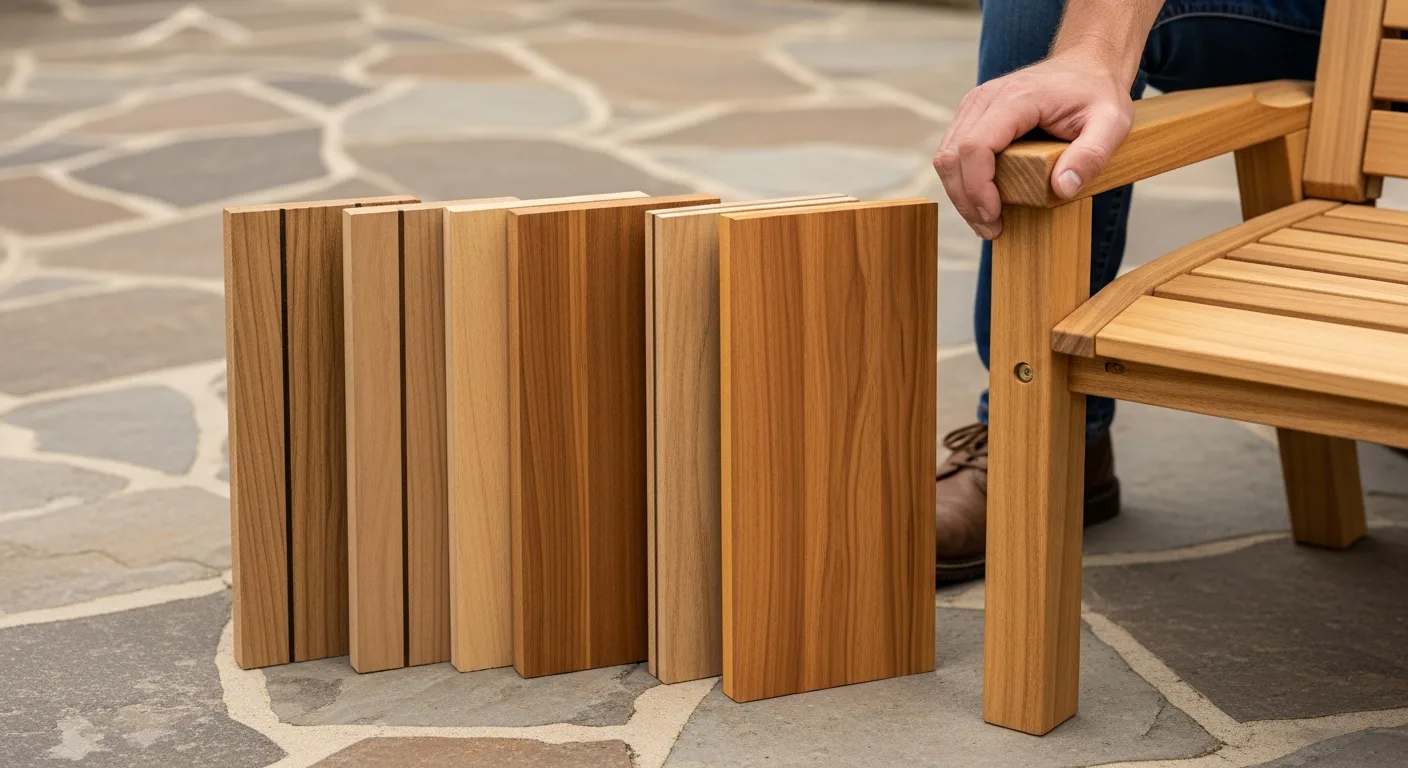
Choosing the right timber for an outdoor project is the difference between a set that lasts decades and one that rots within three seasons. When a man selects wood for his patio, he must account for moisture, UV radiation, and insect attacks. Not all woods are created equal; some possess natural oils that repel water, while others require heavy chemical treatments to survive a single winter.
The environment plays a massive role. A homeowner in a humid coastal region faces different challenges than one in a dry, high-altitude climate. He needs to prioritize stability and rot resistance above all else to ensure his investment doesn’t warp or crack under pressure.
Teak: The Unrivaled King of Outdoor Timber
Teak remains the gold standard for high-end outdoor furniture. Its reputation is built on an incredibly high silica and natural oil content, which acts as a built-in waterproofing system. Even when left untreated, teak transitions into a sophisticated silver-grey patina without losing its structural integrity.
- Durability: Can last 50+ years with minimal care.
- Stability: Minimal shrinking or swelling, making it ideal for intricate joinery.
- Maintenance: He can choose to oil it to maintain the honey-gold hue or let it age naturally.
While teak carries a premium price tag, its longevity often makes it the most cost-effective choice over time. If he is currently structuring his outdoor living space, integrating teak furniture ensures he won’t be shopping for replacements every few years.
Ipe and Acacia: The Dense Hardwood Contenders
Ipe (pronounced ee-pay) is a Brazilian hardwood so dense it actually sinks in water. It carries a Class A fire rating—the same as steel and concrete. For a man who wants a “set it and forget it” solution, Ipe is nearly indestructible. It resists scratches, dents, and decay better than almost any other species on the planet.
Acacia, on the other hand, offers a more budget-friendly hardwood alternative. While not as legendary as Teak or Ipe, it is still a dense, durable wood with a high oil content. It features a beautiful, varied grain pattern that adds a rugged, masculine aesthetic to any deck. However, he should be aware that Acacia requires more frequent sealing than Teak to prevent drying out in harsh sun.
Cedar and Redwood: Natural Resistance with Character
For those who prefer native North American species, Western Red Cedar and California Redwood are the top picks. These softwoods contain tannins—natural chemicals that make the wood unpalatable to insects and resistant to rot. They are significantly lighter than hardwoods, making them easier for a man to move around his yard when rearranging his setup.
Redwood is particularly prized for its deep, rich color and straight grain. Cedar is more widely available and offers a distinct, pleasant aroma. Both woods stay cool to the touch even in direct sunlight, which is a practical benefit during the peak of summer. To keep the grain looking vibrant, he might consider applying a high-quality beeswax furniture polish or a specialized outdoor sealer to create a natural barrier against moisture.
Pressure-Treated Pine: The Practical Budget Choice
If he is working within a strict budget, pressure-treated (PT) pine is the most accessible option. This wood is infused with chemical preservatives to ward off termites and fungal decay. While it doesn’t have the natural elegance of Teak, it is a workhorse for DIY projects.
The downside of PT pine is its tendency to warp, cup, or split as it dries out. A man using this material must be diligent about maintenance. He should wait for the wood to “season” or dry completely before applying a high-quality stain or water repellent. This prevents the internal moisture from being trapped, which can lead to premature rot from the inside out.
Protecting Your Investment: Maintenance and Care
Regardless of the wood species, a man should follow a consistent maintenance schedule to maximize the life of his furniture. Cleaning the wood once a year with mild soap and a soft brush removes pollen and dirt that can trap moisture against the surface.
During the off-season, he should store his furniture in a dry, ventilated area or use breathable covers. Avoiding plastic tarps is essential, as they trap humidity and encourage mold growth. By taking these steps, he ensures his outdoor sanctuary remains a point of pride for years to come.
Frequently Asked Questions
What is the most durable wood for outdoor furniture?
Teak and Ipe are widely considered the most durable woods. Teak is favored for its natural oils and stability, while Ipe is known for its extreme density and resistance to fire and scratches.
Does outdoor wood furniture need to be sealed?
It depends on the wood. Teak and Ipe can be left untreated to age naturally. However, softwoods like Cedar, Redwood, and Pine should be sealed or stained to prevent moisture absorption and UV damage.
How do I stop my wood furniture from turning grey?
The grey patina is caused by UV exposure. To maintain the original color, he must apply a sealer or stain with UV inhibitors and reapply it every 12 to 24 months depending on sun exposure.
Is Acacia wood good for rain?
Acacia is naturally water-resistant, but it is not as resilient as Teak. If it is frequently exposed to heavy rain, it should be treated with a water-resistant finish to prevent the wood from swelling or cracking.