Creating the perfect home theater is about more than just a big screen and comfy seats—it’s an art of balancing sight and sound to transport you into the heart of the action. At its core, a home theater’s success hinges on acoustic treatment, which optimizes sound quality by managing reflections, bass, and noise. Whether you’re setting up a dedicated room or converting a living space, understanding key elements like room dimensions, screen size, and subwoofer amplification is crucial. This guide dives into the essentials of home theater acoustics, offering practical tips to achieve professional-grade audio-visual performance without breaking the bank. From soundproofing basics to advanced setup techniques, we’ll help you transform any space into an immersive entertainment hub.
For optimal home theater acoustic treatment, focus on room dimensions (aim for a 1:1.6:2.4 ratio like 10x16x24 feet), screen size (choose based on seating distance, e.g., 100-inch screen for 10-12 feet), and subwoofer amp power (match to room size, e.g., 200-300 watts for medium rooms). Use bass traps, acoustic panels, and soundproofing materials like mass-loaded vinyl to reduce echoes and external noise.
Understanding Home Theater Dimensions for Acoustic Excellence
Room dimensions play a foundational role in home theater acoustic treatment, as they directly impact sound wave behavior and resonance. An ideal room avoids perfect cubes or overly symmetrical shapes, which can create standing waves and acoustic hotspots. Instead, aim for a rectangular space with dimensions that follow the golden ratio, such as 1:1.6:2.4 (e.g., 10 feet high, 16 feet wide, 24 feet long). This helps distribute sound evenly and minimizes bass buildup in corners. When planning your layout, consider seating placement—typically, the best listening position is about two-thirds back from the screen, with speakers arranged to form an equilateral triangle with the primary seat. For smaller spaces, like those under 600 square feet, optimizing every inch is key; check out our guide on 600 sq ft home design for smart layout concepts that can enhance acoustic performance in compact areas.
Choosing the Right Home Theater Screen Size
Screen size is a critical component of the home theater experience, affecting both visual immersion and acoustic balance. A screen that’s too large can overwhelm the room and cause sound reflections, while one that’s too small may detract from the cinematic feel. To determine the optimal size, use the rule of thumb: the screen’s diagonal should be about one-third of the seating distance (e.g., for a 12-foot viewing distance, a 100-inch screen works well). Consider these factors:
- Viewing Angle: Aim for a 30-40 degree field of view for a theater-like experience.
- Room Dimensions: In larger rooms, a bigger screen (120+ inches) can enhance immersion without acoustic issues.
- Acoustic Impact: Screens can reflect sound; acoustic-transparent screens allow speakers behind them for cleaner audio.
For custom setups, integrating the screen with other elements, like a home bowling alley or cinema, can create a multi-functional entertainment space that balances visual and acoustic needs.
Soundproofing Your Home Theater: Essential Techniques
Soundproofing is vital for home theater acoustic treatment, as it prevents noise leakage and external disturbances from ruining your audio experience. Start by sealing gaps around doors, windows, and vents with acoustic caulk or weatherstripping. For walls, consider adding mass-loaded vinyl or extra drywall layers to block sound transmission. Key strategies include:
- Decoupling: Use resilient channels or sound isolation clips to separate wall layers and reduce vibration.
- Absorption: Install thick insulation, like fiberglass or rockwool, within wall cavities to dampen sound.
- Diffusion: Add bookshelves or acoustic diffusers to scatter sound waves and reduce echoes.
In mobile homes or older structures, soundproofing can be more challenging due to thinner walls; our article on mobile home HVAC maintenance offers insights into managing noise from systems that can interfere with your theater’s audio. Additionally, for whole-house solutions, explore home water treatment systems, as quiet operation can complement a peaceful theater environment.
Optimizing Subwoofer Amp Power and Placement
A subwoofer amp is the powerhouse behind deep, rumbling bass in your home theater, and matching it to your room’s acoustics is crucial for balanced sound. For medium-sized rooms (200-300 square feet), a subwoofer with 200-300 watts RMS is typically sufficient, while larger spaces may require 500+ watts. Placement matters too—experiment with the “subwoofer crawl” by placing the sub in your seating spot and moving around the room to find where bass sounds best. Common locations include front corners or along a wall, but avoid placing it too close to seating to prevent localized bass. Consider this comparison of subwoofer amp types:
| Type | Power Range | Best For | Acoustic Consideration |
|---|---|---|---|
| Powered Subwoofer | 100-500 watts | Small to medium rooms | Integrated amp simplifies setup |
| Passive Subwoofer | Varies with external amp | Custom installations | Requires separate amplification |
| Portable Subwoofer | 50-200 watts | Multi-use spaces | May lack deep bass extension |
For advanced setups, integrating smart home features can enhance control; learn more in our guide on smart home networking to sync your subwoofer with other audio components seamlessly.
Acoustic Treatment Materials and Setup Tips
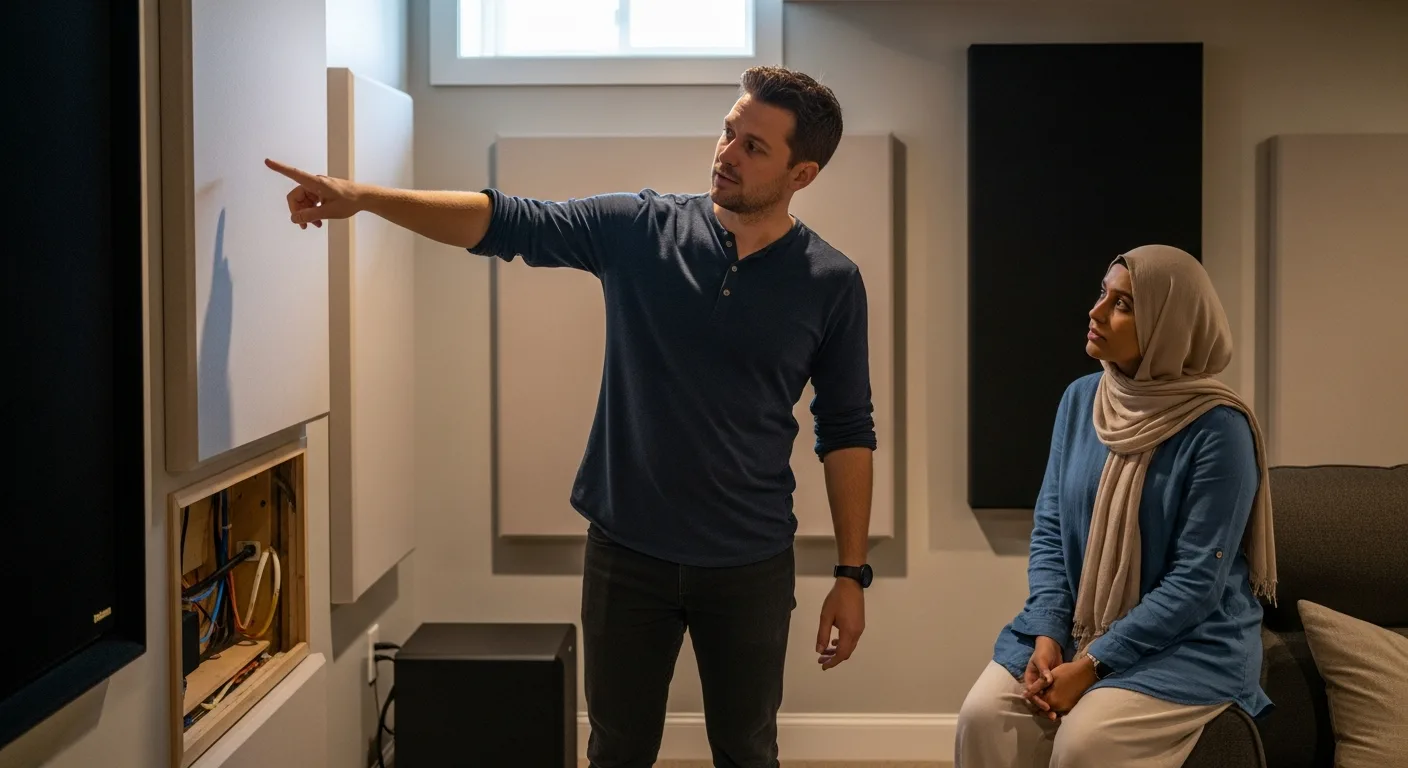
Effective home theater acoustic treatment involves using specialized materials to manage sound reflections and bass issues. Start with bass traps in room corners to absorb low-frequency energy, then add acoustic panels on walls and ceilings at reflection points (use a mirror to identify where sound bounces from speakers to seating). For a DIY approach, consider these options:
- Fiberglass Panels: Affordable and effective for mid to high frequencies.
- Foam Tiles: Easy to install but less effective for bass; best for echo reduction.
- Diffusers: Wooden or plastic designs that scatter sound for a more natural ambiance.
When setting up, balance absorption and diffusion—too much absorption can deaden the room, while too little leads to echoes. For those on a budget, repurposing materials like thick curtains or bookshelves can help. If you’re tackling other home projects, such as home foundation cracks, ensure structural integrity first, as vibrations from bass can exacerbate issues in unstable spaces.
Common Home Theater Acoustic Mistakes to Avoid
Even with the best equipment, poor acoustic planning can undermine your home theater. Avoid these pitfalls:
- Ignoring Room Modes: Not addressing bass buildup in corners or mid-room nulls.
- Over-treating High Frequencies: Using too many absorptive panels, making dialogue hard to hear.
- Poor Speaker Placement: Positioning speakers too close to walls or at uneven heights.
- Neglecting Calibration: Skipping room correction software or manual tuning with an SPL meter.
Regular maintenance, like checking for vibrations or loose fittings, can prevent acoustic degradation over time. For related home care, our article on home air conditioner not blowing cold air highlights how HVAC noise can disrupt your theater’s soundscape, so ensure systems are quiet and well-maintained.
FAQs About Home Theater Acoustics
What is the ideal room size for a home theater?
Aim for a rectangular room with dimensions close to a 1:1.6:2.4 ratio, such as 10x16x24 feet, to minimize acoustic issues like standing waves and ensure even sound distribution.
How do I calculate the right screen size for my home theater?
Divide your seating distance (in inches) by 1.5 to 2.5; for example, a 12-foot (144-inch) distance suggests a 58-96 inch screen, with 100 inches being a common choice for immersive viewing.
What type of subwoofer amp is best for a small room?
A powered subwoofer with 100-200 watts RMS is typically sufficient for small rooms (under 200 sq ft), as it provides deep bass without overpowering the space or causing distortion.
Can I soundproof my home theater without major renovations?
Yes, use weatherstripping on doors, acoustic curtains on windows, and bass traps in corners; these DIY methods can significantly reduce noise leakage and echoes with minimal construction.
How many acoustic panels do I need for my home theater?
Start with panels at primary reflection points (usually 4-6 on side walls and 2-4 on the ceiling), then add more based on echo tests; over-treating can deaden sound, so adjust gradually.
What’s the difference between soundproofing and acoustic treatment?
Soundproofing blocks external noise from entering or leaving the room, while acoustic treatment manages sound within the room by reducing reflections and balancing frequencies for better audio quality.
How do I place speakers for optimal acoustics?
Position front speakers at ear level, forming an equilateral triangle with the main seating; place the subwoofer in a corner or along a wall, and use room correction software to fine-tune settings.
Can I use a home theater in a multi-purpose room?
Yes, but acoustic treatment becomes more critical; use portable panels, bass traps, and flexible seating to adapt the space, and consider soundproofing to minimize noise transfer to other areas.