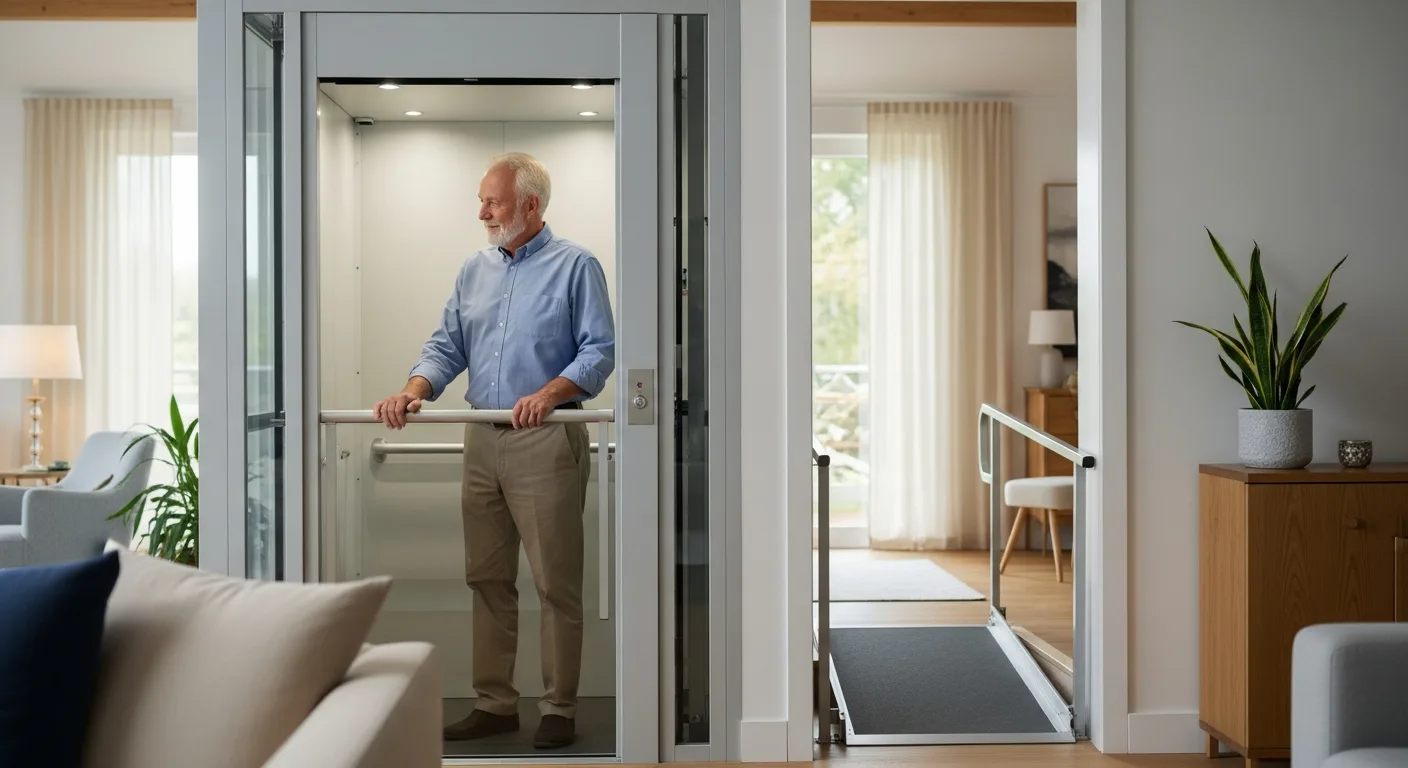
Creating an accessible home is essential for individuals with mobility challenges, aging in place, or those planning for future needs. With options like home elevator kits, exterior lifts, and aluminum wheelchair ramps, homeowners can transform their living spaces into safe, functional environments. This guide delves into the key solutions, helping you choose the right accessibility features to improve independence and comfort. Whether you’re retrofitting an existing home or designing a new one, understanding these options ensures a seamless integration that meets your specific requirements.
Home elevator kits provide a customizable, often DIY-friendly solution for multi-level access, while exterior home lifts offer outdoor mobility, and aluminum wheelchair ramps are durable, low-maintenance options for entryways. Costs vary based on type, installation complexity, and features, with kits starting around $15,000 and ramps from $1,000.
Types of Home Accessibility Solutions
When it comes to enhancing home accessibility, there are three primary categories: elevators, lifts, and ramps. Each serves different needs and spaces, from indoor staircases to outdoor entrances. Home elevator kits, for instance, are popular for their versatility and ease of installation in residential settings. They often come as pre-packaged systems that can be tailored to fit various floor plans. For outdoor areas, exterior home lifts provide a practical solution for navigating decks or porches, especially in homes with uneven terrain. Meanwhile, aluminum wheelchair ramps for homes are a cost-effective choice for creating barrier-free access, known for their lightweight yet sturdy construction. Understanding these options helps in making an informed decision that aligns with your mobility goals and home layout.
Home Elevator Kits: A Detailed Overview
Home elevator kits are designed to simplify the process of adding vertical transportation within a house. These kits typically include all necessary components, such as the cab, drive system, and safety features, allowing for a streamlined installation. They are ideal for multi-story homes, offering a space-saving alternative to traditional stairlifts. Key benefits include:
- Customizability to match home decor and spatial constraints
- Enhanced safety with features like emergency brakes and battery backups
- Potential to increase property value and appeal
When selecting a home elevator kit, consider factors like weight capacity, travel height, and power requirements. For example, hydraulic systems are known for smooth operation but may require more maintenance, while traction elevators are energy-efficient. It’s also wise to consult with professionals to ensure compliance with local building codes, similar to the considerations outlined in our home electrical guide for rewiring and upgrades. Costs can range from $15,000 to $30,000 or more, depending on features and installation complexity.
Exterior Home Lifts: Outdoor Mobility Solutions
Exterior home lifts are specialized devices that provide access to outdoor spaces, such as decks, patios, or garden levels. They are particularly useful in homes with significant elevation changes or for individuals who enjoy outdoor living but face mobility barriers. These lifts are built to withstand weather conditions, often featuring waterproof materials and corrosion-resistant components. Common types include:
- Platform lifts: Offer a stable surface for wheelchairs or scooters
- Inclined stairlifts: Attach to existing outdoor staircases
- Vertical platform lifts: Similar to elevators but designed for exterior use
Installation typically involves securing the lift to a solid foundation and ensuring proper electrical connections. Maintenance includes regular cleaning and inspections to prevent rust or wear. For homes in areas with harsh weather, integrating these lifts with seasonal home maintenance practices can extend their lifespan. Prices vary from $5,000 to $20,000, based on lift type and customization.
Aluminum Wheelchair Ramps for Homes
Aluminum wheelchair ramps are a popular choice for creating accessible entryways due to their durability, lightweight nature, and low maintenance. These ramps are often modular, allowing for easy assembly and adjustment to fit various slopes and lengths. They are ideal for both temporary and permanent installations, providing a reliable solution for homes with steps or raised thresholds. Key advantages include:
- Resistance to rust and corrosion, making them suitable for all climates
- Portability and reusability for flexible placement
- Compliance with ADA guidelines for slope and width
When planning an aluminum ramp, measure the height difference to determine the required length and slope. A common rule is 1 foot of ramp length per inch of rise. Installation involves securing the ramp to a stable surface, such as concrete or wood, and adding handrails for safety. For a comprehensive approach to home safety, consider pairing ramps with upgraded home security measures like cameras and alarms. Costs typically range from $1,000 to $5,000, depending on size and features.
Comparing Accessibility Options
To help you decide between elevators, lifts, and ramps, here’s a comparison table highlighting key aspects:
| Solution | Best For | Cost Range | Installation Complexity | Maintenance Needs |
|---|---|---|---|---|
| Home Elevator Kits | Multi-story indoor access | $15,000 – $30,000+ | Moderate to High | Regular servicing |
| Exterior Home Lifts | Outdoor elevation changes | $5,000 – $20,000 | Moderate | Seasonal checks |
| Aluminum Wheelchair Ramps | Entryway or short-distance access | $1,000 – $5,000 | Low to Moderate | Minimal |
This table shows that while home elevator kits offer the most comprehensive indoor mobility, they come with higher costs and installation efforts. Exterior lifts bridge the gap for outdoor spaces, and aluminum ramps provide an affordable, low-maintenance entry solution. Your choice should factor in budget, space, and specific mobility needs. For those considering broader home improvements, exploring modern container homes can offer insights into adaptable living designs.
Installation and Maintenance Tips
Proper installation and upkeep are crucial for the safety and longevity of accessibility features. Start by consulting with certified installers or contractors who specialize in mobility solutions. They can assess your home’s structure, recommend the best options, and ensure compliance with local regulations. For DIY enthusiasts, some home elevator kits and ramps come with detailed instructions, but professional help is often advised to avoid risks. Maintenance routines include:
- Regular inspections for wear, loose parts, or corrosion
- Lubrication of moving components in elevators and lifts
- Cleaning ramps to prevent slip hazards, especially in wet conditions
Integrating these tasks into a broader home care plan, such as those discussed in our home business compliance guide for systematic upkeep, can streamline efforts. Additionally, consider future needs by opting for scalable solutions that can be upgraded as mobility requirements change.
FAQs: People Also Ask
What is the average cost of a home elevator kit?
The average cost ranges from $15,000 to $30,000, depending on size, features, and installation complexity. Customizations or high-end models can exceed this range.
Are aluminum wheelchair ramps suitable for all weather conditions?
Yes, aluminum ramps are highly resistant to rust and corrosion, making them ideal for various climates. They often feature non-slip surfaces for added safety in rain or snow.
Can exterior home lifts be installed on any type of deck?
Exterior lifts require a sturdy, level foundation. It’s best to consult with a professional to ensure your deck or patio can support the lift’s weight and structure.
How long does it take to install a home elevator kit?
Installation typically takes 2 to 4 weeks, depending on the kit’s complexity and any necessary home modifications, such as shaft construction.
Do home accessibility features increase property value?
Yes, features like elevators and ramps can enhance property value by improving functionality and appeal, especially for aging-in-place or universal design markets.
What are the safety features in home elevator kits?
Common safety features include emergency stop buttons, battery backups, door sensors, and automatic braking systems to prevent accidents.
Can I install an aluminum ramp myself?
Yes, many aluminum ramps are designed for DIY installation with modular components. However, following manufacturer guidelines and local codes is essential for safety.
Are there financing options for home accessibility upgrades?
Yes, options include home equity loans, grants from organizations like the VA or Medicaid, and manufacturer financing plans to help cover costs.