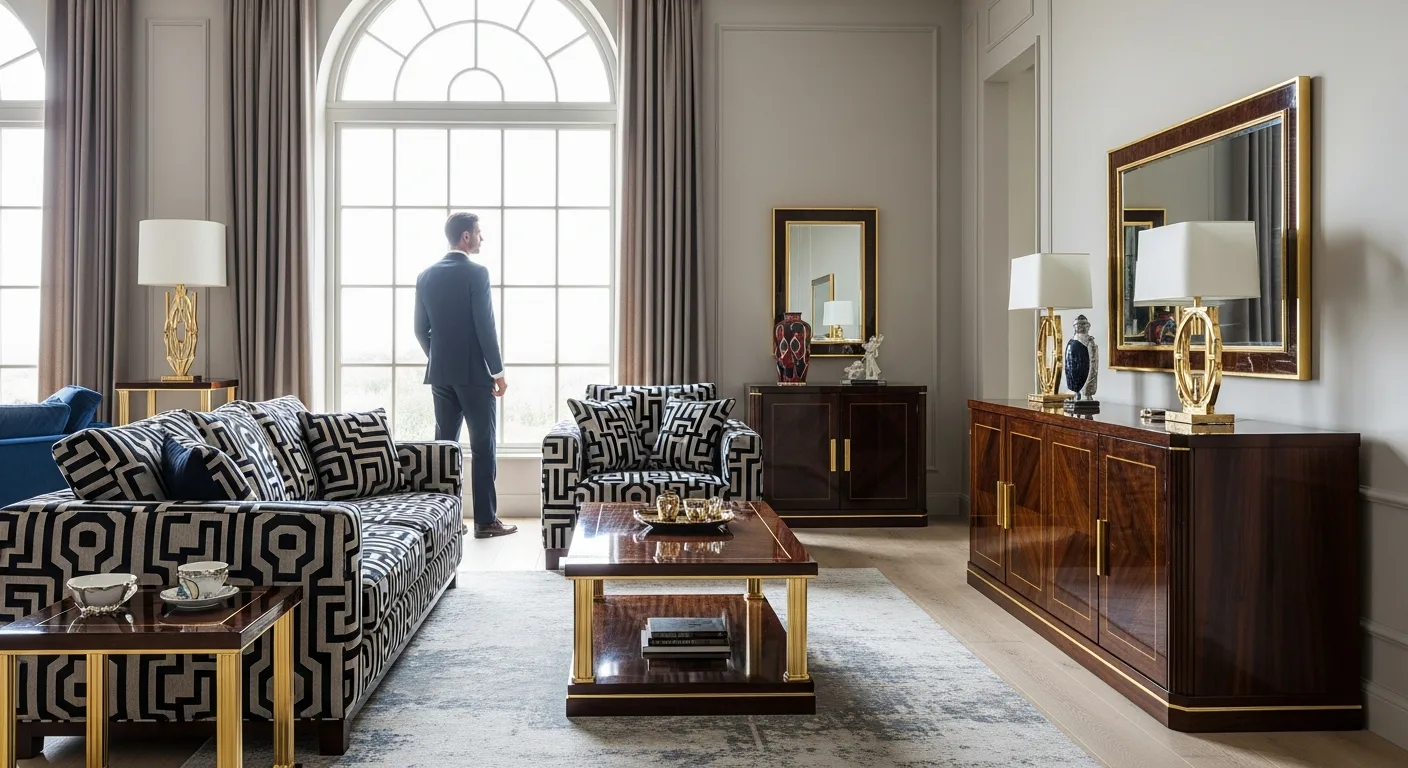
The Timeless Appeal of Art Deco Furniture
Originating in the 1920s and reaching its peak in the 1930s, the Art Deco movement was more than just a trend; it was a revolution in aesthetics. Unlike the flowing curves of Art Nouveau, Art Deco furniture introduced a sense of order, power, and unapologetic luxury. Today, it remains a favorite for the discerning homeowner who wants his living space to reflect a blend of historical grandeur and modern precision.
The movement was born out of a desire for progress. After the first World War, designers sought to embrace the machine age, celebrating industrialization through clean lines and symmetry. When a man invests in a piece of Art Deco furniture, he isn’t just buying a chair or a cabinet; he is acquiring a fragment of an era defined by optimism and technological triumph.
Key Characteristics of the Art Deco Aesthetic
Identifying Art Deco furniture requires an eye for detail. The style is characterized by several distinct elements that set it apart from mid-century modern or contemporary minimalism. If a collector looks closely, he will notice a focus on verticality and streamlined forms that suggest motion and speed.
- Geometric Patterns: Expect to see chevrons, zigzags, and sunburst motifs. These patterns were often inlaid into the wood or etched into glass.
- Symmetry: Balance is crucial. A sideboard or vanity from this era will almost always be perfectly symmetrical, providing a sense of stability and formal elegance.
- Bold Colors: While many pieces use natural wood tones, the era also embraced high-contrast palettes, such as black lacquer paired with gold or silver leaf.
Materials and Craftsmanship
One of the reasons Art Deco furniture commands such respect is the sheer quality of materials used. Designers of the time spared no expense, sourcing exotic woods and metals from across the globe. It was common for a craftsman to use Macassar ebony, zebrano, or burl walnut to create a striking visual texture. These woods were often polished to a high-gloss sheen, a process that requires immense skill and patience.
In addition to rare timbers, the use of chrome, brass, and even sharkskin (shagreen) was prevalent. These materials were chosen for their reflective properties, adding a layer of glamour that was meant to shine under the newly popular electric lighting of the early 20th century. For those interested in the broader context of these designs, exploring a historical architecture styles guide can provide deeper insight into how furniture mirrored the buildings of the time.
Identifying Genuine Pieces vs. Reproductions
With the resurgence of vintage styles in 2026, the market is flooded with mass-produced items that mimic the Deco look. However, a true connoisseur knows that a reproduction rarely matches the weight or the joinery of an original. Authentic pieces often feature hand-cut dovetail joints and solid wood frames, whereas modern imitations might rely on veneers over particle board.
When a buyer is scouting for an investment, he should check for signs of age that aren’t easily faked, such as the specific patina on brass handles or the way the lacquer has settled over decades. For a more detailed breakdown of what to look for, one might consult a specialized resource on identifying authentic art deco furniture to ensure his purchase is legitimate.
How to Integrate Art Deco into a Modern Interior
You do not need a museum-quality home to appreciate Art Deco furniture. In fact, many modern designers recommend using a single “hero” piece to anchor a room. A large, fan-backed armchair or a lacquered cocktail cabinet can act as a focal point in an otherwise minimalist setting. This contrast prevents the room from feeling like a period set and instead makes it feel curated and intentional.
Lighting plays a massive role in how these pieces are perceived. Because of the high-gloss finishes and metallic accents, warm, layered lighting can make a burl wood table glow. A man might choose to pair his Deco desk with a modern ergonomic chair, blending the best of 1930s style with 21st-century comfort.
Caring for Your Investment
Proper maintenance is essential to preserve the value of Art Deco furniture. Because many pieces utilize delicate veneers and high-shine lacquers, they are sensitive to environmental changes. A collector should ensure his home maintains a consistent humidity level to prevent the wood from warping or the veneers from lifting.
Cleaning should be done with a soft, lint-free cloth. Harsh chemicals should be avoided at all costs, as they can strip away the original finish. If the piece features chrome or nickel plating, a gentle metal polish can be used periodically to maintain its mirror-like quality, ensuring the furniture remains as striking as the day it was crafted.
Frequently Asked Questions
What wood is most common in Art Deco furniture?
Walnut, oak, and maple were frequently used, but high-end pieces often utilized exotic species like ebony, rosewood, and mahogany to achieve deep, rich colors and unique grain patterns.
How can I tell if an Art Deco piece is real?
Look for signs of hand-craftsmanship, such as solid wood drawer bottoms and period-correct hardware. Real pieces from the 1920s and 30s will also have a specific weight and density that modern reproductions lack.
Is Art Deco furniture still in style in 2026?
Yes, Art Deco remains a staple in luxury interior design. Its emphasis on high-quality materials and bold, clean lines allows it to blend seamlessly with contemporary and industrial home styles.
Does Art Deco furniture hold its value?
Authentic, well-preserved pieces by known designers or manufacturers often appreciate in value. Even unsigned pieces of high quality are considered strong investments due to the rarity of the materials used.