The Rugged Appeal of Exposed Masonry
A brick backsplash brings an immediate sense of history and grit to a kitchen. While subway tile often feels clinical, the raw texture of kiln-fired clay offers a visual weight that anchors the room. For a man looking to build a kitchen that feels like a workshop for culinary craft rather than a sterile showroom, brick is the definitive choice. It suggests permanence, strength, and a connection to traditional craftsmanship.
Beyond the aesthetics, brick is incredibly versatile. It works just as well in a high-end industrial loft as it does in a rustic cabin. The key lies in the variation of the bricks themselves—some are uniform and sharp-edged, while others carry the chips and soot marks of reclaimed materials. When a homeowner integrates this feature, he is making a statement that his space is built to last.
Thin Brick vs. Full Brick: What Works?
Most modern kitchens do not have the structural depth to support a full-sized brick wall behind the stove. This is where thin brick veneer becomes the hero of the project. These are real bricks, sliced to about 1/2-inch to 1-inch thickness, allowing them to be installed much like standard tile. He gets the authentic look and feel of masonry without the need for structural reinforcement or sacrificing precious countertop inches.
- Full Brick: Best for new builds where the wall can be designed to carry the load. It offers the most authentic depth but is rarely practical for simple remodels.
- Thin Brick Veneer: The industry standard for backsplashes. It is lightweight, easy to cut, and provides the exact same surface texture as a full brick.
- Faux Brick Panels: Usually made of high-density polyurethane. While easier to install, a discerning eye will notice the lack of genuine mineral variation and heat resistance.
When planning the budget for such an upgrade, he should consider how this feature fits into the average cost of kitchen remodel projects, as specialized masonry work or high-end reclaimed veneers can shift the total investment.
Essential Sealing and Maintenance
The primary concern with a brick backsplash is its porosity. Brick is essentially a sponge for grease, tomato sauce, and moisture. If a man leaves his brick unsealed, a single splash of bacon grease can leave a permanent dark stain. To prevent this, sealing is non-negotiable.
He should choose a high-quality penetrating sealer. These products soak into the brick and grout, creating a barrier against liquids without changing the color of the material. For those who prefer a slightly darker, “wet” look, an enhancing sealer can be used to bring out the deep reds and burnt oranges of the clay. Maintenance then becomes a simple matter of wiping the surface with a damp cloth and a mild, pH-neutral cleaner.
Design Styles: From Industrial to Modern
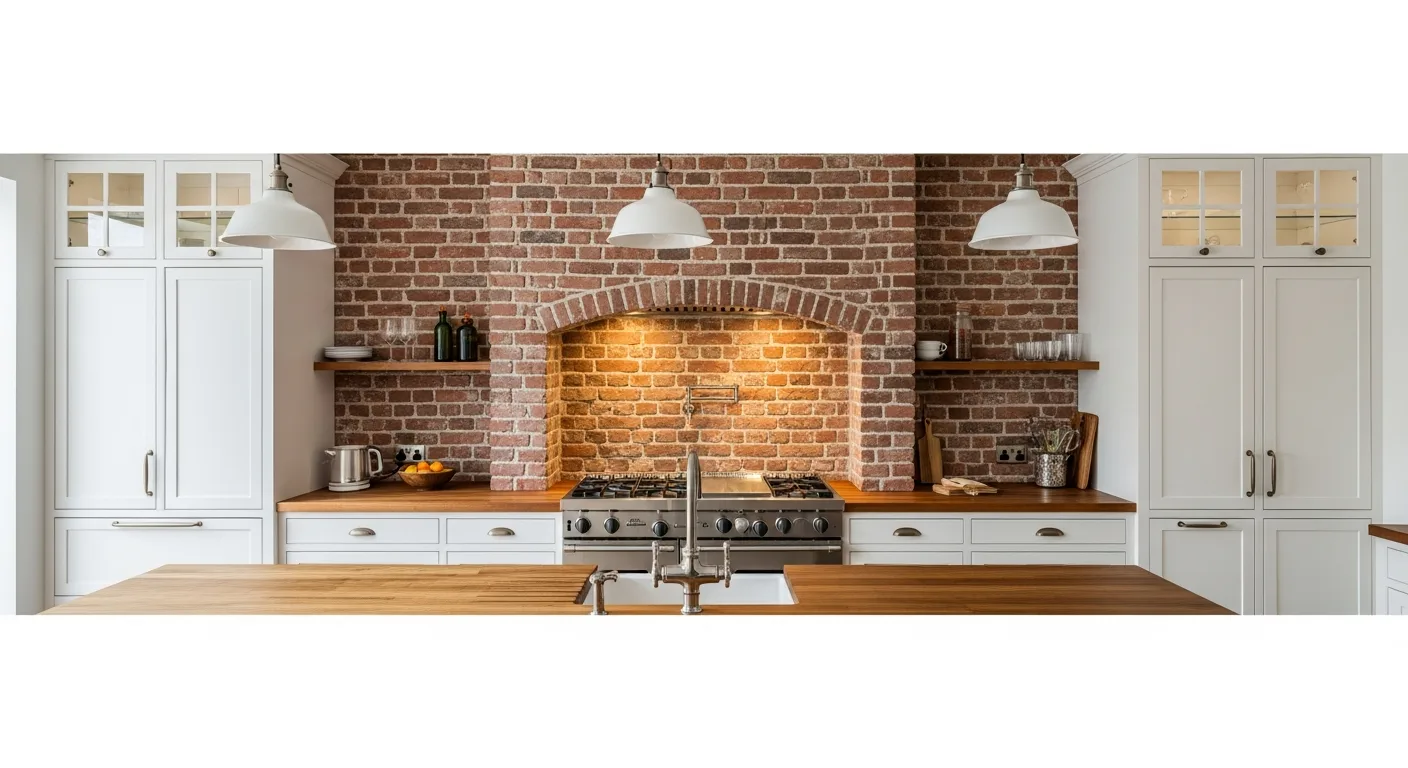
Brick is not a one-size-fits-all solution. The way it is laid and the color of the mortar can completely change the vibe of the kitchen. For an industrial look, he might choose a classic red brick with wide, grey mortar joints. This pairs perfectly with stainless steel appliances and open shelving made of reclaimed wood and iron pipe.
If he prefers a modern or minimalist aesthetic, a white-washed or painted brick backsplash provides texture without the visual noise of multi-colored clay. This allows the architectural lines of the kitchen to stand out. To ensure the overall design remains cohesive, he should pair the textured wall with the best kitchen cabinets available, creating a sharp contrast between raw masonry and refined, high-quality woodwork.
Installation Tips for the DIYer
Installing a thin brick backsplash is a manageable project for a man with basic DIY skills. The process involves applying a thin-set mortar to the wall, pressing the brick veneers into place using spacers, and then filling the gaps with grout or traditional mortar using a grout bag.
One pro tip: use a running bond pattern (the classic staggered look) for the most authentic appearance. He should also pay close attention to the corners. Using “L-shaped” corner bricks instead of flat pieces makes the backsplash look like a solid brick wall rather than a thin application. Once the mortar is dry, a stiff brush should be used to knock off any excess crumbs before applying the final sealer.
Frequently Asked Questions
Is a brick backsplash hard to clean?
If it is properly sealed, it is no harder to clean than standard tile. Without a sealer, however, the brick will absorb grease and stains, making them nearly impossible to remove. A sealed brick surface only requires a quick wipe-down after cooking.
Can I install brick behind a gas stove?
Yes. Real brick and thin brick veneers are fire-resistant and can handle the heat generated by a professional-grade gas range. This makes them a safer and more durable option than some synthetic or wood-based backsplash materials.
Does a brick backsplash make a kitchen look smaller?
Because brick has a heavy texture, it can make a small space feel enclosed if used on every wall. However, when used strictly as a backsplash, it adds depth and character without overwhelming the room. Using a lighter mortar color can also help keep the space feeling open.
Can I paint over a brick backsplash later?
Absolutely. If a homeowner decides he wants a change, brick takes paint very well. He will need to clean it thoroughly and use a high-quality primer designed for masonry to ensure the paint adheres to the porous surface.