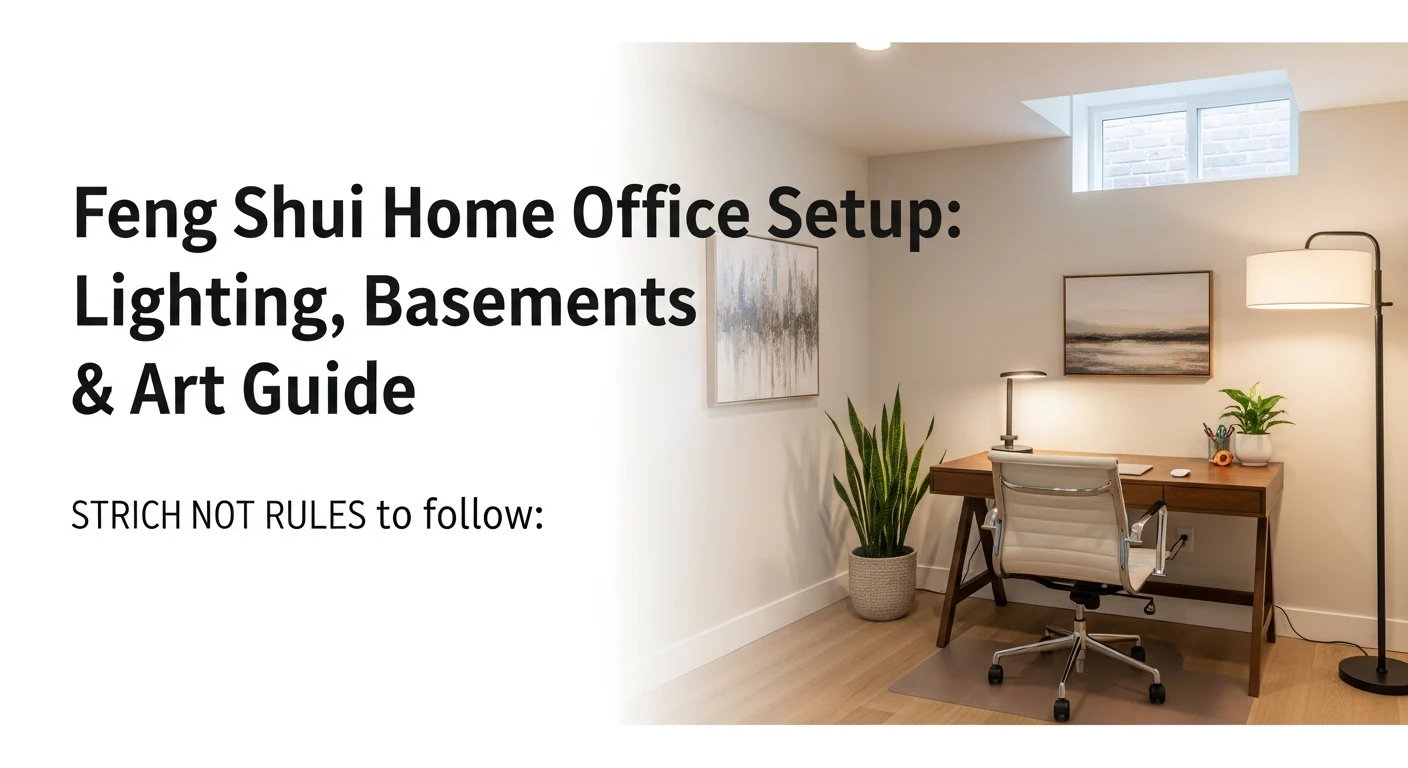
Transforming your home office into a sanctuary of productivity and balance is more than just arranging furniture—it’s about harnessing the principles of feng shui to optimize energy flow, lighting, and aesthetics. Whether you’re setting up in a basement or a sunlit room, a well-designed workspace can enhance focus, reduce stress, and boost creativity. In this guide, we’ll explore how to integrate feng shui with practical elements like lighting fixtures and art to create a harmonious home office that supports your professional goals and personal well-being.
A feng shui home office involves positioning your desk in the command position (facing the door but not in line with it), using natural or full-spectrum lighting to reduce eye strain, incorporating uplifting art and plants for positive energy, and addressing basement challenges with bright colors and proper ventilation to create a balanced, productive workspace.
Core Feng Shui Principles for Your Home Office
Feng shui, an ancient Chinese practice, focuses on arranging your environment to promote harmony and positive energy flow, or “chi.” In a home office, this means creating a space that supports concentration, creativity, and career growth. Start by assessing the room’s layout: the command position is key—place your desk so you can see the entrance without being directly in line with it, symbolizing control and awareness. Avoid positioning your back to the door, as this can lead to feelings of vulnerability and distraction. Additionally, declutter regularly to prevent stagnant energy; a tidy space encourages clear thinking and efficiency. For more tips on optimizing your workspace, check out our guide on masculine home office ideas.
- Use the Bagua map to align office areas with life aspects (e.g., career zone in the north).
- Incorporate elements like wood (desks) and metal (organizers) for balance.
- Add plants like bamboo or peace lilies to purify air and attract positive chi.
- Keep sharp corners softened with plants or fabric to avoid “poison arrows.”
Lighting Solutions for a Balanced Home Office
Proper lighting is crucial in a feng shui home office, as it affects mood, energy levels, and eye health. Aim for a blend of natural and artificial light to create a bright, inviting atmosphere. Natural light is ideal—position your desk near a window to benefit from sunlight, which boosts vitamin D and enhances positivity. If natural light is limited, use full-spectrum or LED bulbs that mimic daylight to reduce glare and eye strain. Avoid harsh overhead lighting; instead, layer light sources with task lamps for focused work and ambient lighting for overall illumination. For comprehensive home upgrades, explore our home electrical guide.
- Assess your room’s natural light sources and maximize exposure.
- Choose adjustable desk lamps with warm white bulbs (2700K-3000K).
- Install dimmer switches to control brightness throughout the day.
- Use mirrors strategically to reflect light and expand space.
Setting Up a Basement Home Office with Feng Shui
Basements can pose unique challenges for a home office, such as low ceilings, limited natural light, and potential dampness, but with feng shui adjustments, they can become cozy and productive spaces. To counteract darkness, use bright, uplifting colors like yellows or light blues on walls, and add ample artificial lighting. Ensure good air circulation with fans or dehumidifiers to prevent stagnant chi—this ties into broader seasonal home maintenance practices. Position your desk away from support beams or sloped ceilings to avoid oppressive energy, and incorporate earthy elements like stone or pottery to ground the space. If structural issues arise, refer to our home foundation cracks guide for solutions.
| Basement Challenge | Feng Shui Solution | Practical Tip |
|---|---|---|
| Low Light | Use mirrors and light colors | Install LED panel lights |
| Poor Ventilation | Add plants and air purifiers | Use a dehumidifier |
| Clutter Accumulation | Declutter regularly | Use multi-functional storage |
| Dampness | Incorporate wood elements | Seal walls and floors |
Incorporating Art and Decor for Positive Energy
Art and decor play a vital role in a feng shui home office by influencing emotions and inspiration. Choose pieces that evoke calmness, motivation, or creativity, such as landscapes, abstract art, or motivational quotes. Avoid aggressive or chaotic imagery, which can disrupt chi. Position art at eye level and in the career or knowledge areas of the Bagua map to enhance focus. Additionally, incorporate personal items like family photos or souvenirs to add warmth, but keep them minimal to maintain professionalism. For more on creating inspiring spaces, see our home gym setup ideas.
- Select art with flowing lines or natural scenes to promote smooth energy.
- Use frames made of wood or metal to align with feng shui elements.
- Rotate artwork seasonally to keep the space dynamic and fresh.
- Avoid placing art behind your desk to prevent “attacks” on your back.
Essential Home Office Equipment and Layout Tips
Beyond aesthetics, the right equipment and layout are key to a functional feng shui home office. Invest in an ergonomic chair and desk to support physical health, aligning with the feng shui principle of comfort and stability. Organize cables and tech gadgets to minimize clutter and electromagnetic stress—use cable organizers and position routers away from your desk. Consider the placement of shelves and storage: keep them tidy and at a height that doesn’t overwhelm the space. For those with limited room, small home floor plans offer smart layout ideas.
- Arrange furniture to allow free movement and avoid blocking doors.
- Use rounded edges on desks and tables to soften energy flow.
- Incorporate a water feature like a small fountain for wealth attraction.
- Place a crystal or lucky charm on your desk for added positivity.
FAQs About Feng Shui Home Office Setup
What is the best direction for a home office desk in feng shui?
The best direction is the command position, where you face the door but are not directly in line with it, typically aligning with your personal Kua number for optimal energy.
Can I use artificial plants in a feng shui home office?
Yes, but real plants are preferred as they purify air and bring live chi; if using artificial ones, choose high-quality, dust-free options and place them in wealth or health areas.
How do I improve lighting in a basement home office?
Use layered lighting with LED bulbs, add mirrors to reflect light, paint walls in light colors, and consider installing a sun lamp to simulate natural daylight.
What colors are good for a feng shui home office?
Neutral tones like beige or white promote clarity, while accents of blue (calm), green (growth), or yellow (energy) can enhance specific areas based on the Bagua map.
Is it bad to have a home office in the bedroom?
It can blur work-life boundaries; if necessary, use a room divider, keep work items hidden after hours, and position the desk away from the bed to maintain separation.
How often should I declutter my home office for feng shui?
Declutter weekly to prevent stagnant energy, with a deeper clean seasonally to align with natural cycles and refresh chi flow.
Can art affect productivity in a home office?
Yes, uplifting and inspiring art can boost mood and creativity, while negative or distracting imagery may reduce focus and increase stress.
What feng shui tips apply to small home offices?
Use multi-functional furniture, keep pathways clear, incorporate mirrors to expand space, and focus on a few key feng shui adjustments rather than overcrowding.