Owning a mobile home comes with unique maintenance challenges, especially when it comes to structural integrity. Over time, issues like sagging subfloors, damaged underbellies, and uneven leveling can compromise safety and comfort. These problems often stem from moisture, poor installation, or natural settling, and ignoring them can lead to costly repairs down the line. In this guide, we’ll dive into the essentials of mobile home structural repair, covering everything from diagnosing subfloor damage to releveling techniques and insulation upgrades. Whether you’re a DIY enthusiast or planning to hire a pro, understanding these key areas will help you maintain a sturdy, energy-efficient home. For more on mobile home upkeep, check out our mobile home installation guide for setup and insulation tips.
Quick Answer: Mobile home structural repair involves fixing subfloor damage (like rot or sagging), repairing underbellies (the protective barrier beneath), and releveling the home to ensure stability. Costs vary, but DIY subfloor repairs can start at $500, while professional releveling might cost $1,500-$3,000. Regular inspections and proper insulation are key to preventing issues.
Understanding Mobile Home Subfloor Issues
The subfloor in a mobile home is the foundation of your living space, typically made of plywood or oriented strand board (OSB) over floor joists. Common problems include water damage, rot, and sagging, often caused by leaks, high humidity, or poor ventilation. Signs of subfloor damage include soft or bouncy floors, visible dips, and musty odors. Addressing these issues early can prevent further structural harm and improve energy efficiency. Here’s a breakdown of key subfloor repair steps:
- Inspect for damage: Look for soft spots, discoloration, or mold.
- Remove damaged sections: Cut out rotten plywood and replace with new material.
- Reinforce joists: Add support beams or sister joists if needed.
- Seal and insulate: Use vapor barriers and proper mobile home floor insulation to prevent future moisture issues.
Mobile Home Underbelly Repair Essentials
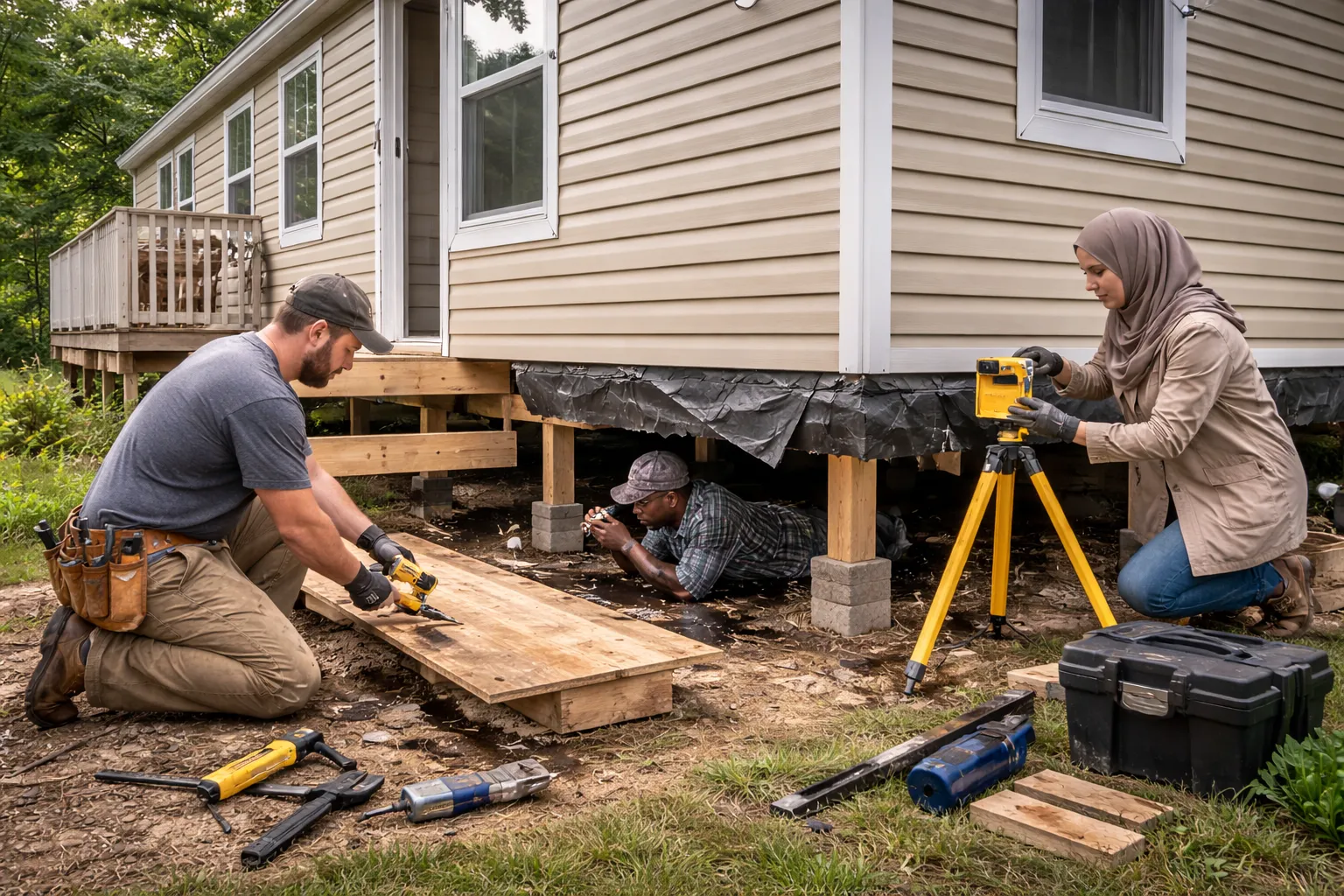
The underbelly is the protective layer beneath your mobile home, covering plumbing, electrical, and insulation. It’s usually made of vinyl or insulated foil and can tear due to pests, weather, or wear. A damaged underbelly exposes critical systems to moisture and cold, leading to frozen pipes or energy loss. Repairing it involves:
- Access the underbelly: Safely crawl under the home or use access panels.
- Clean and dry the area: Remove debris and ensure it’s moisture-free.
- Patch holes: Use underbelly tape or replacement material for small tears.
- Replace large sections: For extensive damage, install new underbelly fabric and secure it with fasteners.
- Add insulation: Upgrade with foam or fiberglass to enhance energy efficiency.
For a deeper dive into plumbing systems, our mobile home plumbing systems guide explains diagrams and drains.
Releveling Your Mobile Home: Costs and Techniques
Releveling is crucial for maintaining structural integrity, as mobile homes can settle unevenly over time. This process adjusts the piers or blocks supporting the home to ensure a level foundation. Signs you need releveling include doors that won’t close, cracked walls, or sloping floors. Costs vary based on home size and complexity, but here’s a comparison:
| Service | Average Cost | DIY Feasibility |
|---|---|---|
| Minor Releveling | $500 – $1,000 | Moderate (with tools) |
| Major Releveling | $1,500 – $3,000 | Low (hire a pro) |
| Pier Replacement | $200 – $500 per pier | Low (requires expertise) |
Techniques include using hydraulic jacks and adjusting piers, but it’s often best to consult a professional to avoid safety risks. For related exterior work, see our home wrap installation guide for awnings and storm shelters.
Mobile Home Floor Insulation Upgrades
Proper insulation beneath your mobile home not only improves comfort but also protects the subfloor and underbelly from temperature extremes. Common insulation types include fiberglass batts, foam boards, and spray foam. Upgrading insulation can reduce energy bills and prevent moisture buildup. Steps for installation:
- Choose the right material: Consider R-value and moisture resistance.
- Remove old insulation: If damaged or inefficient.
- Install vapor barriers: Place between insulation and subfloor to block moisture.
- Seal gaps: Use foam or tape to prevent air leaks.
- Monitor regularly: Check for pests or water damage annually.
Insulation ties into overall home efficiency, much like the tips in our home AC leaking water guide for HVAC maintenance.
DIY vs. Professional Repair Considerations
Deciding whether to tackle mobile home structural repairs yourself or hire a pro depends on skill level, budget, and safety. DIY can save money but requires tools and knowledge, while professionals offer expertise and warranties. Here’s a quick list to help you decide:
- Assess the damage: Minor subfloor patches or small underbelly tears are often DIY-friendly.
- Evaluate risks: Releveling and major structural work are best left to experts due to safety concerns.
- Budget accordingly: DIY costs less upfront but may lead to mistakes; pros cost more but ensure quality.
- Check local codes: Some repairs require permits or licensed contractors.
- Plan for time: DIY projects can take longer, especially for beginners.
Preventive Maintenance Tips
Regular maintenance can extend the life of your mobile home’s structure. Focus on moisture control, inspections, and timely repairs. Key practices include:
- Inspect underbelly and subfloor biannually for tears or soft spots.
- Keep gutters clean to direct water away from the foundation.
- Use dehumidifiers in crawl spaces to reduce humidity.
- Seal cracks in skirting or exterior walls to block pests and moisture.
- Schedule professional inspections every few years for releveling checks.
For more on home upkeep, explore our master home maintenance checklists for monthly and renovation guides.
Frequently Asked Questions
How much does it cost to repair a mobile home subfloor?
Costs range from $500 to $2,000, depending on damage extent and materials. DIY repairs can be cheaper, but hiring a pro ensures durability and may include warranties.
Can I repair a mobile home underbelly myself?
Yes, for small tears, you can use underbelly tape or patches. For large damage, it’s safer to hire a professional to ensure proper sealing and insulation.
How often should a mobile home be releveled?
Typically, every 3-5 years, but it depends on soil conditions and initial installation. Signs like uneven floors or sticking doors indicate it’s time for releveling.
What’s the best insulation for a mobile home floor?
Foam boards or spray foam are highly effective due to their moisture resistance and high R-value. Fiberglass batts are a budget-friendly option but require vapor barriers.
Is mobile home structural repair covered by insurance?
It depends on your policy and the cause of damage. Sudden events like storms may be covered, but wear and tear usually aren’t. Check with your insurer for details.
How do I know if my mobile home has subfloor damage?
Look for soft or bouncy spots, sagging floors, musty smells, or visible mold. A professional inspection can confirm the extent of damage.
Can poor insulation cause subfloor problems?
Yes, inadequate insulation can lead to moisture buildup and temperature fluctuations, which may rot wood or cause condensation damage over time.
What tools are needed for DIY subfloor repair?
Basic tools include a circular saw, hammer, nails, plywood, vapor barrier, and safety gear. For complex jobs, consider renting a jack or leveling tools.
Frequently Asked Questions
How much does it cost to repair a mobile home subfloor?
Costs range from $500 to $2,000, depending on damage extent and materials. DIY repairs can be cheaper, but hiring a pro ensures durability and may include warranties.
Can I repair a mobile home underbelly myself?
Yes, for small tears, you can use underbelly tape or patches. For large damage, it’s safer to hire a professional to ensure proper sealing and insulation.
How often should a mobile home be releveled?
Typically, every 3-5 years, but it depends on soil conditions and initial installation. Signs like uneven floors or sticking doors indicate it’s time for releveling.
What’s the best insulation for a mobile home floor?
Foam boards or spray foam are highly effective due to their moisture resistance and high R-value. Fiberglass batts are a budget-friendly option but require vapor barriers.
Is mobile home structural repair covered by insurance?
It depends on your policy and the cause of damage. Sudden events like storms may be covered, but wear and tear usually aren’t. Check with your insurer for details.
How do I know if my mobile home has subfloor damage?
Look for soft or bouncy spots, sagging floors, musty smells, or visible mold. A professional inspection can confirm the extent of damage.
Can poor insulation cause subfloor problems?
Yes, inadequate insulation can lead to moisture buildup and temperature fluctuations, which may rot wood or cause condensation damage over time.
What tools are needed for DIY subfloor repair?
Basic tools include a circular saw, hammer, nails, plywood, vapor barrier, and safety gear. For complex jobs, consider renting a jack or leveling tools.