Planning Your Deck Roof Attachment
Adding a roof to an existing deck is a significant home improvement project that requires precision and a deep understanding of load-bearing mechanics. When a homeowner decides he wants to extend his living space outdoors, the most critical phase is the connection point between the new roof and the existing house structure. This connection must be both structurally sound to handle snow or wind loads and perfectly sealed to prevent water intrusion into the home’s framing.
Before he begins the physical work, a builder must consult local building codes. In 2026, many jurisdictions have updated requirements regarding lateral load connections and specific fastener schedules. Ensuring the project meets these standards is vital for maintaining long-term structural integrity and ensuring the safety of everyone who uses the space.
Selecting the Right Attachment Method
There are two primary ways to attach a roof over a deck from the house: the ledger method and the roof-mount (stilt) method. The choice depends on the height of the house, the existing roofline, and the desired pitch of the new deck cover.
- The Ledger Method: This involves bolting a pressure-treated board (the ledger) directly to the house’s rim joist. It is the most common approach for shed-style or lean-to roofs.
- The Roof-Mount Method: If the deck is low or the house is a single-story ranch, a builder might use specialized brackets that penetrate the house roof to attach the new rafters to the interior rafters or top plates.
Step-by-Step: Installing the Ledger Board
The ledger board serves as the primary anchor for the new roof. To install it correctly, the homeowner must first remove a strip of siding to expose the house’s sheathing. He should never simply bolt a ledger over the siding, as this creates a weak point and allows moisture to rot the wall.
Once the sheathing is exposed, he must install high-quality flashing. In 2026, self-adhering membrane flashing is the industry standard, providing a secondary barrier behind the metal Z-flashing. The ledger board is then fastened using heavy-duty structural screws or lag bolts, spaced according to engineering specifications. This ensures the weight of the roof is transferred directly into the house’s framing members.
Structural Support and Rafter Integration
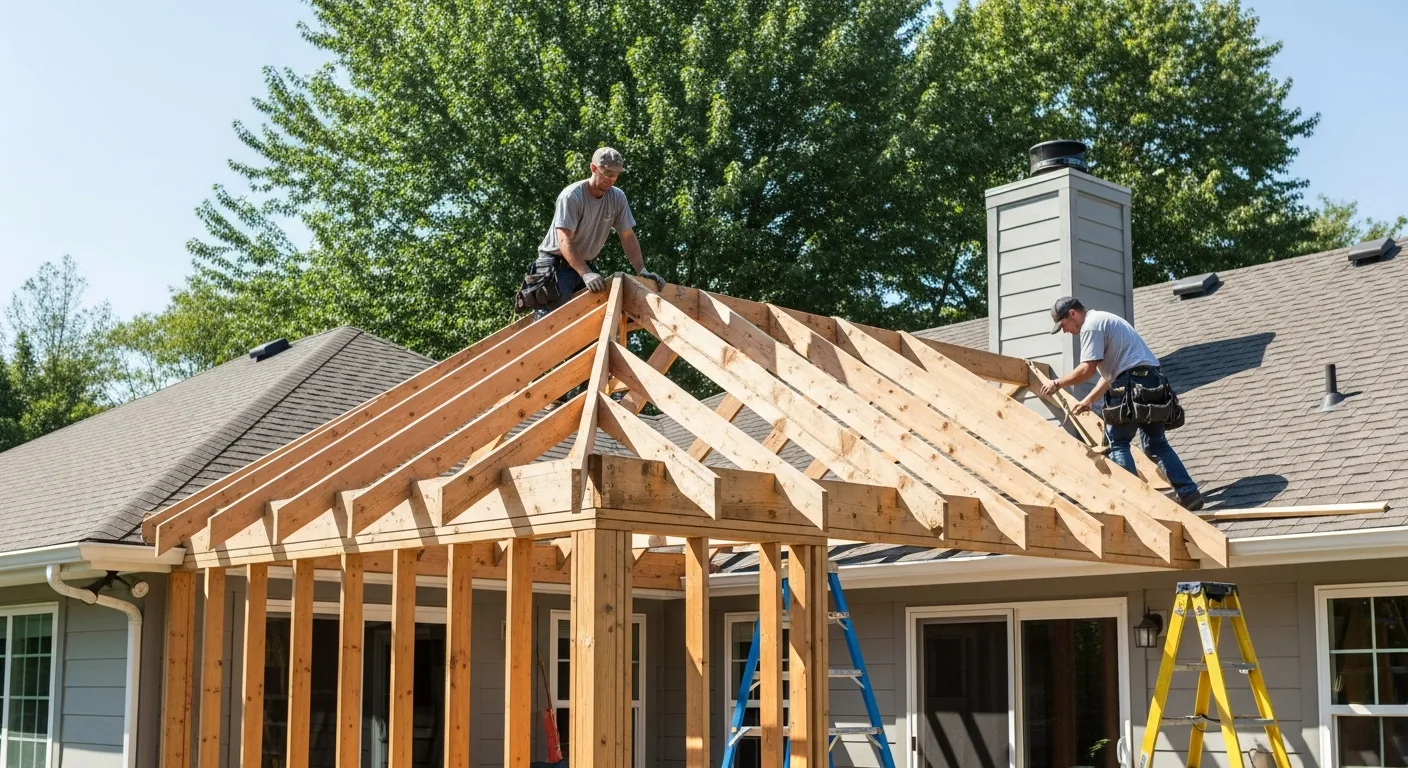
With the ledger firmly in place, the focus shifts to the outer support system. A roof cannot rely solely on the house attachment; it requires robust posts and a beam at the far end of the deck. When integrating outdoor structures like these, the builder must ensure the footings are deep enough to bypass the frost line, preventing the roof from shifting during seasonal temperature changes.
Rafters are then notched or hung from the ledger using galvanized joist hangers. He should ensure each rafter is perfectly aligned to maintain a consistent slope, which is essential for proper drainage. A minimum slope of 2:12 is typically recommended for shingled roofs, though metal roofing can often handle shallower pitches.
Weatherproofing and Finishing Touches
Water is the greatest enemy of any deck roof attachment. After the rafters are in place and the roof decking is installed, the transition between the house roof and the new deck roof must be sealed. This often involves tucking new flashing under the existing house shingles and over the new roof material. This “shingle-style” overlapping ensures that gravity moves water away from the house rather than into the gap.
Finally, he can add aesthetic touches such as tongue-and-groove cedar on the ceiling or integrated LED lighting. By following these professional steps, he ensures that the new addition looks like an original part of the home rather than an afterthought.
Frequently Asked Questions
Can I attach a roof to a deck that wasn’t built for it?
Not necessarily. A standard deck is designed to hold the weight of people and furniture, not the additional weight of a roof structure. A builder must verify that the deck’s footings and posts can handle the “dead load” of the roof. In many cases, he may need to add additional support posts that go through the deck and into the ground.
Do I need a permit to add a roof over my deck?
Yes, in almost all cases, adding a permanent roof structure requires a building permit. This process ensures that his design is safe and that the attachment to the house meets local wind and snow load requirements.
What is the best material for a deck roof?
Metal roofing is highly popular in 2026 due to its longevity and lightweight nature, which puts less stress on the house attachment. However, asphalt shingles are often chosen to match the existing house roof for a seamless aesthetic look.