When it comes to keeping your mobile home comfortable year-round, understanding your HVAC system is key. Unlike traditional houses, mobile homes have unique heating, ventilation, and air conditioning (HVAC) needs due to their construction, size, and insulation. Whether you’re dealing with a sweltering summer or a chilly winter, knowing how your mobile home air conditioner unit, ductwork, and heat pumps work can save you money, improve efficiency, and ensure a cozy living environment. In this guide, we’ll break down everything from the basics of mobile home ductwork to choosing the right AC units and heat pumps, helping you navigate common issues and make informed decisions for your home’s climate control.
Mobile home HVAC systems typically use specialized ductwork and compact AC units, with options like 2-ton heat pumps for efficient heating and cooling. Key considerations include proper sizing, insulation, and maintenance to ensure optimal performance in the unique mobile home environment.
Understanding Mobile Home Ductwork
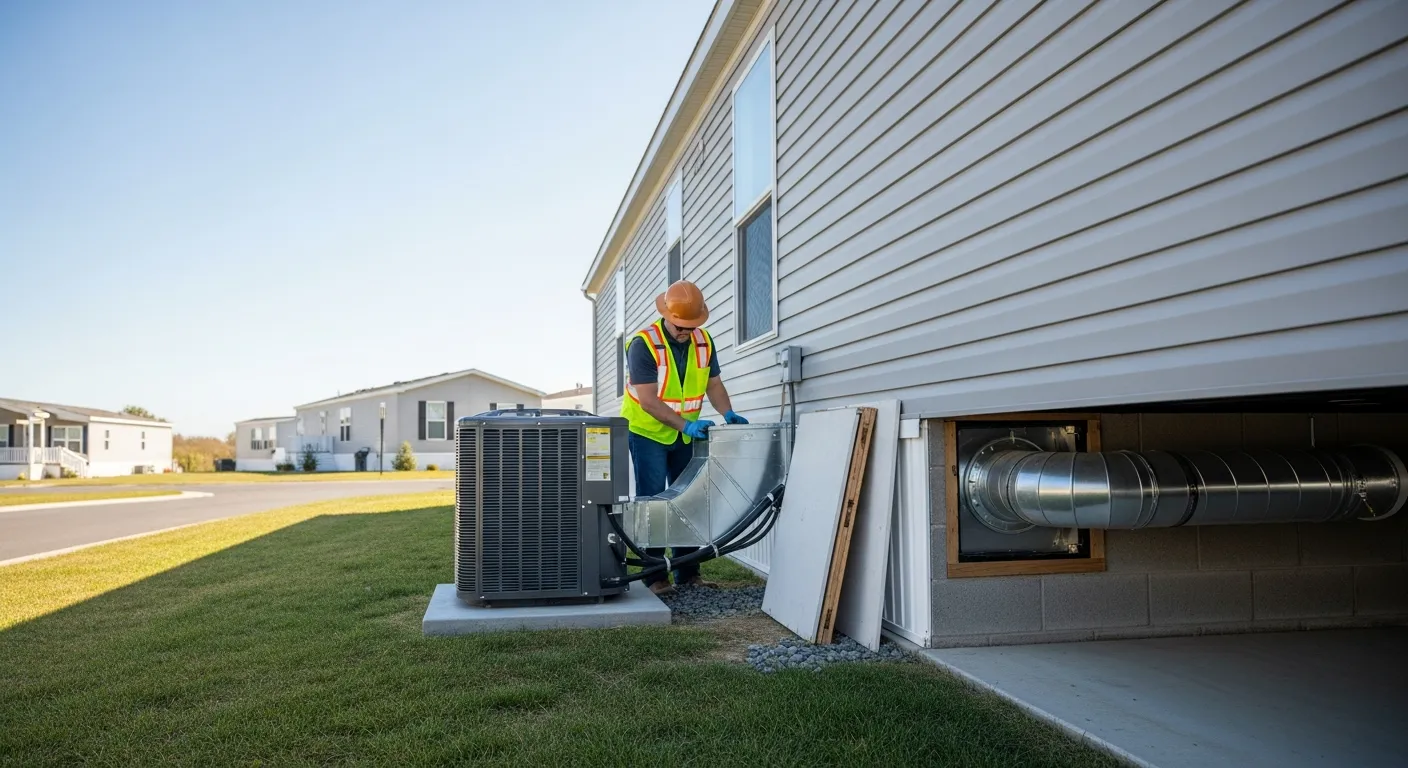
Ductwork in mobile homes is often different from that in site-built houses. Due to space constraints and structural design, mobile homes usually have a simpler, more compact duct system. Typically, ducts are made of flexible materials or thin metal and run through the underbelly or floor joists, distributing air from a central HVAC unit to various rooms. Proper installation and insulation are crucial to prevent energy loss and ensure even temperature distribution. Common issues include leaks, poor insulation, and blockages, which can reduce efficiency and comfort. Regular inspections and maintenance, such as sealing leaks and cleaning ducts, can help optimize performance. For more on maintaining your home’s systems, check out our guide on whole home upgrades.
- Flexible or thin metal ducts are common in mobile homes.
- Ducts often run through the underbelly or floor joists.
- Proper insulation prevents energy loss and improves efficiency.
- Regular maintenance includes sealing leaks and cleaning.
Choosing the Right Mobile Home Air Conditioner Unit
Selecting an AC unit for your mobile home involves considering factors like size, efficiency, and compatibility. Mobile homes typically require specialized units designed for their unique airflow and space limitations. Common options include window units, portable ACs, and central air systems. Central air is often integrated with the heating system and uses the existing ductwork. When choosing a unit, it’s essential to calculate the correct size (measured in tons or BTUs) based on your home’s square footage and insulation levels. An undersized unit will struggle to cool, while an oversized one can lead to humidity issues and higher energy bills. Look for energy-efficient models with high SEER ratings to save on costs. For related tips on home efficiency, explore our article on mobile home heating and insulation.
- Determine the size needed based on square footage and insulation.
- Consider specialized units for mobile homes.
- Opt for energy-efficient models with high SEER ratings.
- Ensure compatibility with existing ductwork if using central air.
Mobile Home 2-Ton Heat Pump: A Versatile Solution
A 2-ton heat pump is a popular choice for mobile homes, offering both heating and cooling in one system. Heat pumps work by transferring heat rather than generating it, making them highly efficient in moderate climates. For a typical mobile home of around 1,000 to 1,400 square feet, a 2-ton unit (24,000 BTUs) is often sufficient, but it’s important to assess your specific needs based on local climate and home insulation. Heat pumps can reduce energy costs compared to traditional furnaces and AC units, but they may be less effective in extremely cold temperatures. Regular maintenance, such as cleaning filters and checking refrigerant levels, is key to longevity. To learn more about efficient home designs, see our insights on efficient home plans.
| Feature | 2-Ton Heat Pump | Traditional AC Unit |
|---|---|---|
| Function | Heating and cooling | Cooling only |
| Efficiency | High in moderate climates | Varies by SEER rating |
| Best For | Mobile homes up to 1,400 sq ft | Homes with separate heating |
| Cost | Higher upfront, lower operating | Lower upfront, higher operating |
Installation and Maintenance Tips
Proper installation and maintenance are critical for the longevity and efficiency of your mobile home HVAC system. When installing a new AC unit or heat pump, it’s advisable to hire a professional familiar with mobile homes to ensure correct sizing, ductwork integration, and safety compliance. For maintenance, create a routine that includes cleaning or replacing air filters every 1-3 months, inspecting ducts for leaks, and checking refrigerant levels annually. Seasonal preparations, such as covering outdoor units in winter or clearing debris, can prevent damage. Additionally, consider upgrading insulation and sealing windows to reduce HVAC strain. For more on home maintenance, refer to our guide on DIY home repairs.
- Hire a professional for installation to ensure safety and efficiency.
- Clean or replace air filters regularly (every 1-3 months).
- Inspect ductwork annually for leaks and blockages.
- Perform seasonal maintenance to protect outdoor units.
Common Issues and Troubleshooting
Mobile home HVAC systems can face specific challenges, such as inadequate airflow, refrigerant leaks, or thermostat problems. If your AC in mobile home isn’t cooling properly, check for dirty filters, blocked vents, or low refrigerant. Uneven heating or cooling might indicate ductwork issues or poor insulation. For heat pumps, defrost cycles in cold weather are normal, but frequent cycling could signal a problem. Always turn off power before inspecting and consult a professional for complex repairs. Understanding these common issues can help you address them promptly and avoid costly breakdowns. For broader troubleshooting tips, check out our article on HVAC troubleshooting.
- Check air filters and vents for blockages.
- Monitor refrigerant levels and look for leaks.
- Ensure thermostat settings are correct.
- Inspect insulation and ductwork for efficiency issues.
FAQs About Mobile Home HVAC Systems
What size AC unit do I need for my mobile home?
For most mobile homes, a 1.5 to 2.5-ton AC unit is suitable, depending on square footage and insulation. Calculate based on 20 BTUs per square foot as a general rule, but consult a professional for an accurate assessment.
Can I use a regular AC unit in a mobile home?
It’s not recommended, as mobile homes require specialized units designed for their airflow and space constraints. Using a regular unit may lead to inefficiency and compatibility issues with existing ductwork.
How often should I service my mobile home HVAC system?
Service your system at least once a year, ideally before peak seasons. Regular maintenance includes cleaning filters, checking ducts, and inspecting refrigerant levels to ensure optimal performance.
What are the benefits of a heat pump for a mobile home?
Heat pumps offer energy-efficient heating and cooling in one system, reducing costs in moderate climates. They are versatile and can be a great alternative to separate furnaces and AC units.
How can I improve my mobile home’s HVAC efficiency?
Improve efficiency by upgrading insulation, sealing leaks in ductwork, using programmable thermostats, and performing regular maintenance. These steps can lower energy bills and enhance comfort.
Is ductwork necessary for a mobile home AC unit?
For central air systems, ductwork is essential to distribute cooled air. However, ductless mini-split systems are an alternative that don’t require ducts, offering flexibility for smaller spaces.
What should I do if my mobile home AC is not blowing cold air?
First, check and clean the air filters. If that doesn’t help, inspect for refrigerant leaks or thermostat issues. If problems persist, contact a professional HVAC technician for diagnosis and repair.